
Idea 1
The Art of Spreading Ideas that Matter
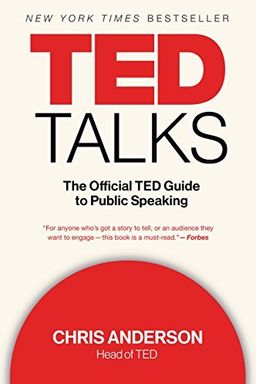
When was the last time you sat in a room, captivated by someone who truly inspired you? In TED Talks: The Official TED Guide to Public Speaking, Chris Anderson invites you to imagine—and master—that kind of magic. He argues that great talks aren't reserved for charismatic leaders or natural-born speakers. Instead, they’re built on something far more accessible: the ability to craft and share ideas that matter, authentically and compellingly, so they can ripple through the world.
Anderson contends that we are living through a renaissance of public speaking, driven by what he calls “the new age of fire”—the global campfire of online talks and shared stories. In a hyperconnected world, powerful communication is no longer a luxury; it’s a survival skill. Whether you’re pitching a startup, teaching a class, or trying to lead social change, your capacity to speak with clarity and empathy can transform your life—and others’ lives. The true secret, Anderson says, is not in theatrical performance or slick persuasion. It lies in the ancient art of connection: taking an idea that matters deeply to you and rebuilding it inside the minds of others.
The Core of a Great Talk
At the heart of the book is one deceptively simple truth—a great talk is a gift. It’s not about selling or performing; it’s about giving something valuable to your listeners: understanding, insight, hope, or perspective. Anderson compares this to the way Sophie Scott, a neuroscientist, shared her idea about laughter’s evolutionary role. She didn’t just inform; she changed how we see laughter itself—as social glue transforming tension into alignment. This, Anderson explains, is the power of giving an idea: when your listeners walk away seeing the world differently, you’ve succeeded.
To do that, speakers must move past fear and self-consciousness—how they look, sound, or compare—and focus on their purpose. Public speaking anxiety, Anderson reminds us, is deeply human. It’s rooted in our social instincts and fear of reputation. Yet, as examples from Monica Lewinsky, Elon Musk, and Richard Turere show, that fear can fuel preparation and authenticity. It’s not about suppressing nerves but about channeling them into conviction for what you want to share.
A Framework for Idea Building
The book’s structure follows the same path as crafting a talk—from foundational principles to connection techniques, from preparation to delivery. Anderson explains that every successful talk begins with an idea worth sharing—a mental construct built carefully inside the listener’s mind. To do that, he introduces key tools: connection, narration, explanation, persuasion, and revelation. These are not mechanical tricks; they are human instruments for building understanding.
Connection ensures the audience trusts you. Narration pulls them in emotionally. Explanation builds comprehension of complex topics. Persuasion reshapes their worldview by dismantling assumptions and reasoning toward clarity. Revelation—the “show, don’t tell” moment—stuns them with new possibility. You can combine these tools in countless ways, but Anderson insists on a golden thread binding them all: authenticity. When listeners sense manipulation or imitation, the spell breaks. When they see genuine curiosity, humility, and passion, connection happens.
Why These Ideas Matter Now
We live in an era Anderson calls the Age of Knowledge—where our main currency is ideas, not products. Automation may claim the repetitive tasks of history, but creative thought, empathy, and communication remain timelessly human. He believes “presentation literacy” is the new fundamental skill—on par with reading or arithmetic—for the 21st century. With billions of microphones and cameras in pockets worldwide, the power once reserved for a stage now extends to anyone capable of sharing meaning. It transforms ordinary lives into platforms of influence, just as Richard Turere’s “lion lights” idea spread from a shy 12-year-old Kenyan inventor to villages worldwide because he found his voice.
At TED, Anderson saw that ideas traverse borders faster than ever. Great public speaking can spark social change, ignite empathy, and democratize knowledge. The same global connectivity that once fragmented us can now unite us through shared human stories—if we learn to communicate wisely. This book is, therefore, a manifesto for everyone who feels they have something to say but doesn’t know how. Anderson’s promise is clear: you don’t have to be Churchill, King, or Mandela. You just have to be you—but courageously, intentionally, and with care for those listening.
The Journey Ahead
Across its chapters, TED Talks offers tools, stories, and examples—from speakers like Brené Brown, Dan Gilbert, Amanda Palmer, and Ken Robinson—to show how you can turn nervous energy into presence, rambling thoughts into structured throughlines, and complex ideas into memorable experiences. You’ll learn how to connect authentically, narrate powerfully, explain clearly, persuade wisely, and reveal beautifully. But more importantly, you’ll learn that speaking isn’t a performance; it’s participation in humanity’s oldest conversation. In Anderson’s words, great talks don’t just inform—they ignite a new age of fire: the flame of an idea spreading mind to mind, across the world.