
Idea 1
Lincoln Among Rivals: Building Leadership Through Comparison
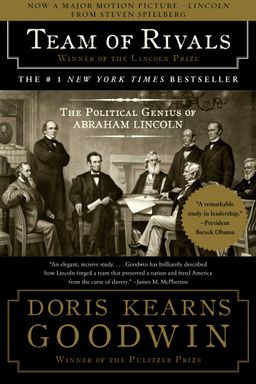
Doris Kearns Goodwin’s Team of Rivals asks you to meet Abraham Lincoln not alone but beside the men who competed with him—William H. Seward, Salmon P. Chase, and Edward Bates—and later served under him. The book’s central argument is that leadership built on inclusion, empathy, and comparative understanding outperforms leadership built on fear or conformity. By studying Lincoln through the lens of these rivals, you discover how character, strategy, and institutional craft turn personal tension into public strength.
The comparative lens: seeing character through contrast
Goodwin constructs Lincoln’s portrait through comparison with Seward’s polish, Chase’s moral fire, and Bates’s moderation. Seward, the cultivated New Yorker, mastered rhetoric and alliance-building; Chase, the austere Ohio reformer, pursued moral progress but courted ambition; Bates, the Virginian turned Missourian, embodied steadiness. Against these figures Lincoln’s gifts emerge: self‑education, story‑telling, resilience born of melancholy, and a political patience that absorbs insult without retaliation. This contrast reveals Lincoln’s unique blend of intellect and emotional intelligence—a mind that listens before commanding.
Politics as organization and persuasion
Goodwin uses the mid‑nineteenth‑century political world to illuminate the art of leadership. You enter a culture of oratory and newspapers—voices and columns as the social media of their age. Lincoln learns early that persuasion requires both moral clarity and organization: he divides counties into precincts, trains captains to visit every voter, and uses storytelling as political engineering. Seward partners with Thurlow Weed’s massive press machine; Chase uses legal treatises as moral pamphlets; together they show that words, networks, and logistics are the three engines of democratic power.
From moral debate to political movement
The book follows how arguments about slavery evolved into the Republican coalition. Lincoln’s own shift—from Whig pragmatism to antislavery conviction—occurs after the Kansas‑Nebraska Act of 1854, which repealed the Missouri Compromise. He answers Douglas’s doctrine of “popular sovereignty” with speeches grounded in empathy and history: he reminds audiences that self‑government cannot be twisted to deny inherent rights. His Peoria, “house divided,” and Cooper Union speeches exemplify his craft—using shared national memory to reach hearts and reason simultaneously.
Elections, rivals, and the dark horse victory
When the fragmented political landscape of 1860 offers Seward, Chase, and Bates as likely Republican nominees, Lincoln’s steady coalition work makes him the acceptable unifier. Chicago’s convention mathematics—his managers’ quiet deals, Seward’s alienating rhetoric, Chase’s disorganization—turn Lincoln’s modest profile into triumph. His victory, followed by Southern secession, forces the transition from political craft to wartime governance.
The cabinet experiment: rivals as resources
In office Lincoln proves that leadership can include opponents. He appoints Seward as Secretary of State, Chase as Treasury, and Bates as Attorney General—the “team of rivals.” He doesn’t demand harmony; he manages conflict. Through patient humor, moral confidence, and private tact, Lincoln transforms potential sabotage into collective strength. (Note: This approach resembles Franklin Roosevelt’s wartime inclusion of ideological opponents.)
A moral presidency tested by war
From Fort Sumter to the Emancipation Proclamation, Goodwin depicts a leader balancing principle and pragmatism. Lincoln defends federal authority without quick aggression, suspends civil liberties to protect the capital, and frames emancipation as both military necessity and moral redemption. His letters, cabinet sessions, and conversations reveal a constitutional mind adapting under pressure, trusting public reason while commanding decisive power.
Humanity and endurance
Goodwin continually returns to Lincoln’s private struggles—melancholy, marital strain, loss of his son Willie—and shows how grief becomes empathy. Humor and mercy are his coping tools: he pardons soldiers, tells stories to relieve tension, and practices ritual walks and readings as emotional management. Through these habits you see resilience as deliberate practice, not temperament.
Triumph, compromise, and legacy
By 1865 Lincoln unites military victory with moral reconciliation. His Second Inaugural transforms politics into theology—“with malice toward none; with charity for all.” His visits to Richmond embody humility, his pursuit of the Thirteenth Amendment secures permanent abolition, and his final acts before assassination demonstrate compassion as pragmatic statecraft. The book closes on Stanton’s line—“Now he belongs to the ages”—marking how personal decency becomes historical greatness.
In sum, Team of Rivals teaches you that leadership is more than command—it is the art of turning rivalry into unity, principle into policy, and personal pain into national empathy. Through Lincoln’s example, Goodwin argues for a model of authority grounded in humility, intelligence, and moral imagination.