
Idea 1
Taxes as a Pathway to Wealth
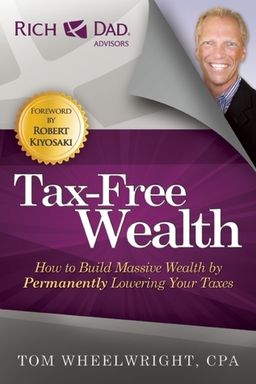
Do you ever feel as though taxes are inevitable — a force that drains your time, your money, and any hope of financial freedom? In Tax-Free Wealth, CPA Tom Wheelwright flips that belief on its head. He argues that taxes are not meant to impoverish you, but instead to guide your behavior toward wealth creation. The central premise of the book is strikingly simple: governments use tax laws as a series of incentives, not punishments, and anyone — not just the rich — can learn to use these incentives to build massive wealth, legally and permanently.
Wheelwright insists that taxes are fun, understandable, and even patriotic when you master them. By reframing the tax code from an obstacle into a map, he reshapes readers’ relationship with money and the government. The book’s thesis echoes his mentor Robert Kiyosaki’s idea from Rich Dad Poor Dad: the wealthy don’t avoid taxes through deceit; they actively fulfill what the government asks of them — creating jobs, housing, food, and energy — and receive tax breaks in return.
The Government’s Hidden Invitation
From the start, Wheelwright contends that nearly all modern tax systems — whether in the U.S., U.K., Canada, or Australia — share one major principle: they’re designed to reward actions that stimulate the economy. Around 99.5% of the tax law exists to help people pay less in taxes. Governments “want” entrepreneurs and investors to take risks, build infrastructure, and generate jobs, and the tax code is their language of incentives. With proper education, you begin to see deductions, credits, and brackets not as traps but as tools.
This shift in mindset transforms taxes from something punitive into something empowering. Instead of fearing taxes, Wheelwright urges readers to treat them as a game with predictable rules — and those who learn the rules can play to win.
Learning the Rules to Win
At the heart of Wheelwright’s approach are two foundational rules: (1) it’s your money, not the government’s; and (2) the tax law is written primarily to reduce your taxes. Once you accept those truths, the rest of the book provides the action steps. Wheelwright systematically teaches you how to shift from being an employee — paying the most tax — to becoming an entrepreneur or investor on the right side of the CASHFLOW Quadrant. That’s where governments provide the most powerful benefits.
The key, he says, lies in changing your facts. Governments tax you based on what your life looks like: your income sources, your entities, even your documentation. So if you want to change your taxes, you must first change your facts — adopt the behaviors and structures of the wealthy. This could mean starting a business, investing in real estate, or learning how depreciation turns paper losses into real cash gains.
A Global Blueprint
In researching international tax systems, Wheelwright discovered that their fundamentals are remarkably similar. Whether you’re in the U.S., Canada, or France, the underlying incentives mirror each other: governments subsidize the same activities — employment creation, housing, energy, agriculture, and development. Once you master these principles, you can apply them globally. This universality makes his message bold yet practical: the tax law is the same treasure map everywhere. The only difference is your willingness to read it.
Why This Perspective Matters
The book’s ultimate impact is psychological as much as financial. Wheelwright wants you to see paying fewer taxes as not only smart but moral. By doing what the government rewards — such as running businesses, investing in housing, or developing clean energy — you participate in national and global progress while securing your own future. This notion makes tax reduction a form of civic engagement, a practical patriotism built on competence rather than complaint.
Throughout the chapters, Wheelwright shows you how to move from fear to mastery. His examples — from Robert Kiyosaki’s shift from employee to entrepreneur to his own experiences with clients turning everyday expenses into deductions — illustrate one truth: wealth is not about earning more, but keeping more. In his worldview, taxes aren’t the enemy of wealth; ignorance is. Understanding tax laws, then, becomes not just an act of financial literacy but the cornerstone of genuine freedom.