
Idea 1
How Technology Transformed Advertising and Privacy
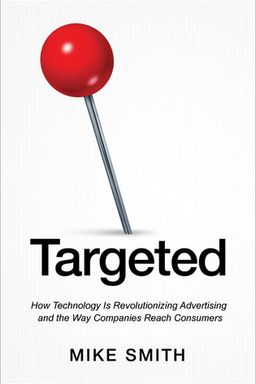
Have you ever wondered why a product you casually searched for seems to follow you everywhere online? In Targeted: How Technology Is Revolutionizing Advertising and the Way Companies Reach Consumers, Mike Smith unpacks the dazzling—and unsettling—world that makes this possible. Smith argues that digital advertising has not just changed how companies sell; it has transformed the power dynamic between technology, marketing, and human privacy.
Smith contends that advertising in the Internet era is no longer about broadcasting to masses—it's about data-driven targeting, where every click, search, and swipe defines your value as a consumer. This revolution, fueled by real-time systems and complex data exchanges, is reshaping both commerce and culture. Yet it comes with a price: the erosion of privacy and the rise of algorithmic surveillance. Understanding this balance of convenience, control, and vulnerability is key to grasping how digital marketing works today—and what it could mean for the future of technology and society.
The Evolution from Mass Media to the Individual
Traditional advertising aimed at crowds—selling to millions through print, radio, or TV. Digital technology flipped this logic. Now, your device’s IP address and browsing behavior define your identity, letting advertisers customize messages to individuals. Smith illustrates this shift by tracing how search engines like Google and platforms like Facebook turned human attention into a monetized commodity. Every banner, click, and cookie becomes a data point that feeds the global advertising ecosystem.
This new model shattered old structures. Advertisers who once relied on fixed campaigns now bid—in real time—for your eyeballs. Publishers who once brokered ad space now depend on algorithmic exchanges and intermediaries. The result is an ecosystem bursting with complexity but driven by efficiency, where milliseconds decide the value of an impression.
Technology's Double-Edged Sword
Smith draws a comparison between Jeremy Bentham’s “Panopticon,” a theoretical prison under constant surveillance, and today’s Internet users. In the digital age, we voluntarily enter Bentham’s dome, trading privacy for convenience and personalization. Every app and cookie acts like a microscope capturing behaviors invisible to us but invaluable to marketers. The author shows how this form of surveillance, once seen as dystopian, has become routine—even desirable—because it delivers what users crave: relevance, speed, and affordability.
Yet behind this convenience lurks a cultural transformation. Smith argues that technology doesn’t merely change society—it redefines what we consider private, fair, or ethical. Laws and norms, he observes, lag far behind the pace of innovation. While data fuels efficiency, it also erodes our power to control how that data is used. The challenge is no longer technological—it’s moral and regulatory.
From Auctions to Algorithms: The New Advertising Economy
Central to the book is the notion of real-time bidding (RTB), where ads are bought and sold in fractions of a second. Smith compares online auctions to stock trades, describing how companies compete in microseconds to serve ads to specific users. This system turned digital advertising into one of the most sophisticated marketplaces ever invented—simultaneously democratic and exploitative. Through vivid examples, such as GoTo.com’s early search auctions or Yahoo!’s acquisition of Right Media, Smith explains how automation and data transformed ad placement from human negotiation into algorithmic competition.
In this world, both advertiser and consumer are traded commodities. For advertisers, data provides pinpoint targeting. For consumers, it offers personalization at the cost of surveillance. The book captures this paradox: technology serves our desires but also shapes them, creating dependency while mining intimacy.
The Broader Stakes for Society
Smith situates this transformation within broader social questions. What happens when every interaction becomes monetizable? When privacy can be bought, sold, or breached? He highlights the rise of privacy advocates, the failures of existing regulations, and the moral gap between what technology can do and what society should allow. Through examples such as Latanya Sweeney’s reidentification experiments and John Taysom’s “Three Is a Crowd” concept, Smith proposes ways to restore balance—like anonymizing data or clustering users to preserve individuality.
Ultimately, Targeted invites you to reconsider your digital life. Every “free” service exacts a hidden toll: your data, your attention, and your autonomy. Smith’s central message is clear—technology revolutionized advertising, but it also targeted us. Understanding this system isn’t just for marketers; it’s for anyone living, working, or consuming in the digital age.