
Idea 1
The Challenge of Understanding Strangers
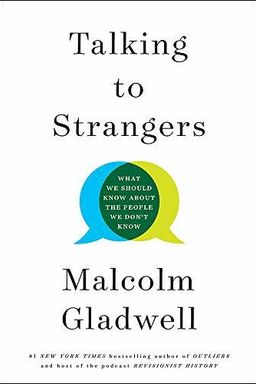
Why do otherwise intelligent people so often misread the intentions of strangers? In Talking to Strangers, Malcolm Gladwell explores this puzzle through vivid stories—from Cortés and Montezuma’s fatal meeting to Amanda Knox’s wrongful conviction and the tragedy of Sandra Bland. His central claim is unsettling: your brain is designed to cooperate, not to detect deception. You default to truth, overtrust transparency, and misread signals across cultural and social divides. When these evolved instincts meet the complex modern world, disaster can follow.
The Architecture of Misunderstanding
Gladwell structures the book around three deeply human limitations. First, you assume honesty until proven otherwise (Levine’s “truth-default theory”). Second, you believe demeanor is a reliable signal of inner emotion—the “Friends fallacy.” And third, you forget that behavior is coupled to context—change the setting and the same person acts differently. These three mechanisms—truth-default, transparency illusion, and coupling—interact whenever you meet a stranger, often with disastrous results.
The historical meeting between Hernán Cortés and Montezuma dramatizes this. Each man interpreted the other through his own cultural code. Montezuma’s ceremonious humility meant reverence; Cortés read it as surrender. Their mutual misreadings led directly to the fall of the Aztec empire. This archetypal collision echoes through modern life in courtrooms, boardrooms, and police stops.
Trust and the Limits of Skepticism
You function in society by assuming others tell the truth. Psychologist Tim Levine argues that this “truth-default” is adaptive: constant suspicion would paralyze commerce, friendship, and cooperation. But the same instinct blinds you to fraudsters like Bernie Madoff, spies like Ana Montes, and criminals whom institutions fail to detect until too late. Gladwell’s stories of the CIA being duped by double agents (exposed by defector Florentino Aspillaga) or Chamberlain’s faith in Hitler remind you that trust is both social glue and systemic vulnerability.
The solution is not to become paranoid. A world without trust would collapse under suspicion. But Gladwell proposes a middle ground: maintain the default but calibrate your triggers—those thresholds that move you from belief to doubt—so that institutions catch deception earlier without eroding the social fabric.
The Myth of Transparency
Television sitcoms, especially Friends, teach you that emotions are legible on the face. In reality, people display feelings idiosyncratically. Gladwell calls this the “Friends fallacy”: the illusion that faces and demeanor transparently reveal truth. Judges misjudge defendants by how they look in court; interviewers mistake nervousness for guilt or charisma for competence. Cross-cultural research (Spanish vs. Trobriand Island children) shows smiles, frowns, or grimaces mean different things in different societies. Even within one culture, few people visibly express the textbook “surprise face.”
When you meet strangers—like police officers meeting citizens, or managers evaluating candidates—you overvalue surface cues and ignore ambiguous or contradictory evidence. Gladwell’s argument is not against intuition but against overconfidence. The lesson is epistemic humility: your intuitive reads are often wrong.
Mismatches, Misreadings, and Institutional Traps
Amanda Knox’s story crystallizes how mismatches destroy lives. Knox’s awkward demeanor, jokes, and seeming composure after her roommate’s murder clashed with Italian expectations of grief. Investigators saw guilt where there was cultural and personality difference. The same bias threads through courtroom judgments, job interviews, and political negotiations. Gladwell coins the “mismatch problem”: when demeanor and inner state diverge, truth-default combined with transparency bias guarantees failure.
Even meeting someone in person—the supposedly best way to form judgment—can backfire. Neville Chamberlain’s warm meetings with Hitler made him more credulous, while Winston Churchill, who never met Hitler, read him more accurately. In both bail hearings and diplomacy, added sensory data create noise rather than signal.
Alcohol, Consent, and the Fragility of Context
Later chapters move from global politics to intimate tragedy. Gladwell reinterprets campus sexual assaults not just as moral breakdowns but as communicative and neurological failures amplified by environment. Claude Steele’s “alcohol myopia” theory shows how drinking narrows focus to immediate cues, while blackouts (caused by hippocampal shutdown around BAC 0.15) obliterate memory. When intoxicated strangers interact in ambiguous contexts, neither their judgment nor recall can be trusted. Cases like Brock Turner at Stanford and Benjamin Bree in England expose a legal system struggling with biological reality.
By comparing the chaotic American party scene with the ritualized drinking of Bolivia’s Camba people, Gladwell reinforces coupling: behavior is inseparable from context. Alcohol itself does not cause assault; its effects depend on the social environment that supplies meaning to disinhibition. A safe culture designs contexts that limit myopia’s harm.
Coupling and System Design
The idea of coupling extends beyond drink and desire. Suicide rates plummeted in Britain after lethal “town gas” was replaced with natural gas—proof that impulse and method are coupled. Similar logic improved public safety at the Golden Gate Bridge: barriers prevent deaths not by moral persuasion but by removing an immediate means. For police reform, criminologists Lawrence Sherman and David Weisburd show that hot-spot policing works precisely because crime, too, is coupled to place. When such tactics spread indiscriminately, as with Sandra Bland’s stop in Prairie View, coupling turns dangerous.
Toward a More Intelligent Trust
Gladwell closes with moral and practical balance. Universal suspicion breeds paranoia; blind trust breeds catastrophe. Society needs “Holy Fools” like Harry Markopolos—people willing to challenge the truth-default—without descending into Angleton-style witch hunts. Institutional design must create channels for doubt and accountability while honoring the social necessity of trust.
The deeper message
Understanding strangers is not a matter of better intuition but better structure: humility, clearer contexts, calibrated optimism, and institutional safeguards. Misunderstanding is inevitable, but its consequences need not be fatal if you respect the fragility of truth between unfamiliar minds.