
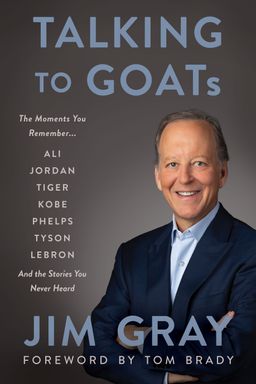
Talking to GOATs cover

Talking to GOATs

by Jim Gray

In Talking to GOATs, Jim Gray takes readers behind the scenes of sports'' most iconic moments, sharing untold stories from his four-decade career. From Muhammad Ali to Tom Brady, Gray captures the essence of greatness and the human spirit, making this a must-read for sports enthusiasts and aspiring journalists alike.

The Craft of Listening and Truth

How do you earn trust in a world built on noise? In Jim Gray: Talking to GOATs, veteran sports journalist Jim Gray shows that listening—active, disciplined, and courageous—is the foundation of truth in media. His career, spanning Muhammad Ali to Tom Brady, revolves around the belief that the best journalism isn't about microphones or fame; it's about presence, persistence, and respect. You discover that genuine listening is not passive—it’s a skill forged through curiosity, preparation, and moral balance.

Gray uses his own experiences—from interviewing a young Muhammad Ali as an intern to questioning Mike Tyson minutes after the infamous ear bite—to illustrate the art of uncovering authenticity under pressure. What ties these moments together is his refusal to settle for surface answers. Listening leads him deeper, revealing vulnerability in legends and reminding you that truth arises not from confrontation but from earned trust.

Listening as an Active Art

Gray doesn’t treat interviews as polite exchanges; he treats them as investigations of character. Preparation transforms curiosity into insight. When Tom Brady called him "Scratchy," it signified Gray’s persistence—he kept asking probing follow-ups until something real emerged. Listening first, following up second, and protecting trust always—this triad defines Gray’s craft. Instead of exploiting vulnerability, he honors it, a principle he practiced with Ali, Tyson, and Brady alike.

If you want depth, you must know your subject intimately. Gray’s example teaches you to study history, observe pattern, and build empathy. His first meeting with Ali, where the champion teased him as “a local Howard Cosell,” showed how awareness of context bridges knowledge gaps. Active listening transforms facts into connection; it builds the credibility that opens closed doors in competitive fields (note: similar to Ori and Rom Brafman’s “click moments” in Click).

Integrity and Timing Under Pressure

Listening matters even in chaos. During Tyson–Holyfield’s “Bite Fight,” Gray faced physical danger, yet maintained composure. His courage to ask “Why did you do that?” live on air created television history. He proves that truth can survive only when journalists balance empathy with accountability. Gray’s Tyson interview, his confrontation with Pete Rose, and his restraint during Marion Jones’s scandal reveal that timing shapes ethics. Sometimes you press; sometimes you wait; both serve truth.

He reminds you that responsibility in reporting requires both speed and conscience. In moments like the Richard Jewell case, rushing to judgment destroyed lives. Gray’s memoir urges you to privilege proof over speculation, compassion over clicks. Listening builds not just stories but justice.

Relationships and Reputation

Gray’s longevity also comes from loyalty—a web of relationships built through reciprocity. He shows that professional trust compounds like interest. His network—Marvin Webster to Julius Erving to Chuck Daly to Al Davis to Brady—is a quiet map of credibility. These bonds gave him unmatched access: Ali invited him to Olympic history; Daly entrusted him with private insight; Davis opened league meetings. Reputation becomes currency, and listening is how you spend it wisely.

Principle and the Moral Thread

At core, Gray’s philosophy echoes Ali’s conviction—that principle often costs comfort but defines legacy. When the world doubted Ali’s antiwar stand, Gray admired his clarity. Reporting, like activism, is moral work. Journalists, athletes, and fans face choices between popularity and integrity. Gray shows you that truth isn’t free—it demands courage in public, restraint in crisis, and compassion in aftermath.

Across decades, Gray turns listening into moral craftsmanship. He models journalistic humility as essential to capturing authentic human stories. What emerges is not only sports history but civic wisdom: when you listen, you illuminate people, not just headlines. The microphone becomes a mirror—and how well you hold that mirror determines whether others see truth or distortion.

Key takeaway

If you want authenticity, start by listening for it. Gray’s life demonstrates that relationships, ethics, and courage—not speed or celebrity—define lasting journalism. The craft of listening is ultimately the art of human understanding.


Reporting in Chaos

Chaos tests integrity. The Tyson–Holyfield rematch, one of the most chaotic nights in sports, shows how preparation and courage make journalism credible. Gray’s Emmy-winning post-fight interview shows that true composure isn’t silence—it’s calm persistence. You learn to prioritize truth while surrounded by spectacle.

Preparation Before Action

Gray describes how every second of that night depended on teamwork—producer David Dinkins Jr., cameraman Gene Samuels, and Gray himself navigating shouting crowds, aggressive management, and rushes of security personnel. Preparation allowed courage to function; Gray didn’t guess questions, he built them from knowledge. In crises, preparation becomes ethics—it keeps you asking responsibly even as emotions surge.

Composure and Access

Following Tyson immediately after his disqualification required risk. Gray’s on-air composure, asking hard follow-ups about the bite, made the difference between rumor and clarity. His professionalism revealed how journalists transform chaos into record. If you report under pressure, his lesson applies: stay centered, respect the subject’s volatility, and let truth—not sensation—drive the moment.

The Broader Lesson

Gray sees chaos as a crucible for trust. Reporters who protect access while pursuing explanation preserve both their careers and public understanding. Courage doesn’t mean aggression—it means steadiness in uncertainty. Tyson’s anger produced spectacle; Gray’s patience preserved journalism. You learn that conflict’s heat can reveal character, both for the athlete and the journalist watching him.

Compact rule

In crisis, preparation and humanity combine. If you can keep listening amid noise, you can turn a scandal into truth instead of chaos.


Principle and Legacy: Muhammad Ali

Muhammad Ali stands as Gray’s lighthouse—the figure who taught him that integrity outweighs popularity. Their first meeting at Denver’s airport turned a student reporter into a lifelong witness of courage. Ali’s humor (“You sound like a local Howard Cosell”) began a mentorship that showed Gray how morality anchors greatness.

What Ali Represented

Ali’s refusal to fight in Vietnam, his embrace of Islam, and his willingness to lose everything for principle demonstrated power beyond fists. Gray studied not just his athletic brilliance but his civic courage. Reporting on him taught Gray that journalism should illuminate conviction, not just competition. Ali’s legacy informed how Gray later treated athletes under criticism—Marion Jones, Tom Brady, Pete Rose—with moral empathy rather than spectacle.

Moments of Meaning

When Ali lit the Olympic torch in Atlanta, Gray was there watching trembling hands create global symbolism. That image represented reconciliation and the endurance of moral clarity. Gray later gathered Olympians around Ali in a final roundtable—connecting generations in reverence and continuity. Those scenes taught him, and you, that human dignity outlives applause.

Lessons on Moral Reporting

Ali’s centering of conscience over career reshaped Gray’s journalism. In a world of speed and spectacle, principle becomes anchor. You learn that moral leadership in sport transcends wins; it constructs civic memory. Covering Ali turned Gray’s microphone into testimony, proving that truth spoken with empathy can echo far beyond arenas.

Ali’s enduring lesson

Principle sometimes alienates but ultimately elevates. Both athlete and journalist must serve truth, not comfort.


Networks of Trust

Behind every story lies a network. Gray’s “World Wide Web” chapters show how relationships—carefully built, maintained, and honored—create the foundation for lasting access. Trust is the professional currency you earn, not demand.

Reciprocal Relationships

Gray emphasizes reciprocity—help others, protect discretion, and return favors. He began as a ball boy meeting Marvin Webster, whose kindness led him to Julius Erving and the professional basketball world. Every connection was cultivated, not exploited. Jerry Richardson’s reminder that “true friendship is reciprocal” applies to every door Gray opened—from Chuck Daly introducing him to his wife to Al Davis giving him behind-the-scenes access.

Credibility and Access

Trust translates directly into professional opportunity. Davis, Daly, and Erving provided Gray insights other journalists could only speculate about because he earned belief that he would protect confidences. In today’s era of instant leaks, Gray’s philosophy—networks are gardens, not vending machines—feels revolutionary. You nurture bonds through loyalty and ethical conduct, not gossip.

The Professional Lesson

For you, Gray’s map—Webster to Erving to Daly to Davis to Brady—illustrates the power of reliability. If you want a career that lasts, invest in the unseen work: consistent respect, quiet help, and disciplined confidentiality. Those actions build networks that later shield you when controversies or crises arise.

Takeaway

Loyalty isn’t sentiment—it’s structure. Gray teaches that professional webs, built patiently, turn into safety nets when storms hit.


Trust and Accountability in Sport

Gray’s reporting on scandals—from steroids to Deflategate—shows that trust is sport’s most fragile currency. Whether it’s Ben Johnson’s disqualification or Tom Brady’s public trial by media, integrity and investigation stand as twin pillars of fair coverage.

Doping and its Damage

Gray walked through the evolution of deception: Ben Johnson in Seoul, Marion Jones in Sydney, Barry Bonds and MLB’s steroid era. Each case exposes institutional failure—organizations ignoring enforcement until culture fractures. In hindsight, Gray’s conversations with Bud Selig underline that authority without transparency erodes belief. Reporting these events teaches you accountability is systemic; journalism must hold institutions as responsible as individuals.

Media Missteps and Consequences

Deflategate offers a modern parallel. A single inaccurate ESPN report amplified into national judgment. Gray reminds you that media velocity magnifies error: one mistaken claim becomes the narrative. Richard Jewell’s case during the Olympic bombing demonstrates the same danger—speed without verification destroys lives. Both stories warn journalists and audiences alike: skepticism is moral, not cynical.

The Human Dimension

In Brady’s case, Gray highlights personal cost—his mother’s battle with cancer amid public vilification. Reporting responsibility requires seeing lives, not symbols. Ethical journalism understands that reputations are human property. Institutions can withstand inquiries; families often cannot. Your takeaway is clear: precision and empathy belong together.

Moral takeaway

Speed is seductive but destructive. Gray teaches that being right later is better than being famous first.


Athlete Control and Modern Media

LeBron James’s The Decision with Jim Gray in 2010 marks a turning point in athlete autonomy. Gray frames it as the moment when players seized control of their own narratives, bypassing traditional journalism. It also exposed the volatility of fan emotion and the risks of media spectacle.

Creation and Intent

Gray proposed the concept—broadcasting LeBron’s team choice live and donating the revenue to charity. The intention was noble; the execution flawed. Delayed timing and tone misjudgment incited outrage. Cleveland’s heartbreak turned empowerment into controversy, teaching you that narrative control changes power dynamics but must respect emotional context.

The Larger Movement

Despite backlash, “The Decision” birthed an era of athlete-driven media: Player’s Tribune platforms, direct social posts, and superteam formations. LeBron’s act normalized strategic storytelling from athletes themselves. Gray acknowledges his missteps—questions should have been faster—but defends the broader principle: transparency paired with charitable intent refines empowerment.

The Legacy

This moment mirrors Gray’s lifelong theme—media’s evolving balance between access and empathy. Athletes now influence institutions as much as journalists once did. For you, it reveals that communication power is shifting. The lesson isn’t to resist change but to approach it ethically, ensuring humanity isn’t lost amid control.

Practical lesson

Control of narrative brings freedom—and responsibility. Empathy toward audience feelings makes empowerment sustainable.


Greatness, Perfection, and Human Cost

Gray studies perfection across figures—Don Shula’s undefeated Dolphins, Michael Phelps’s unparalleled medals, and Floyd Mayweather’s 50–0 record—to expose the human and psychological toll behind flawless achievement.

Different Shapes of Perfection

For Shula, perfection meant collective immortality. He guarded the Dolphins’ 1972 record like sacred relic; one catch in 2007 preserved it against Brady’s near-perfect Patriots. For Mayweather, perfection meant unbeaten mastery—an economic as well as athletic empire. His “Money” persona monetized the zero, turning victory into financial independence. Phelps’s perfection carried inner demons—anxiety, addiction, suicidal lows—showing that success without balance becomes burden.

The Common Thread

Perfection demands control, and control demands isolation. Gray’s portraits remind you that glory always exacts price: mental health, relationships, and identity strain under the expectation of flawless performance. Whether team or individual, perfection’s illusion obscures humanity. You learn that true longevity, like Brady’s example elsewhere in the book, relies on process and humility, not just result.

Core insight

Perfection is rarely whole. In Gray’s lens, greatness includes loss, vulnerability, and perseverance as much as winning streaks.


Sport, Leadership, and the World

Gray’s conversations with presidents and world figures reveal sports as moral theater—a universal language of character and values. Leaders from Obama to Mandela use sport to embody principles of unity, reconciliation, and civic courage.

Sport as Civic Symbol

Obama saw sport as cultural glue, celebrating teamwork as American metaphor. Mandela turned rugby into reconciliation; Gorbachev used political reform as a competitive sacrifice for unity. Gray positions these interviews as reminders that athletic discipline mirrors governance—strategy, patience, and moral risk.

Humanizing Power

His anecdotes—Clinton’s golf humor, Reagan’s typed letter, Ford’s tournament—strip leaders of grandeur, showing them as fans. Even Vin Scully’s Medal of Freedom story reveals how sport can honor civic storytelling. Gray teaches that athletic excellence and political virtue both depend on humility and continuity.

Lesson

Sport connects civic ideals and personal humanity. Watching a game, you are also watching the rhythms of leadership itself.


Conflict, Redemption, and Change

Gray’s accounts of Kobe Bryant’s evolution and the Malice at the Palace incident explore tension and transformation. They remind you that greatness often emerges through conflict and reflection.

Kobe and the Power of Voice

Gray’s controversial 2003 interview, where Kobe criticized Shaq, captures the risks of honesty. It ignited team turmoil and personal strain, but later reconciliation revealed growth. Reporting such candor requires both integrity and warning—a fine line Gray respected by informing Shaq beforehand. Kobe’s relentless drive and tragic death show how ambition and emotion coexist in the pursuit of excellence.

Chaos and Redemption

The 2004 Pacers–Pistons brawl demonstrates collective breakdown. Gray witnessed panic and violence that reshaped league rules. Yet Ron Artest’s later transformation—mental health advocacy and charity—proves human growth beyond infamy. These contrasts embody Gray’s recurring theme: transparency and redemption complete the story arc.

Enduring insight

Conflict is inevitable; redemption is earned. Gray’s stories show that honesty can repair what chaos breaks.


Global Expansion and Collective Excellence

The Dream Team of 1992 embodies how extraordinary collaboration reshapes an entire sport’s ecosystem. Gray shows how assembling excellence—Jordan, Magic, Bird, and Daly’s leadership—transformed basketball into global language.

Managing Genius

Chuck Daly managed egos with tactical empathy, turning crisis into chemistry. Jordan’s and Magic’s rivalry fueled competition but found balance under Daly’s credibility (note: parallels Jackson’s triangle management later). Gray emphasizes this unseen management as critical to global success: individual brilliance coordinated into collective story.

Impact and Legacy

Gray compares the phenomenon to Beatlemania—crowds worldwide seeing American basketball as art. The Dream Team’s showcase ignited international participation; decades later, NBA global rosters trace lineage to Barcelona 1992. You understand excellence as contagious communication: when skill meets exposure, it evolves into cultural export.

Universal conclusion

Collaboration magnifies genius. Gray’s Dream Team narrative proves that greatness shared globally multiplies impact beyond medals.

Dig Deeper

Get personalized prompts to apply these lessons to your life and deepen your understanding.

Go Deeper

Get the Full Experience

Download Insight Books for AI-powered reflections, quizzes, and more.