
Idea 1
Bridging the Divide Through Strategic Dialogue
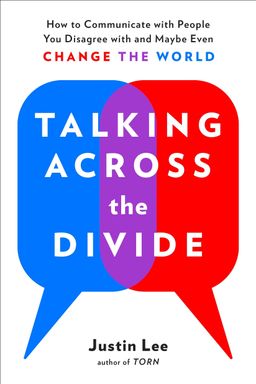
Why does it seem so impossible to talk to people who see the world differently from you? In Talking Across the Divide, Justin Lee argues that society’s polarization isn’t just the result of clashing opinions—it’s a failure of communication fueled by mistrust, misinformation, and emotional defenses. Lee contends that meaningful progress on any issue—from politics to religion to identity—depends on developing the skill of strategic dialogue: a thoughtful, empathetic approach to conversation that dismantles psychological barriers and builds real understanding.
Drawing from decades of experience working at the intersection of faith, sexuality, and social issues, Lee explains how echo chambers, confirmation bias, and “team loyalty” have corroded our ability to engage across lines of difference. The book invites readers to practice a kind of bridge-building communication that prioritizes listening, curiosity, and respect rather than winning arguments. It’s not about vague calls for ‘conversation’; it’s a structured framework based on psychology, storytelling, and negotiation theory.
A World Trapped in Echo Chambers
Lee opens with a portrait of modern America fractured by ideological bubbles. Technology reinforces our biases through algorithms that feed us content we already agree with—a phenomenon Eli Pariser called the “filter bubble.” Whether through Facebook feeds or partisan news channels, we now live in customized realities where our version of truth feels self-evident, and disagreement feels like moral failure. These silos don’t just shape what we think—they make it harder to empathize with others who’ve been formed by different informational ecosystems.
The consequences are everywhere: families torn apart over politics, friendships lost over identity debates, and communities locked in mutual suspicion. Lee’s own story illustrates the cost of this division. He grew up in a conservative evangelical home, later recognized himself as gay, and found that both his church and the LGBTQ community misunderstood each other profoundly. That personal bridge—between two sides that rarely converse—became his laboratory for figuring out how people can actually talk and listen across divides.
The Case for a Fourth Tool
Most people, Lee notes, rely on three primitive tools for handling disagreement: fight (argue or attack), flight (avoid the topic), or compromise (split the difference). But when the issue touches deep values or identities, none of these work. A fourth tool is needed: strategic dialogue. This tool doesn’t abandon conviction, but reframes persuasion as a long-term process built on empathy, trust, and curiosity. It treats persuasion like gardening rather than warfare—you prepare the ground, plant seeds, and nurture them over time.
Strategic dialogue is founded on four basic principles: everyone thinks they’re right; everyone wants to change others’ minds; debates entrench rather than enlighten; and dialogue is not weakness but a deliberate form of action. It merges insights from social psychology, conflict mediation, and narrative therapy (similar to works like Crucial Conversations and Marshall Rosenberg’s Nonviolent Communication), showing that effective persuasion happens when emotional defenses are lowered and trust is built.
The Anatomy of Change
Over the course of the book, Lee identifies five barriers that block honest communication: ego protection (no one wants to feel stupid), team loyalty (we trust our tribe), comfort (we prefer the familiar), misinformation, and worldview protection (we defend core beliefs tied to identity). Each barrier must be approached differently—with listening, storytelling, fact-checking, or reframing—because people cling to beliefs that sustain their sense of self. You can’t uproot someone’s entire worldview; instead, you must find a small branch where change feels safe.
From Understanding to Action
Ultimately, Lee’s mission is not just to create pleasant conversation but to inspire transformation. His framework—Prepare, Dialogue, Reflect—guides readers through every stage of change: researching the other side, listening strategically, sharing authentic personal stories, identifying shared interests, and making a specific “ask” that respects the other’s worldview. The result isn’t instant conversion but the beginning of mutual understanding—what he calls “urgent optimism,” the belief that even small dialogues can ripple out to heal families, communities, and nations. In a world that rewards outrage, Talking Across the Divide asks us to rediscover the quiet courage of human connection.