
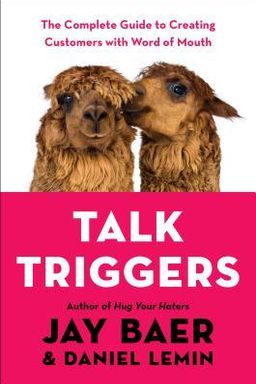
Talk Triggers cover

Talk Triggers

by Jay Baer and Daniel Lemin

Talk Triggers reveals the secret to generating powerful word-of-mouth marketing through strategic customer interactions. By crafting unique talk triggers, businesses can encourage organic conversations that enhance brand visibility and drive customer loyalty, all without the high costs of traditional advertising.

Why Word-of-Mouth Marketing Is Your Brand’s Secret Weapon

Have you ever told a friend about a restaurant simply because it amazed you in some small but memorable way? In Talk Triggers, Jay Baer and Daniel Lemin argue that these moments—what they call “talk triggers”—are the backbone of true marketing success. They contend that while advertising shouts at customers, word of mouth whispers with trust and authenticity—and that whisper spreads further. Yet few organizations intentionally build experiences worth talking about. The authors’ mission is clear: to transform random chatter into a strategic engine that grows your brand organically.

The Power of Talkable Moments

The book opens with the example of The Cheesecake Factory’s enormous, 5,940-word menu. You might laugh at its absurdity, but that gigantic menu is why customers discuss the restaurant endlessly—it’s remarkable enough to inspire stories. The menu itself functions as “free advertising,” generating customer buzz that replaces traditional marketing. The authors use this case to illustrate how a simple operational decision can create powerful word of mouth. It’s not about gimmicks or slogans; it’s about designing an experience that feels worth sharing.

As Baer and Lemin point out, word of mouth drives 19% of all consumer purchases and upwards of $10 trillion in economic activity annually. And yet, fewer than 1% of businesses have a deliberate plan for it. Most hope for organic referrals without realizing they can design them. These talk triggers invite effortless storytelling—a customer’s way of feeling clever, connected, and delighted to share your story.

Turning Customers into Volunteer Marketers

The authors argue that the real winners in business intentionally create experiences that give customers conversational fuel. These aren’t stunts or tricks; they’re moments so intertwined with your operations that they happen for every customer, every time. DoubleTree by Hilton’s warm chocolate chip cookie at check-in, for instance, is a trigger that turns weary travelers into storytellers. It’s repeatable, relevant, and enduring—three pillars of the authors’ framework.

Unlike fleeting marketing campaigns, talk triggers form part of a company’s DNA. They remind customers why a brand stands out. As Ted Wright, author of Fizz (who wrote the foreword), notes: recommendations only work when they’re authentic. Baer and Lemin build on this idea, showcasing brands that create genuine experiences—not gimmicks—for real people.

Why Word of Mouth Beats Advertising

The book contrasts word-of-mouth marketing with traditional advertising. Ads are transactional—companies buy attention. Word of mouth is relational—it’s earned through trust. In a world where 83% of people trust friends but only 52% trust brands (according to Edelman research quoted in the book), creating talk triggers may be the only sustainable way to grow.

Core Philosophy

Word of mouth is the most credible, cost-effective, and underutilized form of marketing. A talk trigger operationalizes it—turning everyday customer experiences into conversations that clone your best customers.

The 4-5-6 System

The authors’ entire process revolves around their “4-5-6” framework: four criteria every talk trigger must meet, five types of triggers to choose from, and six steps to create them in your organization. This structure transforms abstract marketing theory into a replicable roadmap. Every company—from a local locksmith to a global hotel chain—can use it.

Baer and Lemin not only explain the mechanics of word of mouth but also teach the mindset shift required: seeing customer interactions as stories waiting to be told. They blend research (Audience Audit’s surveys), behavioral psychology (how humans share stories), and case studies (Cheesecake Factory, Amazon, Penn & Teller, and more) to form a practical guide.

Why These Ideas Matter

In an age of declining trust and endless noise, customers crave brands that act like humans. Talk triggers make companies more relatable, give customers ownership in their stories, and differentiate them in a “sea of sameness.” As the authors proclaim repeatedly, “Same is lame.” Doing something talkable isn’t just marketing—it’s survival. This book shows you how to create moments people can’t help but discuss, because when you make your business worthy of remark, advertisements become unnecessary.


The Four Criteria of a Successful Talk Trigger

Baer and Lemin insist that every effective talk trigger must meet four universal criteria: remarkable, relevant, reasonable, and repeatable. These requirements form the foundation for crafting word-of-mouth experiences that stick.

Remarkable: Worth Talking About

Something is remarkable if it’s ‘worthy of remark.’ This goes beyond being good—it must be extraordinary enough that customers want to tell others. Umpqua Bank’s silver telephone, which connects any customer directly to the CEO, exemplifies this. It’s unexpected, memorable, and gutsy. Similarly, locksmith Jay Sofer of Lockbusters turned his tips into donations for an animal shelter, creating a heartwarming trigger that inspired viral buzz. (In Different, Youngme Moon similarly warns that operational competence alone never makes you memorable—you must defy competition.)

Relevant: Fits the Brand

A talk trigger must align with the core of the brand. Holiday World’s free beverages amplify its family-oriented promise of generosity, while FreshBooks’ customer dinners fit its mission to serve self-employed entrepreneurs who crave connection. Relevance ensures talk triggers don’t feel gimmicky—like a random iPad giveaway that has nothing to do with your product.

Reasonable: Believable and Trustworthy

The trigger must be bold enough to cause conversation but still believable. When Oprah famously gave away 276 cars, it was “too grand” for normal brands—it provoked awe but wasn’t replicable. Graduate Hotels redesigned its room keys using celebrity alumni IDs, and Five Guys piles extra fries in every bag—simple, talkable gestures customers trust. Overpromising, as shown when Oprah’s recipients later faced tax bills, damages credibility.

Repeatable: Every Customer, Every Time

Talk triggers can’t be random acts of kindness. “Surprise and delight” stunts—like a steak delivered to an airport via Twitter—may go viral briefly but lack durability. Penn & Teller’s strategy is the opposite: after every show, they personally meet audience members—every single attendee, every single performance. Consistency creates compounding conversation because customers trust that the experience is universal.

When your trigger is remarkable, relevant, reasonable, and repeatable, it becomes part of your operational identity. It’s not marketing; it’s what you do. And when done systematically, customers become your brand evangelists without ever seeing an ad.


The Five Types of Talk Triggers

All talk triggers, Baer and Lemin explain, fall into five archetypes—each a unique way of exceeding expectations. Whether you lead a startup or global brand, you can build conversation through one or more of these levers.

  • Talkable Empathy: Businesses that show rare kindness create memorable stories. Americollect changes debt collection’s tone by being “ridiculously nice,” treating every client with humanity. Oral surgeon Dr. Glenn Gorab calls new patients before appointments—a simple act of empathy that reduces lawsuits and builds word-of-mouth trust.
  • Talkable Usefulness: Provide unmatched utility. Air New Zealand’s “Skycouch” transforms cramped airplane rows into mini-beds, rewriting comfort standards. Spiceworks gives IT professionals free software and an online community—support so useful it fuels global advocacy.
  • Talkable Generosity: Give more than expected. Flanders Convention Center lets conference attendees access the adjacent Antwerp Zoo for free—talkable generosity that ripples across industries. Skip’s Kitchen offers a playful chance to win a free meal by picking a joker card, turning generosity into joyful spectacle.
  • Talkable Speed: Deliver service so swiftly it feels magical. Paragon Direct picks up clients’ cars, repairs them overnight, and returns them before morning. KLM’s staff chase down passengers in airports to return lost items before they realize they’re missing—talkable proactivity.
  • Talkable Attitude: Showcase distinctive personality. Tailor Kaleb Ryan embroiders witty messages inside suits; Uberflip uses bright-pink branding and quirky headbands; UberConference turns boring hold music into a hilarious self-aware country song. Attitude triggers create cultural affinity where humor meets brand voice.

Each category taps into human emotion. Empathy charms, usefulness helps, generosity delights, speed amazes, and attitude entertains. As Baer puts it, “Same is lame.” These triggers prove that being boldly different—yet true to your brand—sparks sustainable storytelling.


Creating Talk Triggers: The Six-Step Process

Baer and Lemin detail a methodical six-step process to transform inspiration into implementation. They call it a journey from instinct to intention—where ideas evolve into operations.

1. Gather Internal Insights

Form your “Triangle of Awesome”—a cross-functional team from marketing, sales, and customer service. This group mines data, anecdotes, and customer feedback for patterns in what delights or frustrates. FreshBooks, for example, empowered client service reps to act spontaneously, leading to flower deliveries for customers stood up on dates—gestures that seeded trigger ideas.

2. Get Close to Your Customers

You must experience your business as your customers do. Surveys help, but empathy matters more. Comcast’s service executive Tom Karinshak intentionally experiences worst-case customer journeys (like getting suspended accounts) to identify emotional pain points worth transforming. “Contact point innovation,” says Nicholas Webb (in What Customers Crave), happens where experience meets empathy.

3. Create Candidate Talk Triggers

Brainstorm multiple potential ideas and map each on the Complexity Map—measuring “impact versus difficulty.” Simple, high-impact ideas often win. Five Guys’ extra fries? Low complexity, high impact. Use the four R’s and five types as filters. Fear, budget, or measurement challenges will arise, but the authors urge persistence: start small to build buy-in.

4. Test and Measure

A trigger should appear in at least 10% of customer conversations during pilot tests, and 25% long term. Measure both online chatter and offline anecdotes. Use “always be listening” strategies via surveys, social analysis, or call logs. Importantly, avoid the “observer effect”—asking customers about the trigger too directly distorts results.

5. Expand and Turn On

If the test succeeds, roll it out broadly using the SEE framework: engage Stakeholders (partners, vendors), Employees (train and celebrate consistency), and the entire Enterprise (make it part of operations). Americollect’s kindness culture, for instance, is reflected in hiring, training, and internal rituals—not just in scripts.

6. Amplify

Use marketing to boost—not fabricate—conversation. Keep it simple, as Holiday World does with “free drinks for everyone, every day.” Create a “Because” statement explaining why you do it (“DoubleTree gives cookies because we want guests to feel welcome”). Encourage employees and customers to share the story genuinely—never force it.

This structured approach turns inspiration into action. Baer and Lemin emphasize patience—word of mouth blooms slowly but lasts longer than any ad campaign. A talk trigger is grown, not launched.


Keeping Talk Triggers Alive and Evolving

Even great triggers lose their conversational spark. Baer and Lemin call this the “chocolate problem”—when something delightful becomes normal. To sustain momentum, you must refresh, replace, or amplify.

Understanding Decline

Three forces sap a trigger’s power: competitors copy it (like Westin’s Heavenly Bed, later imitated by Hilton and Marriott), customers come to expect it (Zappos’ free shipping became standard), and societal norms shift (Enterprise’s “We’ll pick you up” lost impact in the Uber era). These realities demand evolution.

Revitalize or Replace

DoubleTree combats cookie fatigue by re-amplifying the story through campaigns like #SweetWelcome. L.L.Bean, in contrast, stumbled when changing its lifetime return policy—it lost goodwill because it failed to communicate empathy. The lesson? Update triggers carefully, preserving the emotional reason behind them.

Adding Sibling Triggers

Sometimes, add rather than replace. Holiday World expanded its free-drinks trigger by offering free sunscreen—another generous, relevant surprise that deepened its brand story. Dual triggers reinforce identity while preventing fatigue.

Embracing the “Same Is Lame” Imperative

At its heart, sustainability demands boldness. “Same is lame” becomes the mantra. In commoditized markets, sameness kills conversation. Refresh triggers that tell customers who you are—different, generous, or empathetic—not just what you sell. As Dixon, Toman, and DeLisi wrote in The Effortless Experience, commoditization is inevitable unless you actively build distinction. Baer urges: “Give yourself permission to do something different.”

Talk triggers are living systems. They should evolve as your customers and culture do. The greatest brands—DoubleTree, Holiday World, and Penn & Teller—reinforce theirs continually, reminding customers that even familiar experiences can still feel worth talking about.

Dig Deeper

Get personalized prompts to apply these lessons to your life and deepen your understanding.

Go Deeper

Get the Full Experience

Download Insight Books for AI-powered reflections, quizzes, and more.