
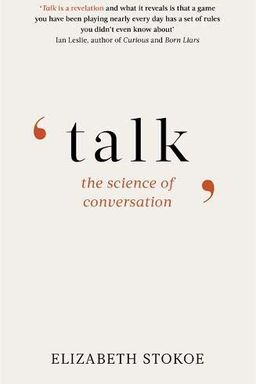
Talk cover

Talk

by Elizabeth Stokoe

Explore the hidden science behind everyday conversations with ''Talk'' by Elizabeth Stokoe. Uncover the structures and strategies that can make your interactions more effective, from turning ''no'' into ''yes'' to understanding the power of silence and word choice.

Speaking Desire: Unlocking Erotic Connection Through Words

Have you ever struggled to tell your partner exactly what you want—but wished you could? Elizabeth Cramer’s 131 Dirty Talk Examples: Learn How to Talk Dirty with These Simple Phrases That Drive Your Lover Wild explores the art of erotic communication, arguing that sexual fulfillment depends as much on what we say as what we do. She contends that dirty talk isn’t ‘dirty’ at all—it’s a natural extension of intimacy, vulnerability, and mutual trust. Through explicit but instructive examples, she reveals why and how voicing desire amplifies physical pleasure, deepens emotional bonds, and helps partners feel genuinely seen and desired.

Cramer begins with a simple truth: people crave to be desired. Whether through a whispered compliment or a raw confession of lust, words validate and excite. Yet, even in an oversharing age, talk about sexual expression stays taboo. Most couples never learn how to discuss fantasies without embarrassment. This silence often keeps even loving partners from full satisfaction. The author confronts this cultural gap directly—she teaches that speaking your desires isn’t shameful but empowering. Talking dirty, she says, is not about vulgarity; it’s about honesty and erotic clarity.

The Power of Erotic Speech

Cramer defines dirty talk as any verbalized expression of desire designed to enhance sexual intimacy. It’s a way of narrating passion as it happens—merging imagination, sensation, and connection. Both men and women benefit differently: men often respond to vocal cues, while women thrive on descriptive imagery. She compares this interplay of hearing and imagining to a kind of duet of senses. When one partner verbalizes fantasy, the other processes it both emotionally and physically, strengthening their shared experience. This, in turn, erases self-consciousness and fuels confidence.

Language as Erotic Mirror

According to Cramer, words serve as mirrors—what you say tells your partner who they are in your eyes. Saying “you’re amazing” or “you drive me crazy” isn’t trivial; it reassures them that they are desired exactly as they are. Many insecurities stem from silence in the bedroom. Dirty talk replaces uncertainty with affirmation. When you tell your partner, “I love how you move,” you’re offering emotional safety and erotic permission simultaneously. This blend of validation and desire can even transform awkwardness into excitement.

Breaking the Taboo

Cramer argues that discomfort around sexual language isn’t innate—it’s social conditioning. We can joke about sex, but rarely discuss its mechanics of communication. She compares this irony to a world that uses sex to sell products yet silences genuine exploration. By normalizing erotic speech, couples reclaim authenticity. The taboo itself becomes thrilling rather than shameful: “I’m saying these things aloud, and it’s okay,” as she describes. That tension—between private confession and shared experience—creates the heady emotional charge that makes dirty talk so intoxicating.

Learning the Craft

The book blends guidance with practice. Cramer offers 131 examples ranging from softcore (“I want you”) to hardcore (“you love it when I fuck you hard, don’t you?”). While explicitly phrased, her goal isn’t shock, but demonstration. She shows how phrasing should shift with timing—before, during, or after sex—and how expression must suit your partner’s comfort level. She also stresses grammar and tone: wrong tenses or awkward delivery can ruin flow. Dirty talk, she insists, works best when it feels natural. It’s not theater but communication—performed not for effect but for connection.

Why It Matters

At its heart, Dirty Talk Examples is about emotional literacy. Sexual communication mirrors broader relationship health. If you can’t tell your partner what you want in bed, chances are you struggle to voice other needs too. Cramer reframes erotic talk as a form of caring honesty—a language of intimacy that breaks patterns of insecurity and closes emotional gaps. As she reminds readers, if you can’t talk openly with someone about your body, you’re not as close as you could be. This makes her book not just a sexual manual but a relationship guide rooted in openness and trust.

The Journey Ahead

Across its chapters, Cramer helps readers dismantle shame, understand gendered communication differences, learn practical ways to begin, and finally craft their own style of verbal eroticism. You’ll explore why dirty talk is erotic, how to start without fear, what to say and when to say it, and how to adapt it to your partner’s preferences. By the book’s end, she assures you that there’s no “right” way to talk dirty—only the way that feels right between you and your partner. Whether whispered in bed or typed in a playful message, words of desire are bridges to deeper pleasure. And as Cramer argues, learning to use them confidently may be one of the most transformative acts of intimacy you’ll ever undertake.


Why Dirty Talk Is So Erotic

Cramer insists that what we call “dirty talk” is really emotional openness disguised as taboo. It’s erotic not just because of the sexual words involved but because of what those words do psychologically—they turn desire into dialogue. When a lover verbalizes fantasies, they share a secret world normally hidden between thoughts and sensations. This act of sharing transforms two bodies into one mind’s rhythm, establishing empathy and trust through language.

Taboo and Thrill

Dirty talk taps into the forbidden. Cramer notes that our culture’s tension—seeing sex everywhere yet rarely hearing it named—creates the exact thrill that makes erotic words powerful. When you speak what’s socially censored, it heightens excitement: you’re breaking the rules, but safely, within consent. That mix of vulnerability and rebellion generates electric intimacy. She writes that the “I can’t believe I just said that” moment turns ordinary passion into extraordinary connection.

Gendered Responses

Men often react to verbal stimulation through sounds—moaned phrases, whispered encouragements—while women lean into imagination. Cramer compares this division to how stories and imagery ignite fantasy for women whereas directive, assertive tones often excite men. Couples who understand and play to these patterns can refine their communication, ensuring both partners feel fully seen and engaged. Dirty talk isn’t uniform; it’s tailored collaboration shaped by how each brain receives pleasure.

Confidence and Validation

One underestimated effect of dirty talk, she argues, is confidence building. Telling someone what you love about their body or actions assures them they’re doing something right. This cuts through anxieties—about body image, technique, or performance. Words of affirmation during sex serve as verbal applause, turning insecurity into strength. When partners feel validated, they become more adventurous and present. It’s a cycle of reinforcement: the more you affirm, the deeper the connection.

Redirection and Encouragement

Dirty talk also functions as subtle guidance. Rather than awkward corrections, sexy phrasing lets you redirect your partner’s actions without tension. Instead of saying, “don’t do that,” you might say, “I love when you do it this way.” This preserves ego and intimacy simultaneously. Cramer views this kind of polite yet erotic redirection as both sensual and strategic—it keeps both partners immersed in pleasure instead of self-consciousness.


Overcoming the Fear of Speaking Desire

In How to Get Started, Cramer acknowledges that the first step to talking dirty often feels terrifying. Our upbringing, culture, and personal insecurity conspire to make sexual expressiveness seem shameful. Her philosophy resembles exposure therapy—you confront embarrassment bit by bit until confidence replaces fear. You start by acknowledging that it’s okay to feel awkward. None of us were taught this language; we must learn it through practice, like any skill.

Start Outside the Bedroom

Cramer recommends soft entry points: talk about the topic before you do it. Mention that you read an article, saw a scene in a novel, or heard about a friend’s experience. Discuss the idea abstractly, then watch your partner’s reaction. If curiosity replaces discomfort, you’ve opened the door. This indirect approach works because it removes pressure—it’s easier to explore a concept than confess a fantasy.

Ease Into Practice

Once the subject is no longer taboo, try small phrases during intimacy. A simple “I want you” can ignite the change. If you feel shy, Cramer suggests practicing alone—say phrases aloud until they sound natural. Like rehearsing a speech, repetition kills embarrassment. The goal isn’t theatrics; it’s fluency. Dirty talk becomes authentic only when it feels comfortably yours.

Text and Phone Play

Cramer points out that technology can offer a safety net. Sexting and phone sex allow experimentation with a layer of emotional distance. Behind a screen, you gain courage to express fantasies without direct eye contact. Emails or messages also create anticipation—sexual storytelling that builds until in-person connection. But she warns about boundaries: never use workplace emails, and protect privacy. Dirty talk should excite, not endanger.

Comfort Is Key

The foundation of successful erotic talk is comfort. You must feel emotionally safe and trust your partner’s response. Start gently, build slowly, and stop if discomfort arises. According to Cramer, enjoyment should guide evolution—dirty talk should feel delicious, not forced. When comfort aligns with curiosity, intimacy deepens organically.


Softcore vs. Hardcore: Finding Your Style

Cramer distinguishes between two broad styles of erotic communication—softcore and hardcore. This isn’t about morality but tone. Softcore dirty talk focuses on emotional tenderness and attraction: compliments, longing, and sensual detail. Hardcore dirty talk deals in explicit dominance, submission, and graphic desire. She stresses that both are valid depending on personality and context. Your task is not to choose what’s ‘right,’ but what’s real for you.

Softcore: Emotional Eroticism

Softcore examples affirm romance through gentle sensuality—phrases like “you amaze me” or “you smell so good” create emotional heat. Cramer explains that these words quiet insecurities and make the partner feel cherished. They work perfectly for lovers who want intimacy without shock value. Softcore talk intertwines affection with desire, reminding partners that eroticism and tenderness aren’t opposites but allies.

Hardcore: Raw Power and Trust

Hardcore talk embraces explicitness. It thrives on dominance, surrender, and primal assertion. These words demand emotional trust—they can thrill or intimidate depending on tone. When done consensually, they amplify passion through intensity. For example, declarations of control (“You’ll do what I say tonight”) or raw confession (“I want to fuck you until you can’t walk”) express unrestrained desire. Cramer cautions that partners should discuss comfort levels beforehand; language this potent transforms only when mutually accepted.

The Grammar of Desire

Interestingly, Cramer highlights linguistic precision. Tense and phrasing shape erotic fluency—past tense affirms memory, present tense heightens immediacy, and future tense teases anticipation. Bad grammar, she jokes, can kill the mood faster than bad lighting. This shows her belief that dirty talk is artful language, not crude vocabulary. Whether soft or hard, the craft is about clarity, rhythm, and honesty.


Communication as Foreplay

Cramer treats language as the first touch. Verbal foreplay builds anticipation long before physical contact. When you say, “I wish I could hold you all day long,” you’re already arousing emotional intimacy. She encourages using words to direct attention, guide rhythm, and amplify pleasure. The sequence of her examples—from ‘getting in the mood’ to phrases during climax—illustrates how words can tempo desire itself.

Creating Anticipation

Verbal cues act like slow-burning sparks. Instructions such as “wait for me” or “lose all the clothes” make the mind race ahead of the body. The imagination fills gaps faster than reality can provide them. When partners verbalize what will come next, anticipation heightens arousal exponentially. She likens it to ‘foreplay through storytelling.’

Feedback in Real Time

During foreplay and intercourse, Cramer emphasizes constant feedback. The words “just like that” or “don’t stop” might appear simple, but they are critical signals that guide rhythm and confirm pleasure. Without this dialogue, partners are left guessing. With it, the act becomes symphonic—two performers exchanging cues to keep harmony.

Connection After Climax

Cramer notes that erotic talk shouldn’t end once physical pleasure does. Post-coital affirmations—like “I can’t get enough of you”—sustain emotional connection beyond orgasm. They remind both partners that intimacy extends past physical release. In her words, “If you still want to talk, you still want to connect.” Dirty talk thus becomes not only part of sex but part of love’s language.


The Emotional Science Behind Desire

Though not a textbook, Cramer’s reasoning aligns with psychological insights on sexual communication. She argues that erotic speech activates the brain’s reward and attachment systems simultaneously. Words of affirmation release dopamine (pleasure), while mutual trust triggers oxytocin (bonding). In this way, dirty talk chemically intertwines lust and love.

Desire as Information

For Cramer, dirty talk is also data. What a partner says reveals preferences, fantasies, and boundaries. When someone verbalizes what excites them, it teaches you their erotic blueprint. This knowledge nurtures personalized pleasure; you stop guessing and start collaborating. Each phrase becomes a clue to emotional and physical compatibility.

Neuroscience of Intimacy

She indirectly echoes sexologists like Esther Perel and David Schnarch, suggesting that erotic imagination thrives through speaking. When you narrate your desire, your brain treats fantasy as real experience, deepening arousal. This also explains why sexting and phone sex can feel as stimulating as real contact—the brain doesn’t distinguish between mental and physical arousal when words are vivid enough.

Honesty and Empathy

Psychologically, dirty talk requires empathy—the ability to tune into your partner’s reactions. Over time, you learn their comfort level, triggers, and signals. The act of verbally engaging during sex cultivates awareness and responsiveness. Cramer thus reframes erotic communication as mutual emotional intelligence: knowing how to listen as well as how to speak.


Making Erotic Expression a Habit of Intimacy

The book concludes with practical insight: dirty talk should evolve naturally into everyday language of love and lust. For Cramer, it’s not a performance; it’s a practice. She suggests treating sexual communication as a continuous conversation—flirty texts, whispered affirmations, jokes, and honest discussions all count. The point is to stay connected verbally as much as physically.

Embrace an Individual Style

Everyone’s voice of desire differs. Some lean poetic; others prefer bluntness. Cramer reassures that there is no wrong way to express want. What matters is authenticity. Over time, couples develop their own erotic dialect, full of private phrases only they understand. These individualized languages create intimacy beyond words—shared codes of desire.

Turn Words Into Relationship Tools

Cramer closes by linking verbal intimacy to relationship growth. When partners communicate openly about sex, they also tend to discuss emotions, needs, and conflicts more effectively. In essence, learning to speak desire teaches you how to speak love. Her final advice reads as universal relationship wisdom: if what you say makes both of you feel connected, confident, and satisfied—then you’re already doing it right.

Dig Deeper

Get personalized prompts to apply these lessons to your life and deepen your understanding.

Go Deeper

Get the Full Experience

Download Insight Books for AI-powered reflections, quizzes, and more.