
Idea 1
The Myth of Talent and the Power of Deliberate Practice
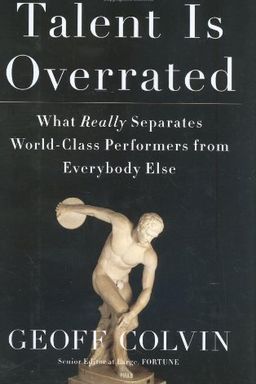
Why do some people achieve breathtaking success—while most of us plateau at a comfortable level, never crossing into greatness? Geoffrey Colvin’s Talent Is Overrated is a bold, science-backed challenge to one of society’s most entrenched beliefs: that top performers are born with special gifts. You might assume that Tiger Woods swings like a god or Mozart composed effortlessly because of innate talent, but Colvin insists that’s not the case. Greatness, he argues, arises less from genetic gifts and more from a rare and grueling form of effort called deliberate practice.
Drawing on decades of research by cognitive scientist K. Anders Ericsson, Colvin reveals that what separates world-class performers from average ones isn’t just hard work; it’s how that work is structured. Deliberate practice is focused, purposeful, feedback-driven, and relentlessly challenging—it’s what turns ordinary individuals into elite musicians, athletes, CEOs, and innovators. But because it’s exhausting and rarely fun, few people endure the thousands of hours required to reach mastery.
From Fortune 500 Offices to Sports and Music Halls
Colvin begins with an intriguing case: two seemingly ordinary young employees at Procter & Gamble who were deemed “least likely to succeed” later became CEOs of General Electric and Microsoft—Jeffrey Immelt and Steve Ballmer. Their rise exemplifies the book’s core mystery: if they weren’t prodigies, how did they reach the apex of corporate leadership? Through disciplined skill-building over decades, Colvin explains, they developed specialized abilities honed by pushing beyond routine performance.
This revelation spans all domains. In music, the best violinists in Berlin didn’t practice more casually or possess superior talent—they practiced differently. They engaged in targeted exercises designed to improve specific weaknesses, accumulated more than 10,000 hours by age twenty, and endured the mental strain of continual improvement. In sports, Jerry Rice became history’s greatest receiver not because of unusual speed but through painstaking off-season routines that strengthened endurance, precision, and reaction. Whether it’s Franklin refining his writing, Tiger Woods practicing sand shots, or Mozart rewriting compositions—the pattern is unmistakable: disciplined effort over years trumps natural ability.
The Rising Stakes of Human Performance
Why does this matter to you? Because, as Colvin warns, the economy is shifting from being capital-driven to ability-driven. Money is abundant; human excellence is scarce. If companies once thrived on products, patents, or capital, today they prosper on talent—and not the mystical kind, but the kind developed deliberately. Global competition and technological acceleration have raised expectations everywhere. Whether you’re an executive, athlete, or artist, your survival depends on continually improving.
Colvin underscores that great performance isn’t bounded by age, IQ, or genetics. Nobel Prize winners are getting older not because they’re gifted longer but because advanced knowledge takes longer to acquire. The act of learning reshapes both brain and body—musicians alter neural pathways, athletes grow new muscle fibers, and performers build highly specialized mental models that allow them to anticipate patterns and solve problems faster. You can learn to perceive more, remember more, and know more deeply if you adopt the right habits of practice.
Why Passion and Practice Must Unite
Still, Colvin acknowledges a vital truth: deliberate practice is punishing. It demands sustained focus for hours a day, often without visible reward. The only force capable of fueling this discipline is passion—a commitment so deep that the work itself becomes meaningful. This passion isn’t innate; it’s cultivated through curiosity, feedback, and the multiplier effect—small wins that accelerate motivation and create compounding progress. In organizations or families, support systems that blend structure and stimulation are essential, whether guiding children toward expertise or shaping teams toward excellence.
In the end, Talent Is Overrated offers more than insight—it’s a roadmap for transformation. If you’ve ever doubted your ability to reach true mastery or thought greatness belonged to a privileged few, this book offers a liberating message: the principles of world-class performance are teachable, replicable, and within your grasp. What separates you from exceptional achievement isn’t who you are—it’s how deliberately you’re willing to practice.