
Idea 1
The Hidden Forces That Drive Irrational Behavior
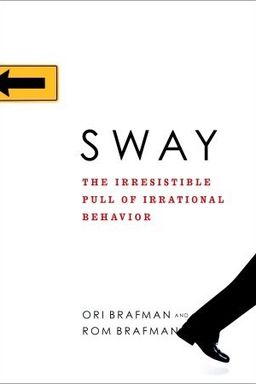
Why do intelligent, experienced people make choices that defy logic—sometimes even with devastating consequences? In Sway, Ori and Rom Brafman argue that human decisions are not always guided by reason; instead, they’re pulled, nudged, and molded by invisible psychological currents. These forces—ranging from the fear of loss to the trap of commitment and the blindness of labels—often lead us astray even when we think we’re acting rationally. The authors contend that by understanding these hidden influences, you can anticipate, recognize, and counter them before they derail your judgment.
The idea is simple yet profound: we all get "swayed." Whether it's a business executive ignoring warning signs, a doctor misdiagnosing a patient, or a politician clinging to a failing policy, the same psychological undercurrents are at play. The Brafmans unite stories from psychology, economics, medicine, sports, and history to show that our irrational decisions are not random errors but systematic patterns guided by emotional triggers and mental shortcuts.
The Core Premise
At the heart of Sway are a few recurring biases that distort human judgment. The first is loss aversion—our tendency to fear losses more than we value gains. This fear pushes us to make risky or counterproductive choices just to avoid feeling the pain of loss. It can cause an investor to cling to falling stocks, a leader to pursue a doomed war, or an airline captain to make catastrophic errors. The second major force is commitment, which locks us into past decisions even when new information suggests that we should change course. These two forces often feed off each other, creating spirals of irrational escalation (much like in Max Bazerman’s famous “twenty-dollar auction” experiment where rational students bid $204 for a twenty-dollar bill).
When Rationality Breaks Down
The Brafmans explore vivid examples—like Captain Jacob Van Zanten, the famed KLM safety instructor whose impatience led him to take off in deep fog without clearance, causing the worst aviation disaster in history. Van Zanten wasn’t reckless by nature; he was caught in a web of loss aversion and commitment. He faced the looming loss of time, money, and reputation, and his emotional drive to “not lose” overpowered his training. In many ways, the book feels like a journey into the anatomy of a cognitive riptide: our instincts tell us to swim harder against it, yet that’s exactly what gets us pulled further away.
Beyond Economics: The Psychology of Everyday Sways
Traditional economics assumes we are rational actors who make decisions for maximum benefit. But as behavioral economists like Daniel Kahneman and Amos Tversky (who inspired much of Sway) revealed, humans are consistently irrational in predictable ways. The Brafmans add a conversational framework: our irrationality isn't just statistical but deeply personal. It affects our relationships, leadership, and creativity. They illustrate this with stories—from emergency rooms blind to “frequent flyer” parents (diagnosis bias) to Joshua Bell’s ignored subway performance (value attribution). These anecdotes make abstract psychological principles feel concrete and relatable.
Why It Matters
Understanding Sway matters because irrational forces aren’t flaws to be fixed—they’re features of human cognition. You can never eliminate them, but you can learn to recognize when they’re pulling you off balance. The Brafmans encourage a new kind of awareness: pause when emotions spike, question when certainty feels too strong, and always look for the long view. The book suggests that by embracing uncertainty and dissent, we can navigate these psychological riptides more wisely. In the end, Sway isn’t just about explaining why people make irrational choices—it’s about teaching you how to swim parallel to the current of your own mind.