
Idea 1
The Psychology Behind Belief in Conspiracy Theories
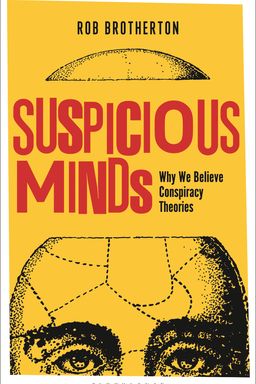
Why do smart, reasonable people believe in wild conspiracies? In Suspicious Minds, psychologist Rob Brotherton argues that conspiratorial thinking is not the preserve of a deluded few—it’s an extension of normal psychology. The same mental shortcuts and emotional instincts that help you make sense of a complex world also push you to find patterns, infer motives, and fill gaps with meaning, even where none exists. Conspiracy theories, he suggests, are the byproducts of brains built to seek coherence, not chaos.
Across history—from ancient Rome’s rumors about Nero to the modern vaccine panic—people have connected scattered dots into compelling stories. These stories thrive because they make a confusing world feel intelligible: if bad things happen, someone must be behind them. Brotherton’s core insight is that believing in conspiracies is less about ignorance and more about deeply human cognitive habits.
Brains Built for Patterns and Agents
Your brain constantly knits fragments into coherent wholes. Visual illusions like the Kanizsa triangle and the canals-on-Mars episode show how the mind fills in what it cannot clearly see. The same machinery that lets you make sense of an incomplete image drives you to connect unrelated political events into a supposed plot. Add in your intention detector—the instinct to interpret actions in terms of purpose—and you have a recipe for seeing deliberate malevolence where randomness might work just as well. When things go terribly wrong, your proportionality bias adds weight to the illusion: surely big events require big causes.
These mechanisms were once adaptive—you’re safer mistaking wind for a predator than missing a real threat—but misfire in a modern world of abstract institutions and media noise. They make conspiracies feel intuitively right because they give accidents and systems a human face.
Emotion, Ambiguity, and the Unconscious Mind
Brotherton highlights research showing that moods and context shift what you find plausible without your awareness. People reading claims in a clear, easy-to-read font are more likely to judge them as true; students in a tidy room feel less need to find hidden order in meaningless shapes. These experiments teach a crucial lesson: when you feel uncertain or disordered, your mind craves patterns and will supply them. Feelings masquerade as logic, and conspiracy theories deliver emotional resolution. The illusion of fluency and coherence tricks you into interpreting ease of thought as quality of evidence.
Stories, Villains, and the Comfort of Drama
Conspiracies spread not only because they appeal to cognitive biases but also because they are gripping stories. They follow an archetypal narrative—innocence threatened by a monstrous villain, hope restored by a brave truth-seeker. Psychologists like Melanie Green show that stories “transport” you emotionally, lowering your critical guard. This means you judge a tale less by evidence than by narrative satisfaction. Figures like David Icke or Oliver Stone present themselves as heroic underdogs fighting corrupt elites, letting audiences join a moral drama rather than a dry factual debate.
Brotherton links this to Colin Campbell’s concept of the cultic milieu—an alternative culture where anti-establishment narratives, spiritual worldviews, and conspiracist tropes mingle. Within that milieu, half-knowledge and the “University of Google” illusion foster overconfidence: a little information feels like expertise, reinforcing defiance toward official sources.
When Suspicion Turns Destructive
Suspicion has its uses; true conspiracies exist. But Brotherton documents how generalized mistrust can metastasize into harm. The Protocols of the Elders of Zion forged antisemitic myths that inspired violence and genocide. Vaccine conspiracies, fueled by misinformation and credible-seeming anecdotes, have revived preventable diseases. Modern tragedies—from Rathenau’s assassination to polio workers attacked in Pakistan—show how ideas translate into action. Once civic trust erodes, people withdraw from politics or reject public health, convinced the system is rigged.
Yet skepticism isn’t pathology. Brotherton distinguishes prudent paranoia—a reasonable vigilance born from real historical abuses like Tuskegee or COINTELPRO—from unfounded paranoia that spirals into worldview. Both rely on the same cognitive foundation but differ in evidence and proportionality.
A Human Disposition, Not a Defect
Conspiracy belief behaves like a psychological disposition. People who believe one conspiracy tend to believe many, even contradictory ones, because they share an underlying worldview: the system hides the truth. Experiments inventing nonsense claims—like Red Bull giving rats wings—show that predisposed individuals endorse them. Exposure to one conspiracy (e.g., about Princess Diana’s death) increases receptivity to others. Brotherton calls this “monological belief,” a self-reinforcing lens that interprets anomalies as proof of cover-ups.
Ultimately, Brotherton’s lesson is empathetic and cautionary. Everyone uses the same cognitive shortcuts that make conspiracies attractive; the difference lies in how reflexively we question our intuitions. To resist seductive falsehoods, you must recognize your pattern-seeking brain, monitor your need for control, seek disconfirming evidence, and remember that narrative power and emotional conviction are not proof. Suspicious minds aren’t broken—they’re simply human.