
Idea 1
A Life Examined Through Music and Meaning
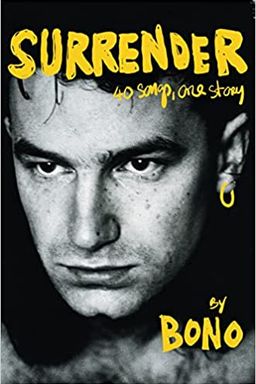
What happens when a life lived in sound becomes an inquiry into soul, politics, and purpose? In Surrender, Bono dismantles his own mythology—rock star, activist, believer—and reconstructs it as a coherent meditation on mortality, faith, and usefulness. The book’s spine is song and story: childhood loss in Dublin, the creation of U2, the moral laboratory of fame, and decades spent trying to convert melody into justice. Through this arc, Bono positions music not as an ornament to life but as its diagnostic tool.
Origins and Loss
The story begins at 10 Cedarwood Road, the childhood home where laughter coexisted with grief. The loss of his mother Iris when he was fourteen left Bono with a hollowness he tried to fill with sound. Domestic textures—Norman’s reel‑to‑reel tapes, Bob Hewson’s opera singing, the smallness of the Dublin home—become creative DNA. This early absence fused rage and tenderness into the emotional dialect of U2’s later songs. The book insists that creativity often starts in rupture: it’s what you sing to repair the silence left by loss.
Formation: Faith, Friends, and Rebellion
U2’s birth feels accidental yet inevitable: a school noticeboard, four teenagers, a borrowed guitar. Mount Temple Comprehensive became their laboratory. The Edge, Larry Mullen, and Adam Clayton supplied precision and pulse; Bono brought vulnerability and audacity. The Shalom Christian community introduced another tension—faith versus fame—that almost tore them apart. When Edge considered leaving to serve God, their manager Paul McGuinness reframed discipleship as stewardship: honor contracts as a form of integrity. This moment defines U2’s ethics—the refusal to choose between sacred impulse and worldly obligation.
Success and Self‑Interrogation
Fame arrives through rehearsal, risk, and a white touring van—a machine that turns teenage dreams into professional vocation. Yet each achievement is met with scrutiny. In a near‑death experience at Mount Sinai hospital, Bono’s aorta nearly bursts; surgery becomes the metaphor for auditing his own life. Suddenly success looks accidental: genetics, privilege, timing. Survival demands humility—the acknowledgement that grace, not merit, sustains genius. This hospital scene reframes every earlier myth as contingent and borrowed.
Creative Expansion and Moral Scale
The book widens from the studio to the world. Songs like “Sunday Bloody Sunday” show art should navigate politics without weaponizing grief. “Bullet the Blue Sky” transforms witnessing war in El Salvador into sonic protest; Live Aid transforms empathy into mechanism. Bono learns that spectacle can raise money but not dismantle systems, prompting the pivot from charity to justice—hence campaigns like Jubilee 2000, Drop the Debt, and later (RED). The evolution mirrors his philosophy: start with compassion, move through activism, arrive at policy.
Reinvention, Persona, and Renewal
As artistic saturation threatened stasis, U2 relocated to Berlin’s Hansa Studios. “One” was born from near collapse—a sonic reconciliation that saved the band. Later, personas like The Fly and Mr. MacPhisto let Bono expose hypocrisy by exaggerating it. Showmanship becomes theology in disguise: light, irony, and confession. The book argues that masks can reveal truths unavailable to the naked face. Reinvention, therefore, is moral survival—proof that self‑mockery can keep sincerity alive.
Activism and the Architecture of Influence
Field witness in Africa leads to global advocacy. Bono integrates story and science—partnering with Dr. Anthony Fauci and economists like Jeff Sachs—to push for practical action. The result is PEPFAR, a $15 billion U.S. program combating AIDS. Later, through (RED) and partnerships with Apple and Oprah, activism merges with design and commerce. Each collaboration is a design lesson: keep messages simple, impact traceable, optics ethical. Success, he insists, depends on coalitions—evangelicals and liberals, presidents and pop stars—united by the single metric of saved lives.
Family, Restoration, and the Private Sphere
Behind the movement stands domestic stillness. Marriage to Ali Hewson, parenting, and loss of friends like Greg Carroll become the emotional infrastructure of songs such as “All I Want Is You” and “One Tree Hill.” Home is both creative refuge and moral anchor—proof that great art can coexist with ordinary love. Cyril Connolly’s suspicion that “the pram is the enemy of art” gets overturned: Bono writes from within family chaos and finds freedom, not constraint.
Endurance, Crisis, and Surrender
Later chapters explore collapse and resilience: Adam Clayton’s addiction, Michael Hutchence’s suicide, terrorist attacks in Paris. The band survives by practicing communal repair—therapy, honesty, and public solidarity. Spiritual motifs return: gospel choirs in Harlem, Sufi jams in Fez, baptism in the Jordan River. “Surrender” becomes both a song and philosophy: strength found in relinquishment. The closing insight is that art, faith, and activism are languages of surrender to something larger than ego.
Core premise
Music is not an escape from life but a method of examining it; faith is not retreat but engagement; surrender is not defeat but participation in grace.
Thus, Surrender reads as both confession and manual: how to turn art into vocation, power into service, and mortality into meaning.