
Idea 1
How Science and Power Invent Race
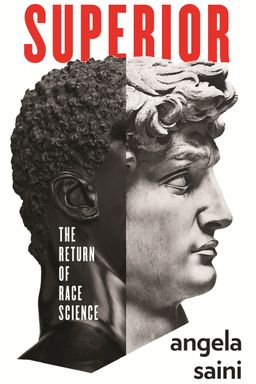
Why does the idea of race, long discredited as biology, still shape how you see the world? Angela Saini’s book shows that race was not discovered—it was constructed through centuries of collecting, classifying, and storytelling. From the marble halls of museums to the genetic lab, Saini traces how political power, scientific curiosity, and cultural narratives worked together to invent and maintain the illusion of human hierarchy.
She argues that you cannot separate science from its social context: what researchers choose to measure, what museums choose to display, and what governments choose to fund all encode assumptions about civilization and difference. This book invites you to follow those threads—through empire, through eugenics, into modern genetics—and to see how each age rewraps race in the language of its own authority.
From Museums to Myths
Walking beneath the British Museum’s neoclassical façade, you enter not a neutral space but an imperial narrative. As Saini notes, the artifacts inside—Hoa Hakananai’a from Rapa Nui, the Rosetta Stone, the Parthenon marbles—tell a story of who has the right to collect and define world culture. Early naturalists such as Johann Friedrich Blumenbach classified human “varieties” much as they catalogued fossils, turning power relations into taxonomies. What looked like science was also theater: Europe placed itself at the apex of a historical drama that justified conquest.
Science, Storytelling, and Origins
From Indigenous handprints in Australia’s caves to Neanderthal skeletons in Europe, Saini shows that origin stories are always filtered through ideology. The debates between “out of Africa” and “multiregional” models, or between symbolic behavior and biological modernity, are less about fossils than about which lineages we wish to celebrate. Interbreeding between archaic humans blurs the lines of any racial model, but society keeps trying to redraw them. (Note: scholars like John Shea and Eleanor Scerri remind you that deep time tells of connection, not separation.)
Eugenics, Empire, and the Machinery of Classification
The Victorian obsession with measurement created both status and suffering. Francis Galton and Karl Pearson transformed casual prejudice into statistical policy under the banner of “eugenics.” Their disciples exported those tools globally—to the U.S., Japan, and beyond—where sterilization laws and selective breeding programs turned equations into law. German institutes such as the Kaiser Wilhelm Society showed how legitimate science could descend into atrocity under Nazism. But even after 1945, eugenic reasoning lingered under new labels like population improvement or behavioral genetics.
The Persistence of Pseudoscience
After UNESCO declared racial science discredited, fringe networks—including the Pioneer Fund, Mankind Quarterly, and modern “human biodiversity” blogs—kept the idea alive, rebranding old hierarchies in data-rich language. Today’s “race realism” or ancestry claims draw on genetic complexity to reassert simple categories. The persistence of these networks, Saini argues, proves that race survives not as data, but as ideology seeking renewed validation.
Genes, Identity, and Belonging
The rise of ancient DNA has reinvigorated origin debates—Cheddar Man’s dark skin, the Yamnaya migrations, or consumer ancestry tests promising truth about roots. Yet these genomic findings, properly read, dissolve racial borders rather than affirm them. Studies by Richard Lewontin and later geneticists consistently show that most human variation exists within, not between, populations. The message: biology binds us more than it divides us, even when politics demands otherwise.
Key message
Race is not a natural truth but a curated story—constantly rewritten through science, politics, and culture. Seeing how that story was built is the first step to dismantling its power.