
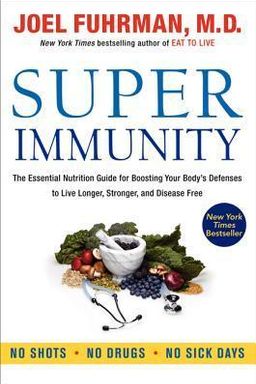
Super Immunity cover

Super Immunity

by Joel Fuhrman, MD

Super Immunity by Joel Fuhrman, MD, unveils the transformative power of superfoods for boosting immunity and preventing diseases. This essential guide offers insights into nutrient-rich diets, revealing the shortcomings of modern medicine and the importance of natural healing through food.

The Power of Super Immunity through Nutrition

What would it feel like to go years without catching a cold, to recover from illness in days instead of weeks, or to eliminate the chronic fatigue that has become our culture’s silent epidemic? In Super Immunity, Dr. Joel Fuhrman makes an audacious claim—that by mastering the relationship between food and cellular defense, you can become nearly impervious to disease. His argument isn’t mystical; it’s biological. A powerful immune system isn’t built on drugs or sheer luck—it’s designed by nature, and it’s fueled by the right kinds of micronutrients and phytonutrients found in plants.

The Core Argument: Food Determines Health

Fuhrman insists that the modern American diet—dominated by animal fats, processed sugars, and low-nutrient foods—has engineered widespread immune dysfunction. The human immune system evolved to operate in a plant-rich world, dependent on thousands of bioactive compounds known as phytochemicals. Without them, we don’t just lose vitality; we degrade cellular protection and invite chronic illnesses such as cancer, heart disease, and autoimmune disorders.

He traces this idea to both historical and contemporary science. Ancient healers already knew plant foods promoted resilience, but only recently have researchers documented how these phytochemicals trigger detoxification enzymes, activate DNA repair, and induce apoptosis—the programmed death of damaged cells before they turn cancerous. When we consume a diet rich in greens, mushrooms, onions, berries, beans, and seeds—the foods Fuhrman labels GOMBBS—we don’t just prevent disease; we strengthen immunity at a genetic level.

The American Dietary Disaster

Fuhrman paints a disturbing picture of what he calls the “American Dietary Disaster.” A century ago, processed foods accounted for only a fraction of our meals; today they make up more than 60% of total calories. Add in animal products for roughly a quarter more, and less than 5% of our diet comes from unrefined plant sources. He argues this imbalance doesn’t just contribute to obesity—it produces immune incompetence, leaving the body unable to fight infections or recognize abnormal cell mutations.

The result is a modern paradox: we are overfed and yet malnourished, heavy but deficient, surrounded by medical technology but plagued by preventable diseases. Fuhrman’s call to action is direct—stop worshiping macronutrients like carbs and protein, and start caring about micronutrients, the substances that don’t provide calories but do provide life.

Super Immunity: What It Means

Super Immunity isn’t merely avoiding sickness; it’s achieving a physiological state in which your cells perform their defensive duties so well that viruses rarely take hold, and cancerous changes are stopped in their tracks. Fuhrman contends that even exposure to pathogens like influenza or pneumonia can pass unnoticed in a well-nourished person. He cites a Vietnamese study where malnourished children improved micronutrient intake through vegetable supplementation—and respiratory infections dropped by half.

At the heart of Super Immunity is synergy. Just as vitamins C and E alone are weak defenses, phytochemicals from different plant families act together, creating what Fuhrman calls “cooperative biology.” Cruciferous vegetables detoxify carcinogens, mushrooms regulate cell-killing “natural killer” activity, and onions supply organosulfur compounds that block tumor blood vessel growth. Together, they forge a biochemistry of self-repair.

Why Medical Solutions Fail

Fuhrman is unflinching in his criticism of conventional medicine. He argues that despite billions spent annually, modern interventions merely suppress symptoms instead of treating causes. Antibiotics overcorrect, destroying gut flora essential for immune function. Prescription drugs often mask hypertension or diabetes while encouraging the same dietary habits that created the diseases. The real cure, he asserts, is nutritional excellence—“scientifically supported superior nutrition”—which prevents illness before it starts and rejuvenates compromised immunity.

The Stakes: Longevity and Freedom from Disease

Throughout the book, Fuhrman pushes a single radical yet empowering idea: great health is earned, not bought. When you align your diet with biological design, you gain leverage over time. He insists that humans are not meant to spend their later years chronically medicated or frail. Instead, a nutritarian lifestyle can extend healthy lifespan beyond ninety-five years—a claim he backs with examples from the world’s longest-living populations, such as the Hunzas and Okinawans, whose diets are plant-dense and low in animal products.

In essence, Super Immunity is both a manifesto and a manual. Fuhrman challenges decades of nutritional dogma to reveal that immunity, longevity, and vitality are not mysteries but mechanisms—mechanisms we can control every time we choose what to eat. Over the next key ideas, you’ll see how he builds this case: from identifying the most potent immune-boosting foods and dismantling modern medicine’s myths to laying out practical steps that transform your daily meals into medical-grade protection. You’ll learn how to cultivate a body so well defended that illness becomes the rare exception, not the rule.


Food Equals Health: You Are What You Eat

Fuhrman argues that the phrase “you are what you eat” isn’t a cliché—it’s molecular biology in action. Every cell in your body is built from the nutrients in your food, and when those nutrients are incomplete, your body becomes incomplete, too. He explains that the rise of chronic disease is directly linked to our shift away from plant foods toward processed ingredients and animal fats.

Phytochemicals: Nature’s Miracle Compounds

Phytochemicals, Fuhrman tells us, are the hidden heroes of nutrition—the thousands of plant-derived compounds responsible not only for color and flavor but for subtle biochemical defense. Studies show that these molecules activate detox enzymes, repair DNA, and even destroy cells that may be turning cancerous. He refers to them as the “fuel that powers anticancer defenses.” Without phytochemicals, our immune cells lose their power.

He describes how these compounds work synergistically. For instance, the glucosinolates in broccoli and kale produce isothiocyanates that detoxify carcinogens, while the polyphenols in berries neutralize free radicals. Combining these foods multiplies benefits—something supplements can’t replicate. In his view, nature designed immunity to operate through complexity, not isolation.

The Modern Nutrient Collapse

According to Fuhrman, modern agriculture and food manufacturing have stripped food of these protective elements. He cites sobering data: Americans get over half their calories from processed foods, another quarter from meat and dairy, leaving barely 10 percent from plants—and that figure drops to 5 percent when white potatoes are excluded. It’s not just about missing vitamins; it’s about missing hundreds of plant compounds we haven’t even identified yet.

Micronutrients over Macronutrients

Fuhrman challenges the obsession with macronutrients—protein, fat, and carbohydrates—arguing that they are just fuel, not repair tools. Genuine health depends on micronutrients: vitamins, minerals, and phytochemicals that contain no calories but enable all cellular maintenance. He’s quick to point out that even popular diets, whether low-fat or high-protein, miss the point if they neglect nutrient density.

Fuhrman’s Health Formula

Health = Nutrients / Calories — Your health is proportional to how many nutrients you consume per calorie. Meals built on vegetables, fruits, beans, and seeds yield high nutrient-per-calorie ratios, whereas processed foods and animal products yield low ones.

Super Foods and Synergy

Fuhrman recommends a daily focus on super foods: greens, mushrooms, onions, berries, beans, and seeds. He illustrates how combinations of these foods create “cooperative health”—where compounds from one plant enhance absorption or efficacy of another. For example, eating fat-rich seeds with vegetables boosts carotenoid absorption tenfold, and blending cruciferous vegetables activates chemical reactions that make their anticancer components bioavailable.

Ultimately, Fuhrman’s message is both scientific and moral: healthy food isn’t only fuel; it’s architecture. Every bite remodels your tissues, resets your immune signals, and determines how well your body can protect itself. When you eat plants, you eat immunity itself.


Why Medicine Fails and Nutrition Heals

Fuhrman’s most controversial assertion is that modern medicine has become a business of disease management, not health creation. He argues that pharmaceutical dependence perpetuates illness, because drugs treat symptoms while ignoring the root cause—poor nutrition.

The Illusion of Medical Progress

He reminds readers that lifespan gains in the last century largely came from sanitation, not medicine. Today, while infectious deaths have declined, chronic illness and cancer rates have soared. The supposed benefits of medical technology are offset by dietary-induced morbidity. In Fuhrman’s view, “we drug ourselves out of awareness,” mistaking temporary symptom control for healing.

Drug Culture and Nutritional Ignorance

Fuhrman cites studies showing popular drugs often increase mortality. Blood pressure medications, diabetic drugs, and statins do little to prevent disease long term. For instance, he mentions the ACCORD study, where intensive drug treatment for diabetic blood sugar control increased death rates instead of reducing them. These failures, he argues, stem from neglecting lifestyle correction.

He contrasts this pharmacological approach with cases from his clinical experience: patients reversing hypertension, autoimmune disease, or cancer through diet alone. One woman with systemic lupus recovered after following his nutrient-dense meal plan centered on cruciferous vegetables, mushrooms, berries, and seeds. Another patient beat stage-4 ovarian cancer after changing her diet during chemotherapy—her tumors vanished and never returned.

Restoring Responsibility

Fuhrman’s philosophy restores agency to patients. He insists that “great health cannot be purchased—it must be earned.” Nutrition, not medication, is the means to self-healing. His nutritional protocol doesn’t reject medicine; it transcends it, making drugs largely unnecessary except for emergencies.

By reframing immune failure as nutritional deficiency rather than viral fate, Fuhrman redefines what it means to be healthy. Medicine can treat disease, but only nutrition teaches the body how to never need medicine in the first place.


Building Super Immunity with GOMBBS Foods

Fuhrman’s acronym GOMBBS—Greens, Onions, Mushrooms, Berries, Beans, and Seeds—captures his formula for a disease-proof life. Each food family contributes specific micronutrients that activate immune functions and prevent cellular damage.

Greens and Cruciferous Vegetables

Greens are the highest in nutrient density per calorie. Their sulfurous compounds trigger detoxification enzymes and shield DNA from toxins. Fuhrman recommends two servings daily—one raw, one cooked—and emphasizes chopping or blending cruciferous vegetables to release their isothiocyanates, nature’s anticancer chemicals.

Mushrooms: Immune Modulators

Mushrooms contain beta-glucans and lectins that activate natural killer T cells. Studies cited show that women eating as little as one mushroom a day cut breast cancer risk by up to 64%. Combined with green tea, risk drops over 80%. Fuhrman calls mushrooms the “queen of Super Immunity.”

Onions and Garlic

Allium vegetables add powerful organosulfur compounds that detoxify carcinogens and block angiogenesis—the formation of blood vessels feeding tumors. Eating half a cup of onions daily, Fuhrman claims, halves risk of colon, prostate, and stomach cancers.

Berries and Pomegranates

Colorful berries and pomegranates provide anthocyanins, ellagic acid, and polyphenols that regenerate damaged genes and stop tumor proliferation. He details animal studies where rats fed blackberries showed reversal of chemically induced DNA damage. These fruits, he notes, inhibit angiogenesis while strengthening heart and vascular health.

Beans and Seeds

Beans stabilize blood sugar and offer resistant starch for gut health, fueling beneficial bacteria. Seeds provide omega-3 fats and lignans, hormones that balance estrogen and fend off cancers. Fuhrman recommends at least half a cup of beans and one ounce of seeds daily—together they form the heart of his immune-enhancing diet.

Collectively, GOMBBS foods transform the plate into a pharmacological arsenal. As Fuhrman writes, “A salad is not just a meal—it’s an immune intervention.”


Nutrition’s Role in Preventing Viral Mutations

Fuhrman introduces a breakthrough concept: strong nutrition not only protects your body from viruses—it influences the viruses themselves. Malnourishment can make viral strains mutate into more dangerous forms inside the host. Well-fed cells, by contrast, limit viral replication and mutation.

The Host-Virus Equation

Four factors determine whether you get sick: viral exposure, virulence, immune memory, and nutritional status. Only nutrition is fully controllable. Fuhrman points out that micronutrient-rich diets allow immune cells to quickly destroy invaders, making infection either mild or symptom-free.

Nutrition Alters Virus Genetics

Research shows deficiencies in selenium, riboflavin, and carotenoids can increase viral mutation rates. In deficient hosts, even harmless viruses can evolve resistance or increased virulence. Fuhrman cites studies on HIV and influenza where viral aggressiveness rose in malnourished individuals but remained muted in those with high vegetable intake.

The 1918 Influenza Lesson

He connects these insights to history: the 1918 flu killed millions largely due to starvation and poor nutrition throughout wartime Europe. Malnourished soldiers and civilians had depressed immunity and suffered fatal secondary infections. This historical lens underscores his thesis that society’s immune strength shapes pathogen evolution.

When you nourish your body deeply, you don’t just defend yourself—you prevent viruses from becoming more dangerous. Nutrition is health’s quiet diplomacy with the microbial world.


Rethinking Health: From Pills to Plants

Fuhrman challenges the cultural addiction to quick fixes. Instead of asking “What medication cures this?” he asks “What food causes health?” This reversal reframes wellness as a daily creative act rather than a medical emergency.

Supplements vs. Real Food

Fuhrman recognizes that supplements have value but warns against dependence. Synthetic vitamins like folic acid and isolated beta-carotene may increase cancer risks. He contrasts these with natural folate in greens and carotenoids from mixed vegetables. In his view, “the flag was mistaken for the ship”—scientists saw high vitamin levels in healthy populations but ignored that those vitamins came packaged in whole foods.

Holistic Immunity

Unlike the reductionist model of medicine, which isolates single causes, Fuhrman promotes holistic synergy. Micronutrients, fiber, antioxidants, and live plant enzymes build a resilient body at every level—from gut bacteria to gene repair. He emphasizes lifestyle consistency: health isn't created by one smoothie but by a sustained immersion in phytochemical abundance.

Pills offer fragments of healing; plants offer entire ecosystems of it. Super Immunity, in Fuhrman’s hands, becomes a philosophy of wholeness—a reminder that nature’s complexity, not chemical isolation, is the blueprint for human well-being.


From Chronic Illness to Self-Healing

Fuhrman’s practice is filled with stories of transformation. Patients with autoimmune diseases, cancers, and lifelong allergies regain vitality through food. His accounts read like miracles—but they’re explained through biochemistry.

Reversing Autoimmune Disease

He describes lupus patients who overcame pain and left medication behind by following his “autoimmune protocol”: high-nutrient vegan meals, vegetable smoothies, and anti-inflammatory supplements like turmeric and DHA. Others with rheumatoid arthritis experienced full remission when eliminating processed ingredients and salt while maximizing greens and beans.

Cancer Recovery and Protection

Fuhrman narrates remarkable cancer recoveries—Pam Swallow’s stage-4 ovarian cancer disappeared after adopting his plan alongside conventional care; Irene Zabransky’s lymphoma reduced until no tumors remained. He credits these recoveries to strengthening the body’s own anticancer surveillance, allowing immune cells to destroy abnormal tissue.

Becoming the Solution

He concludes that food is not supplemental medicine; it is primary medicine. When you rethink meals as medical interventions, you gain power no prescription can match. The body’s self-repair mechanisms are waiting—a salad, he says, is the on-switch.

In Fuhrman’s world, illness is not fate but feedback. Each bite can either mute or magnify your body’s capacity to heal. Through superior nutrition, you transform that capacity into lifelong protection.

Dig Deeper

Get personalized prompts to apply these lessons to your life and deepen your understanding.

Go Deeper

Get the Full Experience

Download Insight Books for AI-powered reflections, quizzes, and more.