
Idea 1
What Data Reveals About Billion-Dollar Startups
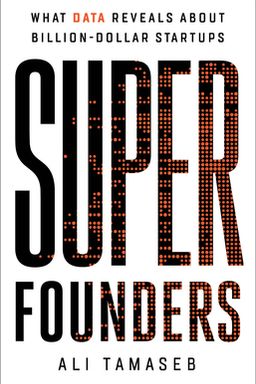
Why do some startups become billion-dollar successes while others, just as ambitious, fizzle into obscurity? In Super Founders: What Data Reveals About Billion-Dollar Startups, venture capitalist Ali Tamaseb confronts this question through one of the largest and most rigorous data-driven studies ever conducted on entrepreneurship. His goal: to separate startup mythology from measurable truth. Forget the image of the hoodie-clad Ivy League dropout; Tamaseb argues that most "unicorn" founders—startups valued at over a billion dollars—don’t fit that stereotype at all.
Over four years, Tamaseb manually collected over 30,000 data points across hundreds of companies, studying more than sixty-five different variables—including founder age, prior experience, education, number of co-founders, market size, and fundraising patterns—to uncover what truly predicts startup success. He compares these billion-dollar companies to a control group of random startups that failed to reach that valuation, letting the data—not anecdotes—speak.
Shattering the Startup Myths
Tamaseb begins by debunking the narratives perpetuated by Hollywood and media. The image of the young drop-out genius—à la Zuckerberg or Jobs—dominates popular culture, yet the median founder age of billion-dollar startups is thirty-four. Many founders held PhDs rather than dropping out of school; many were experienced professionals or serial entrepreneurs before starting their billion-dollar venture. Only 15 percent of them ever attended accelerator programs such as Y Combinator, and fewer than half worked in the same industry prior to founding their company. In short, there is no single founder "type."
Tamaseb differentiates myth from fact through vivid storytelling. You meet Henrique Dubugras and Pedro Franceschi, the teenage prodigies behind Brex, but also Arie Belldegrun, a seasoned UCLA professor and oncologist who founded billion-dollar biotech companies in his sixties. You see solo founders—often assumed to be doomed—like Langley Steinert of CarGurus succeed on the strength of prior experience. The lesson? What matters most isn’t a magical demographic formula, but a mindset of persistence, experimentation, and a "bug for building."
Patterns Hidden Beneath Chaos
Quoting Chuck Palahniuk—“What we call chaos is just patterns we haven’t recognized”—Tamaseb searches for repeatable patterns. His methodology underscores a crucial idea: correlation is not causation. He uses statistical correction techniques like the Benjamini-Hochberg procedure to ensure significance, comparing each factor against a baseline sample of failing startups. The result is a more disciplined lens on entrepreneurship than the hunch-driven narratives common in Silicon Valley. Readers get a grounded understanding of what truly differentiates winners from the pack.
For example, having previously built a modestly successful company—what Tamaseb calls being a “Super Founder”—more than triples one’s odds of founding a billion-dollar startup later. Prior entrepreneurial experience, even from a venture that failed, dramatically increases success likelihood. By contrast, being first to market, often glamorized by investors, shows no statistical advantage. And while location still matters—Silicon Valley startups are twice as likely to reach unicorn status—half of billion-dollar ventures emerge elsewhere, from Denver’s Guild Education to Istanbul’s Peak Games.
From Founders to Funds to Fundamentals
The book unfolds in three major parts. The first, “The Founders,” examines who creates billion-dollar startups—demographics, experience, education, and personality traits. The second part, “The Company,” tackles the what and how: idea formation, market timing, competition, and pivots. The third part, “Fundraising,” demystifies venture capital, bootstrapping, capital efficiency, and investor psychology.
Each section unearths counterintuitive truths. In “The Company,” we learn that most unicorns emerge from large, established markets—not from creating new ones. Market size and timing regularly trump novelty. Great founders are not zealots tied to one idea—they’re flexible, willing to pivot dramatically like YouTube (which started as a dating site) or Slack (originally a failed video game). In “Fundraising,” Tamaseb reveals that over 90% of billion-dollar companies are venture-backed, but some—like GitHub and Atlassian—grew profitably for years without VC money. Data also shows that unicorns often raise larger rounds earlier, with the median first raise at $4 million, double that of failed startups.
Why These Findings Matter
Tamaseb’s research is not only a myth-busting exercise but a deeply practical roadmap for aspiring founders, investors, and policymakers. If success is not confined to a single profile, the opportunity set widens: a forty-year-old scientist, a technical engineer from India, or a college student in Turkey could each be as likely to build a unicorn as a Stanford-educated twentysomething. By revealing which factors truly move the needle—product differentiation, repeat founding experience, market timing, and defensibility—Tamaseb shifts the focus from “who” founders are to “what” they build and “how” they adapt.
The core message of Super Founders is profoundly liberating: startup success is not preordained by pedigree, age, or luck—it’s the product of persistent builders identifying patterns, learning from each attempt, and refining their approach until everything clicks.
Viewed together, the book offers both data-driven rigor and human storytelling—an insider’s reeducation of startup dogma. Whether you’re an aspiring entrepreneur or a seasoned investor, Tamaseb’s findings challenge you to let go of myths, embrace experimentation, and recognize that the next billion-dollar idea may look nothing like your assumptions.