
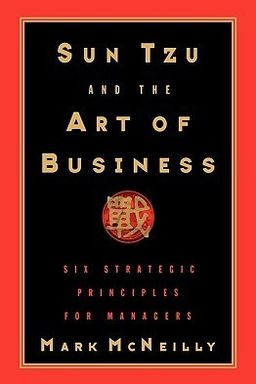
Sun Tzu and the Art of Business cover

Sun Tzu and the Art of Business

by Mark R McNeilly

Discover how Sun Tzu''s ancient military strategies can revolutionize modern business tactics. Mark R McNeilly translates The Art of War into six strategic principles, guiding managers to outsmart competitors, dominate markets, and lead effectively. Embrace timeless wisdom for lasting success.

The Strategic Wisdom of Sun Tzu for Modern Managers

How can you consistently win in a competitive world without even fighting? That provocative question anchors Gerald A. Michaelson’s The Art of War for Managers, an ambitious translation and commentary that reimagines Sun Tzu’s timeless military treatise as a modern guide for leadership, business, and organizational success. Michaelson contends that the 2,500-year-old wisdom of the Chinese strategist Sun Tzu provides managers today with a powerful mindset for thriving in uncertainty, anticipating change, and leading with clarity.

Rather than focusing on combat or confrontation, Michaelson emphasizes the essence of Sun Tzu’s philosophy—victory through strategic foresight. He argues that by studying Sun Tzu’s strategic rules, managers can learn to win without conflict, outthink rather than outfight the competition, and advance toward success through preparation, discipline, and adaptability. In his view, the battlefield is the marketplace, and the enemy is confusion, complacency, and poor leadership.

Sun Tzu’s Eternal Principles Meet Modern Business

Sun Tzu saw success not in brute force but in insight—understanding yourself, your opponent, and your environment before taking action. Michaelson applies this to management, arguing that modern executives must learn to lay detailed plans, marshal resources wisely, and identify battles worth fighting. The book transforms Sun Tzu’s thirteen chapters into fifty distinct strategic rules relevant to business practice, each accompanied by managerial commentary and real-world examples of companies and leaders—such as General Electric, Coca-Cola, Ford, and Microsoft—who demonstrated ancient wisdom through modern action.

For example, “win without fighting” becomes a principle of market differentiation—finding unoccupied niches where competition is minimal. “Know yourself and know your opponent” becomes advanced competitor intelligence and self-awareness within organizations. “Fight only battles you can win” translates into wisely allocating effort, avoiding futile conflicts, and prioritizing decisive projects. “Build a sound organization structure” becomes ensuring coordination and clarity across teams, echoing Sun Tzu’s discipline among troops.

From Military Strategy to Corporate Practice

The genius of Michaelson’s translation is how it bridges Eastern and Western strategy traditions. In contrast to Carl von Clausewitz’s Western focus on total battle (“On War”), Sun Tzu’s Eastern method advocates mastery through intelligence, deception, and harmony. Michaelson places both traditions side by side, showing how Sun Tzu’s flexibility complements Western managerial planning. He insists that strategy is “doing the right thing,” while tactics are “doing things right.” A leader must think strategically like Sun Tzu—anticipating change, setting clear direction, and planning for victory before engagement.

Throughout the book, he supports Sun Tzu’s maxims with corporate case studies. Federal Express demonstrates “extraordinary force” by pioneering overnight delivery and maintaining momentum through innovation. Southwest Airlines reveals “press the attack” by bold continuous expansion and operational efficiency. Coca-Cola embodies “consolidate your gains” by nurturing lasting global brand loyalty. Each story underscores the timelessness of Sun Tzu’s principles when translated into disciplined organizational behavior.

Why These Lessons Matter Now

In an era of rapid globalization and corporate volatility, Michaelson argues that understanding Sun Tzu’s strategic mindset is more relevant than ever. The manager’s battlefield has changed from land and weapons to data and markets—but the need for foresight, self-knowledge, and decisive leadership endures. He urges managers to study their “terrain” (marketplace), master “leadership laws” (command and discipline), and practice “intelligence” (market research and internal awareness). By preparing thoroughly, aligning teams to common purpose, and acting with agility, a leader can achieve victory without wasteful conflict.

Michaelson concludes that the wisdom of Sun Tzu transcends cultures and centuries because it is about human understanding. It teaches that strategy is both science and art—the science of preparation and the art of execution. Success, he writes, depends not on force but on thought: “The side that wins will be the side that has already won.” By internalizing Sun Tzu’s timeless teachings, today’s managers can replace reactive decision-making with intentional strategy, transforming uncertainty into opportunity.


Laying Plans for Strategic Vision

Michaelson begins with Sun Tzu’s first principle: victory starts long before the battle. For business leaders, success begins long before the product launch, sales pitch, or market entry. It starts with laying plans—designing a vision grounded in realistic assessment and wise comparison. Sun Tzu calls this phase “Laying Plans,” where purpose, mission, and guiding values are articulated with clarity and flexibility.

Thoroughly Assess Conditions

Sun Tzu’s five constant factors—moral influence, weather, terrain, commander, and doctrine—become management parallels. “Moral influence” is a shared mission that drives commitment; “weather” represents outside forces like market trends and technology; “terrain” is customer and marketplace conditions; “commander” is leadership; and “doctrine” equates to core principles guiding the firm. Every manager must study these factors before making strategic decisions.

Michaelson tells of a pharmaceutical company that saw its product development declining. An assessment revealed the cause—two creative leaders had been reassigned. Only by uncovering this systemic issue could the company fix the problem. The lesson: assessment uncovers hidden dynamics that influence success. As in war, knowing the ground prevents confusion and wasted effort.

Compare Attributes

Once conditions are known, Sun Tzu advises comparing attributes with your opponent. Which side commands greater moral influence, leadership, or discipline? Today that means benchmarking—studying other organizations to adopt superior methods. Ford, Michaelson notes, benchmarked six world-class companies and found that trust replaced controls, cross-functional teams drove innovation, and authority was delegated through decentralization. Benchmarking turned learning into competitive advantage.

Look for Strategic Turns

Sun Tzu teaches that great commanders create circumstances that lead to victory—the “strategic turn.” Instead of following conventional rules, they innovate. Wal-Mart did this by targeting small towns ignored by competitors. ESPN turned sports broadcasting into a global fan culture. In each case, innovative shifts created new rules and dislocated opponents.

Michaelson emphasizes that planning must remain flexible. A rigid strategy dies in contact with reality, just as a rigid battle plan collapses amid confusion. Successful managers plan deeply but adapt quickly. Planning, he reminds us, is not just thinking—it is writing, acting, and revising. In short, assessment, comparison, and innovative turns form the blueprint for lasting victory.


Waging War with Resources and Speed

After planning comes execution. Michaelson’s commentary on Sun Tzu’s “Waging War” warns that even the best strategy fails without sufficient resources, timely action, and human motivation. War, like business, drains resources and morale; managers must know how to marshal assets, value time, and ensure everyone profits from victories.

Marshal Adequate Resources

Sun Tzu calculated the cost of raising an army—his metaphor applies to business ventures. Every operation requires investment. Michaelson cites Home Depot and Toys “R” Us as examples of category killers who marshaled enough resources to dominate retail markets. He reminds leaders that most failed startups didn’t just “run out of money”—they lacked managerial talent, strategy, or operational skill. True strength lies not only in funds but in well-aligned capabilities.

Make Time Your Ally

Speed is a weapon. Napoleon marched his troops nearly twice as fast as his opponents, achieving victory through momentum. In business, companies like Cisco and Dell win by acting rapidly—deploying decisions, cutting cycle times, and maintaining perpetual motion. Sun Tzu warned against prolonged operations; momentum preserves morale and resources. Michaelson advises, “Earliest is best. Rapid decisions produce rapid execution.” A quick victory means adapting faster than your competition.

Everyone Must Profit from Victories

Victories must strengthen both the organization and its people. Michaelson retells Sun Tzu’s teaching: when warriors capture chariots, they should be rewarded and prisoners treated well—because winning must multiply strength. In business, you profit by sharing success, retaining top talent, and acquiring competitors’ assets wisely. Merrill Lynch, for instance, recruited discontented rivals when bonuses dropped elsewhere, tying reward directly to accomplishment.

Know Your Craft

Sun Tzu’s final lesson in this chapter is mastery. Leaders must know their craft—their industry, their teams, their tools. Michaelson lists admired CEOs—Jack Welch of GE, Bill Gates of Microsoft, Herb Kelleher of Southwest—who embody this principle. Like ancient generals, these leaders balanced courage and intellect, innovation and humanity. Knowledge of craft transforms ordinary management into strategic leadership.


Winning Without Fighting

One of the most famous teachings of Sun Tzu—and one Michaelson emphasizes passionately—is that to subdue the enemy without fighting is the supreme excellence. Real victory comes not through destruction but through outmaneuvering opponents in ways that render combat unnecessary. For managers, this means finding uncontested niches, using strategy to neutralize competition before confrontation.

Avoid Conflict, Find Opportunity

Holiday Inn achieved leadership by building hotels outside crowded city centers, avoiding direct battle with Hilton. CNN captured news broadcasting by founding a 24-hour network before competitors. Jolibee in the Philippines beat McDonald’s by studying its model and launching first. Each avoided frontal assault—echoing Sun Tzu’s advice that attacking walled cities (entrenched positions) is a last resort.

Strength Against Weakness

Battles are won by concentration of strength. Gillette, Frito-Lay, and Anheuser-Busch dominate their categories not by fighting on every front but by controlling distribution—turning location into strength. Napoleon’s maxim, “God is on the side of the heaviest artillery,” translates into allocating resources where payoff is greatest. Managers must reinforce what works best and avoid spreading resources thin.

Beware of “High-Level Dumb”

A recurring enemy is poor leadership. Michaelson warns of “high-level dumb,” when headquarters issues orders without knowing ground realities. Ford’s leadership during McNamara’s years suffered from executives “who could hear only their own voices.” Avoiding micromanagement, empowering on-site decisions, and listening to the truth—even when uncomfortable—are essential forms of intelligence.

Obey Fundamental Principles

Sun Tzu summarizes five points of inevitable victory—knowing when to fight, how to handle superior and inferior forces, uniting purpose, preparing before action, and empowering capable generals. Michaelson adapts these into modern fundamentals: maintain objectives, establish secure positions, keep on the offensive, simplify plans, and concentrate resources. The art is judgment—knowing when to apply each rule skillfully rather than mechanically.


Building Strength and Energy

In Sun Tzu’s chapters on the Disposition of Military Strength and Use of Energy, Michaelson reveals how great organizations develop inner power—invincibility, momentum, and extraordinary force. Winning is not spontaneous; it’s a product of structure, strategy, and relentless refinement.

Be Invincible

Sun Tzu reminds us that invincibility depends on oneself, not on enemy weakness. In business, this translates to building enduring strengths—Microsoft’s innovation speed, McDonald’s ubiquity, Starbucks’ brand dominance. Each formed a culture of consistency and renewal. Michaelson quotes Shell strategist Arnie De Geus: “The ability to learn faster than your competitors may be the only sustainable competitive advantage.”

Apply Extraordinary Force

Use the normal to engage, the extraordinary to win. Frito-Lay’s weekly shelf restocking, Avon’s two million door-to-door agents, BMW’s personalized customer experience—each applied extraordinary effort beyond standard practice. Extraordinary force means creative energy directed at the key point of impact. Virgin’s Richard Branson exemplifies this through flamboyant publicity strategies that outshine competitors.

Coordinate Momentum and Timing

Momentum provides strength; timing determines success. Subway’s and GE’s coordinated expansions demonstrate synergy between these forces. Like torrential water tossing boulders, momentum must be harnessed and released at the right time. Michaelson compares this to advertising campaigns or product launches that combine concentrated effort with precise timing—going “hunting when the birds are flying.”

True mastery of energy, he concludes, requires both discipline and creativity. Discipline channels power, creativity applies it where it matters most. Leaders must generate collective energy through purpose, training, and empowerment—turning ordinary effort into extraordinary achievement.


Knowing Terrain, Leadership, and Yourself

Michaelson’s tenth chapter, “Terrain,” translates Sun Tzu’s military geography into the corporate landscape. He emphasizes that knowing your field of operations—your market, your customers, and your internal organization—is the highest responsibility of a manager.

Know Your Battlefield

Sun Tzu classified six types of ground requiring different tactics. For managers, this means recognizing situations where competition is accessible, entangled, constricted, or distant. Michaelson urges leaders to “wander their terrain”—to visit customers, suppliers, and staff. Decisions made from the office without context risk misconceptions and failure.

Obey the Laws of Leadership

Six causes of failure—flight, insubordination, collapse, disorganization, rout, and poor leadership—stem from weak command. Effective leaders delegate authority, encourage freedom, foster stability, and build mutual trust. Decentralization, he argues, is not chaos; it is empowerment. The “manager as trainer” principle mirrors Sun Tzu’s insistence on discipline—leaders must ensure their teams are ready before the battle begins.

Fight Only Battles You Can Win

Managers must choose where to exert effort. Fight political battles rarely and focus externally—on customers, not internal conflicts. Efficiency matters only when effectiveness exists. Ford’s Edsel and Gerber’s adult foods failed because they pursued efficiency without strategy. Better to conduct decisive tests, apply full resources, and abandon hopeless ventures. The wisdom lies in restraint and focus.

Know Yourself and Your Opponent

Sun Tzu’s signature dictum—“Know your enemy and know yourself”—is reinterpreted for management intelligence. Executives must study competitors’ actions, personal styles, and past experiences. Equally, they must pursue honest self-assessment through feedback, health checks, and moral reflection. The hardest truth, Michaelson concludes, is self-knowledge. Only those who continuously examine themselves can lead others wisely.


The Manager’s Battlefield and Intelligence

Michaelson closes with Sun Tzu’s thirteenth chapter on “Employment of Secret Agents,” showing that information—more than force—is the foundation of success. The modern manager’s spies are analysts, researchers, and frontline employees who capture and interpret signals from the world.

Invest in Intelligence Resources

A commander who refuses to spend on intelligence is “devoid of humanity.” Investing in knowledge saves far more than it costs. Wegmans Food Markets exemplifies front-line intelligence by hosting focus groups run by store managers. Insights flow directly into action. Like Sun Tzu’s admonition, “Search your neighborhood or benchmark the world,” modern managers leverage data, customer feedback, and industry research to make better decisions.

Establish an Active Intelligence System

Michaelson translates Sun Tzu’s five types of spies into roles within corporate information systems: native (customers), internal (staff), converted (competitors turned partners), doomed (test data or trial operations), and surviving (returning researchers). Intelligence, he says, is dynamic—not bureaucratic. The best systems are decentralized, allowing individuals at every level to process and act on information. Structure and flow must ensure decisions happen closest to the action.

Practice Counterintelligence

While gathering intelligence, protect your own. Corporate espionage is real, warns Michaelson, citing surveys of industrial spying led by China and Japan. Counterintelligence begins with security protocols: confidentiality policies, controlled documents, and discretion. But it also means strategic opacity—planning quietly, revealing only what must be revealed. As Sun Tzu advised, secrecy multiplies strength.

Michaelson concludes that the wise commander is both student and teacher of intelligence. Success in the information age means managing not just armies or assets, but insight and attention—turning data into foresight, foresight into decision, and decision into victory.

Dig Deeper

Get personalized prompts to apply these lessons to your life and deepen your understanding.

Go Deeper

Get the Full Experience

Download Insight Books for AI-powered reflections, quizzes, and more.