
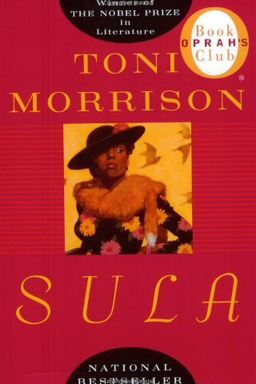
Sula cover

Sula

by Toni Morrison

In ''Sula,'' Toni Morrison invites readers into the lives of two childhood friends in a 1920s African American town. Their divergent paths explore themes of friendship, identity, and societal norms, offering a rich narrative that challenges traditional views on love and autonomy.

Freedom, Friendship, and the Cost of Defiance

What does it really mean to live freely when your community defines everything for you? Toni Morrison’s Sula poses this haunting question through the intertwined lives of two Black women in a small Ohio town called the Bottom. Morrison argues that freedom—especially for Black women—is both irresistible and fraught, a pursuit that can shatter relationships, identities, and communities. Her novel becomes a map of how individuality collides with conformity, how personal liberation might demand loneliness, and how female friendship contains both salvation and betrayal.

At its heart, Sula is about the tension between selfhood and belonging. Morrison contends that American—and particularly African American—society restricts women’s individuality through respectability, motherhood, and religion. The Bottom, a Black neighborhood perched ironically in the hills, is not just a setting but a social cage where conformity is survival. Against this backdrop, two girls—Nel Wright and Sula Peace—forge a friendship that becomes both a mirror and a battlefield for how women might define themselves beyond communal expectations.

The Bottom: A Paradox of Oppression

The story begins with a cruel joke. A white farmer tricks his slave by promising him “bottom land,” only to give him hilly, exhausted soil—the bottom of heaven, not earth. This “Bottom” becomes metaphor and reality: an inversion of social order where Black residents live high up but remain economically and socially suppressed. Morrison uses this setting to explore how systemic oppression breeds ironic pride and complicated survival. The community clings to humor and myth, turning pain into identity. Yet under this ironic resilience lurks bitterness and conformity: the people of the Bottom enforce propriety as tightly as white society demands it of them.

Sula and Nel: Two Paths to Womanhood

Nel and Sula embody two possible responses to oppression. Nel seeks stability through marriage and social decorum, mirroring her mother Helene’s control and respectability politics. Sula, by contrast, rejects the dictates of family and morality entirely. From her unconventional household—ruled by her grandmother Eva and mother Hannah—she inherits anarchic freedom. Whereas Nel’s mother scrubs shame away, Sula’s mother embraces sensuality. The girls’ friendship becomes a sanctuary where both can imagine escaping judgment. “We were two throats and one eye,” Morrison writes, capturing their youthful intimacy. But that unity fractures when adult life forces them to choose between belonging and autonomy.

The Price of Defiance

Sula’s rebellion is not only against society but against narrative itself. When she cuts off her fingertip as a child to frighten four white boys, Morrison shows that her defiance begins as self-defense but evolves into existential experiment. Later, when she sleeps with her best friend’s husband, Jude, it’s not lust that drives her—it’s the urge to test boundaries, to inhabit freedom so fully that it becomes destruction. Morrison suggests that Sula’s transgressions are simultaneously acts of power and loneliness: by rejecting all roles, she forfeits communal love. Her isolation mirrors the broader loneliness that comes from any radical break with one’s culture. In comparison, Nel’s compliance earns comfort but not authenticity. Both pay dearly.

Evil, Death, and Community

As the town brands Sula evil, Morrison examines how societies need scapegoats to survive. Once Sula returns home after years away, nature itself rebels—a plague of robins descends, and the town reads her as an omen. Her mere presence revitalizes their moral order; people love harder and behave better when they can despise her. Morrison flips the biblical logic of sin: Sula’s defiance becomes the catalyst for communal righteousness. When she dies, the town ironically loses its cohesion, sliding back into hypocrisy and disconnection. Through this, Morrison suggests that morality itself is socially constructed—often sustained by the punishment of those who diverge from it.

Why It Matters

Morrison’s novel transcends its local setting to become a meditation on identity and imagination. In her 1987 Nobel lecture, Morrison argued that language is the site of freedom; in Sula, we see this idea incarnated in the vernacular, the myths, and the silences of Black women. She challenges readers to confront how conformity and fear mute creativity—and how loyalty, especially among women, can become a form of imprisonment. You’re left asking whether genuine freedom requires wickedness, loneliness, or both.

Ultimately, Morrison contends that friendship, individuality, race, and gender intertwine in a web of painful necessity. The novel insists that freedom for the marginalized is never gentle: it tears through flesh and memory. Yet, as Nel’s final cry to her dead friend reveals, loss may be the deepest expression of love. Sula dares you to ask whether the price of selfhood can ever be paid without heartbreak—and whether liberation is possible without betrayal.


Female Friendship as Mirror and Conflict

Nel Wright and Sula Peace are the emotional center of Morrison’s story—a friendship that defines their childhood and fractures their adulthood. Through them, Morrison examines female intimacy not as sentimental sisterhood but as a complicated mirror of identity, power, and moral choice. Their bond anchors the novel’s question: What happens when two women embody opposite ways of being free?

The Deep Formation of Connection

As girls in the 1920s Bottom, Nel and Sula discover each other like twin halves of an imagination. Nel’s orderly household, governed by respectability and fear of “custard-colored” shame, contrasts with Sula’s chaotic and sensual home where men wander and laughter fills the air. They share loneliness: both raised by mothers who confine them, both yearning for connection outside the suffocating limits set by gender and race. When they meet, it's described as feeling like meeting an old friend from a dream. That dream connection—two throats and one eye—hints they complete each other’s missing parts.

Freedom and Order in Balance

Nel seeks peace through conformity and marriage; Sula seeks motion through defiance. These two responses form Morrison’s dual model of survival under oppression. Nel’s life with Jude offers the illusion of stability—children, church, and community—but sacrifices selfhood. Sula’s wandering adulthood after leaving the Bottom represents the opposite: autonomy without belonging. When they reunite ten years later, each envies the other’s choice. Morrison suggests that friendship between women may simultaneously nurture self-realization and expose where selfhood ends. The betrayal that occurs when Sula sleeps with Jude is thus symbolic, not merely personal—it marks the absolute collision of these two forces.

Betrayal as Awakening

When Nel discovers Sula and Jude together, the friendship collapses. Yet Morrison refuses moral binaries. Sula’s act is not about stealing a husband; it’s about testing the boundaries that friendship and society have built around her. “He just filled up a space,” she later tells Nel. That line crystallizes Morrison’s insight: relationships, including friendship, are often attempts to occupy the void in ourselves. Nel’s shocked pain and Sula’s indifference expose two versions of loneliness—one suppressed, one embraced. In her dying reflection years later, Sula wonders whether maybe she, not Nel, was the good one, reframing the entire moral scaffolding of the book.

Reunion and Realization

When Nel visits Sula on her deathbed, Morrison stages a philosophical reconciliation. Their argument—about gender, morality, and independence—distills decades of struggle between submission and rebellion. Sula’s declaration that she’s “going down like one of those redwoods” is her defense of life lived on uncompromising terms. For Nel, the revelation comes much later: years after Sula’s burial, she realizes her grief was not for her husband but for her lost friend. The story closes on Nel crying “girl, girl, girl,” a lament that blurs friendship and love, echoing Virginia Woolf’s insight that female bonds can contain the emotional intensity society restricts sexually.

In Sula, friendship is not comfort but confrontation. It teaches that loving another woman can be the fiercest route to knowing yourself—and that such intimacy, when lost, leaves scars deeper than romance. Morrison transforms friendship into a philosophy: an arena where you learn not how to be good, but how to be real.


The Bottom and the Myth of Community

Morrison turns the Bottom into a living symbol of how oppression shapes identity. The neighborhood doesn’t merely backdrop the novel; it embodies the paradoxes of race, class, and redemption within Black America. Through its creation story and evolution, Morrison asks how communities built from pain conceal their own tyranny.

A Joke Turned into Geography

The Bottom’s founding legend—where a slave is tricked into believing hilltop land is “the bottom of heaven”—shows how language becomes oppression’s tool. Morrison treats this myth as both a riddle and prophecy. Its irony explains how African Americans were given the worst land and yet made meaning and beauty from it. Like William Faulkner’s fictional Yoknapatawpha County, the Bottom is a microcosm of America: its humor hides cruelty, its music masks suffering. Morrison’s description of its erasure—replaced by a golf course—reveals how progress preserves privilege by literally paving over Black history.

A Community of Contradictions

Within the Bottom, social survival requires moral conformity. The people call themselves “folk,” proud of their ironies, yet they police one another’s behavior rigidly. Women like Helene Wright gain status by replicating white respectability; others, like Hannah and Sula, are punished for sexual freedom. The town’s gossip acts as government—its judgment defines what counts as decency. Morrison reveals that oppression breeds mimicry: the same structures that have crushed the community also become its internal code. Everyone laughs at the “nigger joke” that founded the town, but nobody questions the joke they live inside.

Destruction as Renewal

The novel’s devastating climax—the tunnel collapse in 1941—is Morrison’s allegory for collective delusion. After years of exclusion from construction work, Black residents finally march to take over the job site during National Suicide Day, a ritual created by the town’s mad war veteran, Shadrack. Their rebellion is ecstatic, tragic, and eerily joyful. When the tunnel collapses, killing them, it’s as if the community has imploded under its own illusions. Morrison aligns this catastrophe with Biblical floods and modern labor history, showing how hope used as bait leads to spiritual death. The Bottom’s physical disappearance mirrors how memory and culture are erased by progress.

In your own life, Morrison’s vision of the Bottom invites reflection on how any group defines belonging. Communities grounded in pain can provide shelter—but also imprison through conformity. The Bottom survives, paradoxically, as metaphor: a place forever “looking down on white folks” yet always being looked down upon. Morrison insists that true community requires imagination, not imitation—and that laughter can be both resistance and surrender.


Gender, Race, and the Politics of Freedom

Throughout Sula, Morrison probes how Black women’s lives are constrained by intersecting oppressions—race, gender, class—and how breaking from those constraints brings peril and revelation. The women of the Bottom represent different negotiations with these boundaries, forming a symposium on what female freedom can look like under systemic control.

Different Forms of Womanhood

Eva Peace, Hannah, Helene, Nel, and Sula each embody a response to survival. Eva sacrifices her leg for economic independence, literally mutilating herself to feed her children—a grim symbol of the choices imposed on Black mothers. Helene Wright adopts moral purity and respectability to shield her daughter from shame; her obedience to religious decorum makes her powerful but emotionally sterile. Hannah lives openly, pursuing sexuality as joy and daily ritual, scandalizing the town. And Sula? She inherits all of these contradictions, merging them into outright rebellion: she wants no husband, no children, and no apologies.

Freedom Equals Isolation

Morrison shows that freedom for women in a racist, patriarchal world often means solitude. Sula’s independence makes her both enviable and monstrous. Outlaw women, Morrison writes in her foreword, are seen as “naturally disruptive,” their escape from male rule treated as tragedy. Society labels Sula evil not because of harm she does but because she lives autonomously. The irony is that her liberation fuels the town’s moral revival—people become better spouses, parents, and workers simply by vilifying her. Freedom, Morrison implies, always threatens power structures because it exposes their dependence on control.

Sexuality and Selfhood

Morrison refuses the idea that sexual freedom equals immorality. Hannah’s sensuality and Sula’s erotic curiosity are presented as philosophy, not sin. For Sula, sex is an experiment in connection and pain: each lover becomes a mirror to her loneliness. In one striking passage, she experiences lovemaking as both exaltation and despair—the death of time itself. This double awareness transforms desire into existential inquiry, challenging the moral binaries that both white and Black traditions impose on women’s bodies. Morrison’s view echoes Simone de Beauvoir’s notion that women’s liberation requires confronting the body as both self and social symbol.

By the novel’s end, female freedom appears inseparable from loss. Eva’s power costs her a leg; Sula’s liberty costs her love; Nel’s propriety costs her authenticity. Morrison’s message is clear: freedom for marginalized women cannot be borrowed from men’s definitions of autonomy. It demands reinventing power itself, even if that invention isolates you.


Madness, Mortality, and Meaning

Madness and death flow through Sula like hidden rivers. Morrison uses Shadrack—the traumatized World War I veteran who invents National Suicide Day—as emblem of a world driven insane by violence and loss. His madness becomes the town’s rhythm, a reminder that trauma and meaning are intertwined in Black history.

Shadrack’s Suicide Day

When Shadrack returns from war shattered by death’s randomness, he creates a ritual to control it: one day a year when people can die or kill without fear. Initially seen as lunacy, his holiday becomes folklore, absorbed into the Bottom’s language. People joke about giving birth on Suicide Day or avoiding weddings during it. Morrison transforms madness into communal function—trauma ritualized into culture. The Bottom’s acceptance of Shadrack reflects how Black communities have often adapted madness as wisdom, turning despair into endurance.

Death as Connection

Death in Sula is inseparable from love. Eva kills her son Plum out of mercy, believing his return from war has reduced him to infantile ruin. Hannah burns in a yard fire while Eva leaps from a window trying to save her. These deaths blur the line between care and violence, echoing the book’s central paradox—that love and destruction coexist. When Sula dies peacefully after facing pain’s edges, she experiences revelation: death doesn’t hurt. Her last thought, “Wait’ll I tell Nel,” suggests death as conversation, an extension of friendship beyond mortality. Morrison frames dying not as horror but as continuity—the other side of selfhood.

Madness as Alternative Logic

For Morrison, madness isn’t failure; it’s another way of knowing. Shadrack’s rituals and Eva’s fiery rescue acts are distorted attempts to impose meaning on chaos. The line between sanity and creativity collapses, mirroring sociological ideas from Frantz Fanon and Michel Foucault about madness as political resistance. The Bottom’s willingness to tolerate Shadrack—absorbing his madness into daily life—illustrates cultural resilience: when official truth refuses to accommodate suffering, myth must.

Through madness and mortality, Morrison transforms trauma into philosophy. She suggests that to survive historical violence, you must invent rituals that keep meaning alive—even if they seem insane. Whether through Shadrack’s bell, Eva’s fire, or Sula’s defiance, these characters insist on finding coherence in chaos, reminding you that dignity often begins at the edge of madness.


Language, Myth, and the Art of Reimagining Black Life

Toni Morrison’s artistry in Sula lies not just in story but in language itself. She reclaims vernacular speech, myth, and community memory as legitimate forms of literature. In doing so, she redefines what it means to write about Black life: not as politics disguised as prose, but as language charged with history and imagination.

Reclaiming the Vernacular

Morrison’s prose captures the cadences of rural Ohio Black speech without caricature. She treats colloquialism as poetic structure—phrases like “pig meat” or “the bottom of heaven” carry philosophy beneath their humor. In her foreword, Morrison explains that she wanted to use folk language neither as exotic decoration nor comic relief. Her goal was to restore its dignity, making it an instrument of beauty. Readers hear storytelling traditions intertwined with biblical rhythm and blues cadence. This linguistic hybridity turns local myth into universal meditation.

Myth and Imagination

Throughout the novel, Morrison reshapes myth to reveal Black people’s creative strategies for survival. The Bottom’s founding joke, National Suicide Day, and the plague of robins all echo folklore patterns—transforming suffering into legend. She aligns herself with earlier myth-makers like Zora Neale Hurston, who argued that storytelling was a sacred act of preservation. In the Bottom, laughter is not escape but archive; every tale about the “evil” Sula becomes collective memory. Morrison shows that myth-making lets oppressed communities redefine meaning outside dominant narratives.

Art as Imagination’s Refuge

Morrison’s own writing mirrors the imaginative defiance of her characters. The only triumph available, she says, is that of the imagination—the ability to “summon perceptions in language.” By telling stories of women ignored by history, she builds a parallel archive of emotional truth. In a culture that pathologized Black existence, imagination becomes rebellion. You, too, can view creative expression as survival—an act of naming what power tries to erase.

In the end, Sula itself is a myth about myth-making: a testament that the stories of “outlaw women” can reconstruct worlds. Morrison’s audacious language turns the ordinary into epic, arguing that literature’s highest calling is not perfection but presence—the ability to make forgotten voices sing.

Dig Deeper

Get personalized prompts to apply these lessons to your life and deepen your understanding.

Go Deeper

Get the Full Experience

Download Insight Books for AI-powered reflections, quizzes, and more.