
Idea 1
The Miracle and the Human Animal
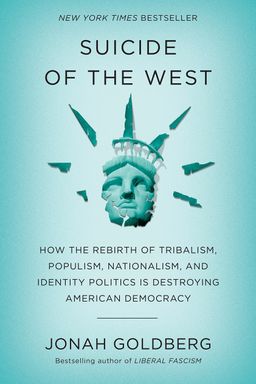
You live in the age of what Jonah Goldberg calls the Miracle—a historically unique explosion of prosperity, rights, and longevity that began only a few centuries ago. For roughly two million years, humans struggled under conditions of poverty and violence that were, by today’s standards, unimaginable. Then, suddenly, everything changed. Life expectancy doubled, incomes multiplied, technology accelerated, and ordinary people gained rights once reserved for kings. Goldberg urges you to recognize how strange—and fragile—this accomplishment is.
He argues that this transformation was not inevitable or geographically determined by coal or trade routes. It was the product of ideas: a Lockean revolution that elevated the individual over tribe, reason over passion, and rule of law over arbitrary power. The central claim of the book is that modern civilization is an artificial achievement built atop ancient, tribal instincts. Sustaining it requires gratitude for the institutions and habits that tame our primitive selves.
The Fragile Nature of Modernity
Before 1700, per-capita income barely rose above subsistence levels. Then, in what economists like Deirdre McCloskey and J. Bradford DeLong call the Great Enrichment, wealth and health took off in a hockey-stick curve. Goldberg calls this an “accidental modernity” because it was not planned—it emerged when a cluster of cultural changes encouraged innovation and protected individual initiative. You live in an anomaly, not a permanent state. That means gratitude and vigilance are civic duties.
Human Nature Never Upgrades
Goldberg reminds you that evolution did not design the human brain for open societies of strangers. You are still wired for life in Dunbar-sized tribes—roughly 150 people—where loyalty, suspicion, and face-to-face trust ruled. Those instincts persist today as status games, group identity, and moralistic tribalism. Civil society and markets are ingenious human inventions that harness these instincts toward cooperation rather than conflict. But when they erode, the tribal self reawakens.
The Role of Ideas and Institutions
Lockean liberalism redefined the moral universe. Property became an extension of personal labor, contracts replaced kinship, and constitutional rules limited power. These ideas laid the groundwork for capitalism and democracy—systems that extended cooperation to strangers and rewarded innovation. Goldberg traces this lineage through thinkers like John Locke, Adam Smith, and the American Founders, whose constitutional design institutionalized mistrust by separating powers and enforcing law. The result: markets for goods and checks on rulers.
(Parenthetical note: Goldberg joins scholars like Douglass North and Deirdre McCloskey in arguing that rhetoric and norms, not raw resources, made prosperity possible.)
Why It’s Easy to Forget—and Dangerous To
Just as civilization is artificial, corruption is natural. The Miracle must be maintained against two corrosive forces: ingratitude and romanticism. Ingratitude forgets the labor of earlier generations and assumes freedom is self-replenishing. Romanticism longs for tribal authenticity—what Rousseau called the noble savage—and fuels populist and collectivist movements that promise unity at the cost of liberty. Individually, these impulses seem benign; together they erode the fragile latticework of modernity.
The Book’s Journey
Across its chapters, Goldberg explores how the Miracle arose (in “Accidental Modernity” and “Why Capitalism Emerged Here”), how our inner tribe undermines it (“Our Inner Tribesman”), and how romantic movements corrupted it (“Romanticism and Corruption”). He dissects how states evolved from predators to protectors (“Stationary Bandits”), how the family civilizes instincts (“Family as Keystone”), and how cultural narratives—from Frankenstein to pop culture—mirror our moral anxieties. Finally, he examines modern threats: administrative elites, identity politics, and populist tribalism. His message remains consistent: ideas matter. If liberalism is to endure, you must remember the Miracle’s origins, practice gratitude for its institutions, and defend them from the primitive longings they suppress.
Core Insight
The Miracle is not an evolutionarily natural state—it’s an intellectual, moral, and cultural invention. It emerged when we disciplined the tribesman within through law, property, religion, and family. It will persist only if we remain grateful enough to maintain those constraints on ourselves.