
Idea 1
The Power of a Positive Mental Attitude
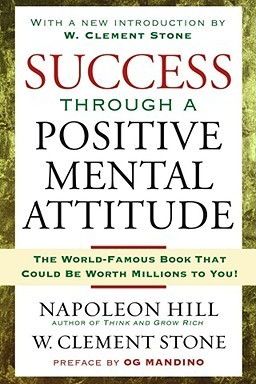
Why do some people flourish under adversity while others collapse? Napoleon Hill and W. Clement Stone argue that the secret lies in your mind's invisible talisman: Positive Mental Attitude (PMA) and Negative Mental Attitude (NMA). Every thought, reaction, and decision flips this talisman one way or the other—and that determines whether you attract blessings or repel opportunity.
Throughout their collaboration, Hill and Stone weave one consistent message: success is not random luck but the habitual discipline of your thinking. You can train your subconscious to operate like a success-seeking instrument through PMA, definite purpose, accurate thinking, and continual action. The book presents examples from everyday life and industrial history to prove the claim in practice.
Two Faces of the Talisman
Your attitude acts as an invisible magnet. When it faces PMA, it pulls opportunity toward you; when flipped to NMA, it drives it away. PMA includes faith, initiative, courage, tolerance, generosity, and common sense. NMA expresses fear, envy, defeatism, and excuses. S. B. Fuller’s story—a tenant farmer’s son who dared to think like an industrialist, read inspirational books, and used PMA to raise capital for his soap company—illustrates the power of this mental orientation. By contrast, the woodcutter who hoarded his secret never prospered, showing how secrecy and scarcity thinking block prosperity.
Practicing PMA
PMA is not a mood; it’s a trainable habit. The authors recommend deliberate self-suggestions such as “What the mind can conceive and believe, it can achieve,” practiced until reflexive. Tom Dempsey, born without hands, and Henry J. Kaiser, who learned the joy of work from his mother, are cases of PMA translating directly into concrete achievement. They faced barriers but held their talisman toward faith and perseverance.
PMA as Catalyst for All Success Principles
Hill and Stone identified 17 success principles—definiteness of purpose, applied faith, controlled attention, teamwork, creative vision, and others—but insist PMA is the activator. Without PMA, these principles remain inert. With PMA, they form a practical success formula. When Milo C. Jones, paralyzed from the neck down, used PMA and definite purpose to teach his family sausage production, he embodied how mental attitude can overpower physical restriction.
Turning Adversity into Growth
Every problem, the authors say, contains the seed of an equal or greater benefit. Charlie Ward’s transformation from prisoner to president of Brown & Bigelow demonstrates the six-step method: ask for guidance, analyze your problem, affirm “That’s good!”, and keep searching until a solution appears. Even economic depressions, sexual energy, or guilt can be transmuted into vitality through PMA-directed actions.
Action as the Bridge
Thought alone is inert. Hill condenses the method into a practical self-starter: DO IT NOW. Every time the impulse to act arises, follow it. This reflex transforms visualization into achievement. Kenneth Harmon’s habit of immediate action—copying Think and Grow Rich from memory while captive—captures the spirit of decisive PMA.
Core Insight
PMA is both philosophy and tool: it trains your thoughts, conditions your subconscious, and guides your behavior. You grow rich in spirit, health, and wealth by continually flipping your talisman toward PMA—believing in possibilities, acting promptly, learning from defeat, and helping others do the same.
The book’s deeper promise is moral as well as practical: condition your mind to act with faith, honesty, initiative, and generosity, and success ceases to be a chase—it becomes the natural outcome of a clear, positive attitude.