
Idea 1
Success, Luck, and the Limits of Meritocracy
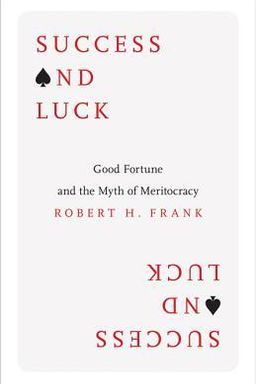
Do you really deserve your success—or could luck have had more to do with it than you think? In Success and Luck: Good Fortune and the Myth of Meritocracy, economist Robert H. Frank challenges the comforting idea that success results purely from talent and hard work. He argues that while those qualities matter deeply, the decisive ingredient behind great achievements—and great fortunes—is often random chance.
Frank’s core claim is both simple and radical: our world is far more meritocratic than ever, yet we stubbornly maintain false beliefs about how merit alone determines outcomes. He contends that luck systematically shapes every level of success—from being born in rich countries and healthy families, to meeting the right mentor or getting the perfect break. And because many successful people don’t recognize that luck’s invisible hand aided them, they become less inclined to support the collective investments that made their success possible.
In exploring this idea, Frank weaves together economics, psychology, sociology, and personal experience. He starts from harrowing stories—such as surviving sudden cardiac death thanks to an ambulance’s quick arrival—to highlight how luck decides literal survival. He then expands to societal luck: the historical and infrastructure advantages of developed nations, the educational and familial circumstances that shape ambitions, and the economic systems—“winner-take-all markets”—that amplify tiny differences in ability and luck into enormous disparities of wealth.
The Myth of Complete Control
At the heart of the book lies a tension between two narratives. One, favored by many conservatives and self-made millionaires, insists that success is self-created through discipline and risk. The other, more nuanced, recognizes that success depends jointly on ability and opportunity. Frank illustrates this conflict through his televised debate with commentator Stuart Varney, who rejected any suggestion that luck contributed to his own success as an immigrant broadcaster. But as Frank patiently explains, even taking risks implies that outcomes are uncertain—meaning Varney was by definition lucky to have succeeded instead of failed.
This individual defensiveness about luck fuels a broader cultural problem. When people attribute success solely to their virtues, they feel entitled to keep all their rewards. They forget the social systems—roads, education, security, and innovation ecosystems—that enable prosperity. This blindness has political consequences: declining taxes on the wealthy and decaying public investment. Frank thus contends that recognizing luck’s role isn’t merely about humility; it’s a prerequisite for sustaining the environments that make success possible for anyone.
Why Luck Matters More Than We Think
Through vivid examples, Frank distinguishes between personal luck (accidents and coincidences) and systemic luck (being born into the right society or time). A brilliant Bhutanese cook he once employed, Birkhaman Rai, possessed remarkable ingenuity and practical intelligence—but because he lived in rural Nepal without education or opportunity, he probably earned less than $1,500 per year. Had he been born in America, Frank observes, he would likely have been wealthy. Rai’s story reveals how birthplace and environment—luck none of us choose—can outweigh talent.
Frank deepens the argument by invoking psychology’s availability heuristic: we remember our hard work vividly but forget the structural advantages and good breaks we’ve enjoyed. This bias leads us to believe our triumphs were inevitable. Yet as his simulations of competitive markets show, even when luck accounts for only 2% of total performance, the winners of large contests are almost always the luckiest members of the talented pool. The larger and more competitive a field becomes, the more luck determines who gets the top prize.
Why Recognizing Luck Changes Everything
If luck shapes our outcomes, gratitude should shape our attitudes. Frank connects realizing one’s luck to generosity and civic responsibility. Studies by psychologist David DeSteno show that gratitude increases cooperation and altruism, suggesting that acknowledging fortune’s role might make societies more compassionate and sustainable. Frank’s own experiments found that people who reflect on external causes of their good fortune donate 25% more to charity than those who attribute success to personal effort alone.
Therefore, the point isn’t to diminish achievement—it’s to place it in context. Appreciating luck fosters humility, gratitude, and willingness to strengthen institutions so future generations can enjoy similar luck. That acknowledgment not only benefits society; it even helps the successful themselves. By funding better infrastructure, education, and health systems, they ensure environments that multiply opportunities for everyone—including their own descendants.
The Broader Promise
Ultimately, Frank’s argument culminates in a hopeful call: societies can translate acknowledgment of luck into policy change. His proposed progressive consumption tax would redirect wasteful luxury spending into productive public investment, raising living standards without sacrificing happiness. By accepting that luck helped us succeed, he says, we can repay that debt forward—funding the luck of future generations.
“We could make the educational investments that help foster success, tackle our infrastructure maintenance backlog, expand health care coverage, and reduce poverty—all without requiring painful sacrifices from anyone.”
Frank’s message resonates beyond economics. It’s a moral philosophy disguised as empirical analysis: fortune obligates gratitude, and gratitude demands generosity. Whether you’re an entrepreneur, policymaker, or dreamer chasing success, he challenges you to remember the invisible networks of support—and luck—that made your path possible. Recognizing them is not weakness. It’s wisdom.