
Idea 1
The Subscription Economy: Why Services Are Replacing Products
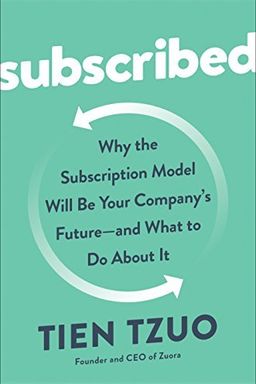
Have you ever wondered why you can stream endless movies but hardly buy DVDs anymore? Or why owning a car feels old-fashioned compared to summoning one on-demand? In Subscribed, Tien Tzuo argues that the most profound shift in modern commerce is moving from selling products to delivering ongoing services. He calls this transformation the Subscription Economy—a radical reimagination of business itself that places the customer, not the product, at the center.
From Ownership to Access
According to Tzuo, customers no longer crave ownership—they crave outcomes. We don’t want to own a DVD; we want stories at our fingertips. We don’t want a car loan; we want mobility. This paradigm shift is demolishing the industrial-age product economy, where businesses pushed units through linear supply chains, measured success by margins, and handed customers one-time transactions. Instead, services now thrive on relationships, personalization, and recurring revenue. Subscription companies—from Netflix to Salesforce—start every quarter with revenue already in hand, enabling sustainable, predictable growth.
This reinvention echoes Peter Drucker’s insight that companies manage what they can measure. In the past, businesses measured units sold. Today, in the Subscription Economy, they measure relationships maintained. The future belongs to companies that start with the customer and work backward to design an experience that continuously delivers value.
Why It Matters Now
For the first time since the Industrial Revolution, Tzuo says, business models are being rewritten. Fortune 500 giants that once sold products—GE, IBM, Xerox—are morphing into service-driven enterprises. Meanwhile, digital natives like Amazon, Apple, and Netflix were built from the start around ongoing access and consumer insight. The Subscription Economy doesn’t just change pricing; it changes culture. It reorients organizations to focus on lifetime relationships rather than quarterly results.
This shift has vast economic implications. File it under survival: half of Fortune 500 companies from the year 2000 have disappeared. As Tzuo highlights, companies that understand their customers’ data—and use it to deliver experiences, not objects—will dominate the next century. Business transformation isn’t optional; it’s existential.
Inside the New Model
In this book, Tzuo explores how the subscription model plays out across industries. You’ll see retail stores reinvent themselves as experience zones. Media companies like Netflix and Spotify liberate creators from one-hit dependency. Automakers like Hyundai and Volvo offer flexible car subscriptions. Newspapers, from the Financial Times to The New York Times, abandon advertising addiction for direct reader relationships. Even manufacturers like Caterpillar and Komatsu are turning physical products into platforms for ongoing digital services.
Alongside stories of innovation, Tzuo dissects the new corporate anatomy required to thrive in this environment. Every function—product, marketing, sales, finance, and IT—must be redefined. The result is a living organization that listens, iterates, and evolves continuously. Companies must learn to stay in “beta forever,” embracing agility over perfection.
The Promise of a Circular Relationship
Tzuo summarizes the Subscription Economy with a simple diagram: the shift from a straight line to a circle. The old model was linear—build, ship, and forget. The new model is circular—engage, deliver, measure, and improve. Each subscriber forms a continuous loop of data and feedback that drives innovation. When companies follow their customers, they don’t need to chase hits—they create happiness and predictability instead.
Ultimately, Tzuo’s message is both prophetic and practical: your customers are no longer hiding at the end of your distribution chain. They are your partners in creation. To succeed, you must stop selling products and start offering experiences that evolve. The question isn’t whether your industry will join the Subscription Economy—it’s how soon.