
Idea 1
The Human Time Machine: Imagining Tomorrow’s Emotions
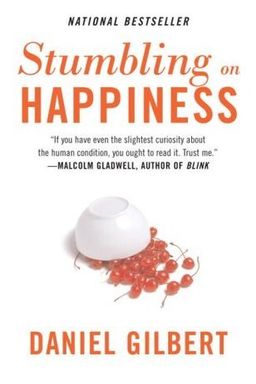
What makes you human is not just memory but imagination—the ability to mentally travel forward in time. In Stumbling on Happiness, Daniel Gilbert argues that our species’ signature strength, prospection, is both a gift and a source of error. The same frontal-lobe machinery that lets you plan a career, anticipate romance, or worry about tomorrow also generates systematic misforecasts of future feeling. You think, feel, and choose based on imagined futures—but those simulations are distorted by your brain’s architecture and habits of interpretation.
Nexting vs. Prospection
Gilbert distinguishes between automatic prediction—"nexting"—and conscious simulation—prospection. Nexting is what a sea slug does when it learns to expect a shock after a light; it is immediate and biological. Prospection, powered by the frontal lobes, lets you picture yourself next year wearing a different suit or feeling heartbreak. Clinical cases like Phineas Gage and patient N.N. reveal how frontal-lobe damage severs that capacity, trapping patients in a perpetual present. The frontal cortex is your mental time machine.
Why You Look Forward
You imagine tomorrow for pleasure and control. Anticipation itself is enjoyable; people even delay rewards to savor them. You also imagine to influence outcomes—if you foresee rain, you carry an umbrella. Control feels powerful: experiments with nursing-home residents and lottery players show that perceived control boosts happiness more than objective probability. Yet, as Gilbert stresses, this control is often illusory—you roll your own dice and pick your own numbers thinking it matters.
The Subjectivity of Happiness
Before understanding predictive errors, Gilbert defines happiness itself. Emotional happiness is pure feeling, moral happiness is virtuous living, and judgmental happiness is approval (“I’m happy for you”). Only emotional happiness can be measured scientifically—and imperfectly, via self-report. Seen through conjoined twins Lori and Reba Schappell’s self-described joy, Gilbert reminds you that happiness is private, inaccessible except through honest introspection and aggregate patterns across populations.
The Forecasting Problem
Because happiness is subjective and imagination is partial, your forecasts go wrong. You picture the future using fragments of memory, present feelings, and false detail. You fill gaps with plausible inventions that feel real. You anchor predictions in the present, fail to consider absences, and compare options improperly. Worse, you ignore the way your psychological defenses will change your future feelings after events occur.
Core insight
Your frontal lobes give you imagination, but imagination misleads because the same system that creates vivid futures also omits, distorts, and fills them in. Understanding those biases—presentism, filling-in, anchoring, and immune neglect—lets you forecast and choose more wisely.
Across the book, Gilbert invites you to watch your mind making its own future films—accurate in plot, wrong in feeling. You are, as he puts it, an ape with a time machine—and you need a manual to drive it without illusion.