
Idea 1
Matter as a Mirror of Humanity
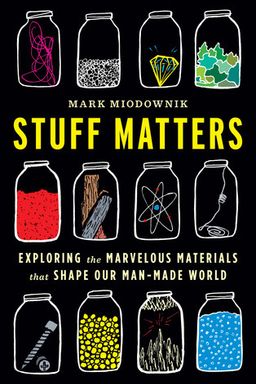
Have you ever stopped to imagine what your world would look like if every material—your glass panes, concrete buildings, stainless steel cutlery, and plastic gadgets—suddenly vanished? In Stuff Matters, materials scientist Mark Miodownik takes you beneath the surface of everyday objects to reveal how matter itself has shaped our civilization, our senses, and even our emotions. His central argument is simple yet profound: materials are not passive things we use—they are active participants in human story, reflections of our ingenuity, desires, and identities.
Miodownik contends that understanding materials is understanding ourselves. From concrete to glass, steel to chocolate, each material encodes human needs—such as protection, pleasure, or communication—and technological capacity. He writes as both scientist and storyteller, blending curiosity, history, and cultural psychology to show how the hidden architectures of matter underpin everything we see, touch, and taste.
The Invisible Story Beneath Every Material
At the book’s core is the idea that materials act as mirrors for who we are. Miodownik begins with a deeply personal story—his stabbing as a teenager—and transforms this trauma into curiosity about steel, the substance that both injured and protected him. This event anchors his lifelong fascination with how matter defines human experience: our tools, our safety, our beauty, and even our vulnerability. Each chapter is built around a familiar material—paper, concrete, glass, chocolate, plastic, ceramic, steel—and unfolds as both a scientific and emotional biography, tracking how these materials evolved from raw elements into cultural artifacts.
He explores how humans learned to manipulate atomic structures long before they could see atoms, producing eras of civilization defined by materials—the Stone Age, Bronze Age, and Iron Age. But Miodownik extends the lineage into our own time, arguing that the twentieth century should rightly be called the Age of Materials Science, when we began to understand not just what matter is made of but how to design its molecular architecture.
The Language of Materials
Each substance—steel’s indomitability, glass’s invisibility, chocolate’s sensuality, concrete’s fundamentality—becomes a dialect in what Miodownik calls the language of materials. Like words, materials express intent: stainless steel speaks of durability and cleanliness; concrete speaks of permanence and empire; porcelain whispers of refinement and identity. By reading materials as cultural narratives, he bridges physics and philosophy, chemistry and design.
The author blends storytelling with elegant lessons in materials science, showing how atomic bonds, crystalline structures, and molecular behaviors explain everyday phenomena: why razors cut, why glass shatters, why chocolate melts perfectly in the mouth. But he also connects these microscopic mechanisms to macroscopic meanings—how they give rise to entire ways of living. (Comparable works, like Philip Ball’s Bright Earth, also link chemistry and culture, but Miodownik’s approach feels more personal, more tactile.)
Materials as Extensions of Human Desire
For Miodownik, the materials surrounding us reveal what we value most. Concrete shows our obsession with permanence and power; glass expresses our yearning for light and transparency; plastics reflect our craving for convenience and control; ceramics embody our pursuit of civility and ritual; and steel demonstrates our eternal struggle for strength. In every case, we create materials to answer our emotional and existential questions: How can we feel safe? How can we see further? How can we taste pleasure? How can we heal? How can we live longer?
He shows that materials have not only changed the world physically but changed our psychology, from how we connect socially (through paper letters or phone screens) to how we see beauty (diamond’s sparkle or porcelain’s smoothness). Each physical innovation rewires our cultural imagination.
Why This Matters to You
If you picture your life—your home, your clothing, your devices—you are seeing the culmination of thousands of years of material evolution. Miodownik argues that to truly understand progress, creativity, and even compassion, you must learn to see materials not as neutral but as alive—shaped by the hands, hopes, and histories of those who made them. His closing chapter, “Synthesis,” drives this home, revealing how materials interconnect through nested structures—from atoms to nanostructures to microscopic scaffolds to human-scale design—mirroring the layered nature of human individuality itself.
This book ultimately asks you to look around your world with new eyes. The spoon in your mouth, the glass screen of your phone, and the concrete under your feet are not inert things but manifestations of curiosity, creativity, and desire. Matter is not separate from us—it is us, written in atomic symbols and cultural stories. Miodownik’s message makes science personal again: if you want to understand what it means to be human, start by understanding the stuff of life.