
Idea 1
The Geometry of the Self Through Tennis
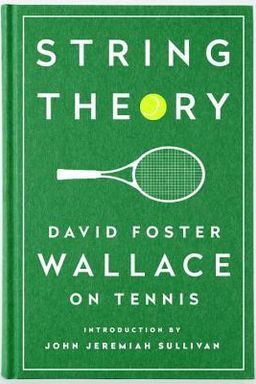
What if the way you play sports could reveal the architecture of your mind? In String Theory: On Tennis, David Foster Wallace considers tennis not merely as a sport but as a metaphorical lens for understanding consciousness, perfection, and the struggles of being human. Across five essays written between 1990 and 2006, Wallace transforms tennis—a game of angles, wind, and sweat—into a meditation on obsession, joy, failure, commerce, and transcendence. He finds, in its strange geometries and lonely duels, a field for exploring what it means to be alive and to attempt mastery in a chaotic world.
Wallace’s writing never confines itself to the court. Instead, it asks you to consider: what does it mean to work toward perfection when you know you’ll never reach it? What happens when art and athleticism meet? And what can the pursuit of greatness in a physical sport tell you about the limits of your own mind and language?
Tennis as Philosophy and Religion
At the heart of Wallace’s fascination is tennis as a quasi-spiritual pursuit. From childhood, he loved the game’s precision and isolation—the way it mirrors intellectual life. In the introduction by John Jeremiah Sullivan, tennis emerges as a sort of monastic discipline, where silence and geometry combine into ritual. Players live at the limits of endurance, much like philosophers or writers struggling to express the ineffable. Wallace, himself a regionally ranked junior player, saw this firsthand while growing up in Illinois, where the wind forced him to abandon control and embrace what he famously called “a weird robotic detachment from unfairnesses of wind and weather.”
For Wallace, tennis becomes a spiritual test of consciousness: how can the mind stay present amid distractions? What happens when thought intrudes on instinct? These questions thread through all of his essays—from the early “Derivative Sport in Tornado Alley” to his later masterwork, “Federer Both Flesh and Not.”
The Writer as Athlete, the Athlete as Philosopher
Each piece in the collection reflects a stage in Wallace’s understanding of excellence. The essays move from personal reflection on his own youth in windy Illinois to intellectual analyses of tennis stars like Tracy Austin, Michael Joyce, and Roger Federer. In “How Tracy Austin Broke My Heart,” Wallace explores the paradox of athletic genius—the way supreme performers often fail to articulate what makes them great. Their silence is maddening to writers and fans alike, yet that very emptiness—he concludes—is the essence of their talent. In “The String Theory,” Wallace shadows Michael Joyce, a top-100 player, to reveal the grinding, monastic life of professionals outside stardom. The piece is both a study in devotion and a quiet horror story about what single-minded pursuit costs.
By the time we reach “Federer Both Flesh and Not,” written in 2006, Wallace transforms Federer’s grace into myth. Observing him at Wimbledon, Wallace describes a kind of secular epiphany—a “religious experience” of human beauty so precise it reconciles body and soul. In doing so, Wallace also finds a metaphor for the writer’s craft: both writer and athlete strive to shape chaos into order, to communicate perfection through imperfect tools.
Why Tennis Reveals Wallace’s Genius
Reading String Theory is like watching Wallace in motion at full stretch. His prose mirrors Federer’s forehand—elegant, elaborate, and breathtaking in precision. He combines physics, philosophy, and humor in sentences that twist and spin like well-cut serves. If you love writing about sport, this is not really about winning or losing matches. It’s about consciousness as movement: the paradox of striving and surrender, intellect and instinct, body and mind.
Why does this matter to you? Because Wallace’s tennis essays are secretly about control and acceptance—skills essential not just to athletes, but to anyone trying to live well. He shows how mastery depends on humility, how beauty emerges from constraint, and how meaning is born in motion. Whether you are a player, an artist, or an overthinker, Wallace’s tennis essays invite you to ponder how your own mental geometry—your self-curving arcs of thought—shapes the life you play each day.