
Idea 1
Stretching—Unlocking the Power of Less
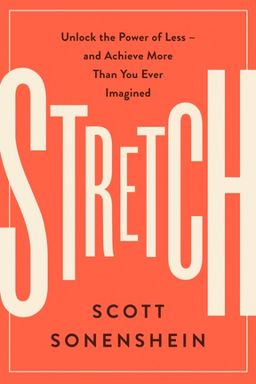
Have you ever felt that if you just had a bit more—more time, more money, more tools—you could finally do your best work? In Stretch, Scott Sonenshein argues that this common belief is an illusion. More doesn’t lead to better; better use leads to better. Sonenshein claims that our obsession with accumulating resources—what he calls chasing—often undermines success, innovation, and fulfillment. True achievement, he contends, stems from learning to stretch—that is, making the most of what’s already at hand.
Sonenshein’s central argument reframes what it means to be resourceful: while most people chase after new resources, stretchers transform limitations into advantages. They approach constraints not as barriers but as catalysts for creativity and growth. From entrepreneurs who build empires from scraps, to artists and managers who innovate through necessity, stretchers find more possibilities precisely because they stop believing that more resources automatically produce better results.
The Core Argument
At its heart, Stretch explores the psychology of resourcefulness and the mindset shift required to escape the endless cycle of accumulation. Sonenshein contrasts two opposing worldviews: the chasing mindset, which assumes that more tools, money, or time are essential for better performance, and the stretching mindset, which focuses on creatively expanding what you already possess. Stretchers cultivate ingenuity, find satisfaction in constraints, and create more with less.
The book’s appeal lies in its blend of storytelling and science. Sonenshein draws on vivid case studies—from Dick Yuengling, who rebuilt a billion-dollar brewery through thrift, to filmmaker Robert Rodriguez, who created a Hollywood hit with just $7,000 in hand. He combines behavioral psychology, management research, and creative theory to show that resourcefulness outperforms resource abundance. Stretching, he insists, isn’t about deprivation—it’s about empowerment and adaptability.
Why This Matters
We live in an age where productivity tools, self-help programs, and corporate systems promise success through accumulation. Yet Sonenshein reveals that abundance often dulls creativity and encourages waste. When resources flow freely—as in Silicon Valley during the dotcom boom—companies lose discipline, squander funds, and chase growth at all costs. When resources tighten, creativity flourishes. Constraints force focus and innovation; scarcity becomes a teacher rather than a threat.
Stretching, therefore, is not merely a professional skill—it’s a way of living. Sonenshein defines it as a conscious decision to recognize hidden possibilities and mobilize existing assets. In stretching, you reimagine “what you have” instead of lamenting “what you lack.” You shift from wishful accumulation to practical creativity.
The Book’s Map of Ideas
Sonenshein organizes the book along three arcs:
- Part One: Replaces the “chasing” mindset with the “stretching” mindset, revealing how our quest for more blinds us to existing opportunities. Stories of companies and individuals showcase how constraints drive creativity.
- Part Two: Teaches practical stretching skills—acting without perfect plans, leveraging expectations positively, and mixing unlikely combinations such as competition and collaboration or creativity and routine.
- Part Three: Warns about overstretching, when too much frugality or overconfidence turns flexibility into harm, and concludes with exercises to strengthen your ability to stretch daily.
Across these sections, Sonenshein connects psychology, sociology, and business insights to show how people flourish not because they have more, but because they use better. Stretchers cultivate curiosity, adaptability, and ownership. They view problems as puzzles, not roadblocks. They ask: “What can I make happen right now with what’s here?”
The Promise of Stretching
Sonenshein closes with an optimistic vision: by stretching, you stop waiting for ideal conditions and start acting. This mindset fosters sustainability, resilience, and meaning. The wandering brewer, the minimalist baseball player, the frugal manufacturer, and the ingenious filmmaker all discovered freedom in constraints. Their examples prove that the most successful people are not those with the most to use—but those who see the most in what they have.
Key Message
Instead of chasing more, learn to stretch: reimagine, reuse, and reinvent. The power of less lies in realizing that enough is already abundance when used wisely.