
Idea 1
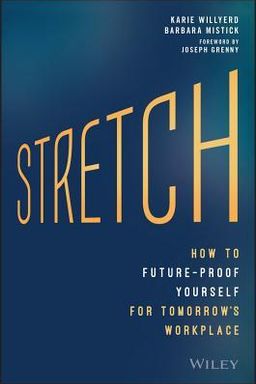
Stretch: How to Stay Relevant in a Constantly Changing World of Work
Have you ever wondered what it takes to stay relevant when careers seem to expire faster than technology updates? In Stretch: How to Future-Proof Yourself for Tomorrow’s Workplace, Karie Willyerd and Barbara Mistick argue that success in the modern workplace hinges not on job security or seniority, but on your capacity to stretch—to continually learn, grow, and reinvent yourself.
Willyerd and Mistick contend that traditional career models, defined by lifelong employment and predictable advancement, are obsolete. Today’s professionals face a volatile, uncertain, complex, and ambiguous (VUCA) world shaped by globalization, automation, and demographic disruption. To thrive, you must take ownership of your future—because as the authors put it, “there is no future in any job; the future lies in the person who holds the job.”
A New Imperative for Modern Workers
Central to the book is the idea of the Stretch Imperatives—three realities that define today’s working world: (1) It’s all on you; (2) You need options; and (3) You have dreams. These principles capture both the freedom and responsibility of modern work. You must learn to manage your own learning, build career flexibility, and stay motivated to pursue your goals—even as external structures like corporate career tracks disappear.
To navigate this new reality, the authors propose five transformative practices that form the backbone of their approach: Learn on the Fly, Be Open, Build a Diverse Network, Be Greedy About Experiences, and Bounce Forward. Together, they create a roadmap to professional resilience and personal growth. These practices aren’t theoretical—they’re drawn from global surveys, hundreds of interviews, and real-life stories like Jade, a journalist who turned media upheaval into opportunity, or Brandon, a dyslexic learner who discovered how to thrive by taking charge of his own development.
The Context: Why “Stretch” Matters Now
Using a research foundation from the Workforce 2020 study with SAP and Oxford Economics, the authors highlight a paradox: while most employees fear their skills becoming obsolete, few companies truly invest in developing them. With less than one-third of organizations offering meaningful training benefits, professionals must fill the gap themselves.
This is happening against a backdrop of global megatrends—automation, data explosion, demographic change, and shifting work ethics—that are redefining the very notion of “career.” For instance, half of today’s work can already be automated, and one-third of U.S. workers are freelancers or contractors. Companies no longer promise stability; instead, they value adaptability, learning agility, and innovation.
The Book’s Vision: Future-Proofing the You of Tomorrow
Stretch isn’t about doing more work—it’s about doing work differently. The authors emphasize developing a growth mindset (from Carol Dweck’s research) and cultivating the capacity to learn on the fly. This extends beyond technical skills into social intelligence, networking, and emotional resilience. Whether you’re early in your career or decades in, the key to future-proofing is developing capabilities that transcend specific jobs—capabilities like cross-cultural dexterity, creative problem-solving, and personal advocacy.
At its heart, Stretch offers hope. The authors argue that anyone can replace fear of obsolescence with curiosity and action. They champion a philosophy of self-renewal built around flexibility and purpose—a theme echoed in their inspirational case studies, from war survivors to startup founders. If the world of work has become unpredictable, then stretching becomes both a mindset and a method for navigating that uncertainty.
A Path from Obsolescence to Opportunity
Throughout the book, Willyerd and Mistick present vivid examples of workers who faced disruption and reinvented their paths. David, a Pulitzer-nominated journalist, found new purpose after the digital collapse of print media; Jade leveraged online storytelling to remain relevant; and executives across industries admitted that “more preparation is needed for leaders.” Their stories illustrate that everyone—regardless of position—must learn continuously, build cross-functional networks, and adapt to emerging roles.
The authors also extend their insights to organizations, encouraging leaders to cultivate cultures of curiosity, development, and coaching. Companies like LinkedIn, Oakley, and SAP are used as case studies for how learning ecosystems and talent networks can unlock potential at scale. Yet even in such environments, personal ownership remains critical—“good enough” is never good enough for long.
What You’ll Discover in This Summary
In the following key ideas, you’ll explore the practical side of stretching: how to learn on the fly by mastering curiosity and unlearning old habits; how to be open by welcoming feedback and change; how to build a diverse network that opens doors and provides new perspectives; how to be greedy about experiences to grow faster; and how to bounce forward to thrive through adversity. Finally, we’ll look at the authors’ predictions for the future of work and their list of the ten capabilities of tomorrow—from emotional intelligence to stretchpertise—that define successful 21st-century professionals.
The core message of Stretch:
The future belongs not to the most credentialed, but to the most adaptable. Those who stretch—who continuously learn, take risks, and find meaning in their work—will shape not just their careers, but the workplaces of tomorrow.