
Idea 1
Turning Stress from Enemy to Ally
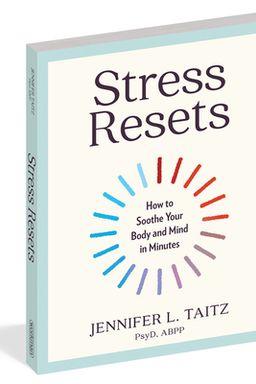
Have you ever wished you could pause your spiraling thoughts in a stressful moment—literally press a reset button for your mind? In Stress Resets, clinical psychologist Jennifer L. Taitz argues that you can. Drawing on years of cognitive behavioral, acceptance, and dialectical behavior therapy practice, Taitz contends that stress isn’t inherently bad—it’s our reaction to it that matters most. With the right tools, she insists, we can transform stress from a paralyzing force into a powerful source of growth and meaning.
In this conversational and research-backed guide, Taitz introduces the concept of “stress resets”—quick, effective techniques designed to help you pause, ground yourself, and choose wiser responses in minutes rather than hours. These strategies are drawn from evidence-based therapies—DBT, ACT, CBT, and mindfulness—and they’re intentionally short and practical. As she explains, the goal isn’t to avoid stress or magically erase it but to pivot from habitual reactions like overthinking, avoidance, or self-criticism to more effective, value-driven actions.
Why We Need to Rethink Stress
Taitz begins by noting how widespread stress has become. A 2022 American Psychological Association survey found that 27% of U.S. adults feel so stressed they struggle to function. Modern life—with political divisions, financial volatility, and the aftermath of a global pandemic—has made intense stress practically inevitable. Left unaddressed, this state can devastate physical and psychological health. Yet, Taitz insists that we can intervene—not by eliminating stress but by changing our relationship to it. Echoing pioneering researchers Hans Selye and Richard Lazarus, she reframes stress not merely as an external force but as an interaction between event and response. Your beliefs about your abilities shape how you experience tension. A challenge you view as manageable can motivate and strengthen you; one you view as overwhelming can cripple you.
She drives this point home with humorous anecdotes about herself and her husband—spilled milk and self-inflicted stress spirals included—to show how small events snowball when we’re reactive. These stories are familiar because they mirror most of our daily patterns: we stew, self-criticize, and seek instant comfort in distraction or substances. Taitz calls this the “stress cycle”: thoughts (“I can’t handle this”), body reactions (racing heart, clenched jaw), and avoidance behaviors reinforcing one another until we’re trapped in a loop.
The Science of Resets
A central insight of Stress Resets is Viktor Frankl’s famous observation: “Between stimulus and response there is a space.” Taitz’s mission is to help readers widen that space. Using micro-practices lasting mere minutes, you can interrupt biological stress cycles, regain perspective, and make choices aligned with your values. These practices draw on three therapeutic models she uses in her own clinical work:
- Dialectical Behavior Therapy (DBT): Developed by Dr. Marsha Linehan, this framework teaches distress tolerance and mindfulness skills to handle emotions without impulsive reactions.
- Acceptance and Commitment Therapy (ACT): Created by Dr. Steven Hayes, ACT emphasizes psychological flexibility—accepting inner experiences, defusing from unhelpful thoughts, and acting according to your core values.
- The Unified Protocol (CBT variant): Spearheaded by Dr. David Barlow, it provides strategies to face avoidance and regulate emotions across different psychological problems.
These therapies overlap in one crucial idea: resisting or suppressing discomfort makes it worse. Instead of trying to “calm down,” you can learn to ride out the wave of bodily reactions, transforming them into manageable energy. This aligns with the neuroscience of stress regulation, which shows that short, mindful interventions calm the amygdala and re-engage the brain’s rational centers.
The Structure of the Book
Taitz’s book is smartly divided into three parts to mirror the journey from short-term survival to long-term growth:
- Part One: Befriending Stress, Living Better explores mindset shifts. You’ll learn to “turn your knots into bows,” distinguish stress from anxiety, regulate emotions, rethink overthinking, and identify healthier ways of coping without substances.
- Part Two: Stress Resets for Intense Times introduces quick “Mind,” “Body,” and “Behavior” resets—bite-sized tools like “anchor yourself,” “sing your thoughts,” “tense to let go,” “walk outside,” or “build a hope kit.” Each reset takes minutes and draws from empirical research.
- Part Three: Stress Buffers for Building Resilience focuses on long-term lifestyle adjustments—psycho-behavioral “buffers” that strengthen your baseline resilience through practices like mindfulness, gratitude, exercise, breathing regulation, setting sleep routines, and cultivating purpose.
Each exercise is practical and compassionate, written in Taitz’s trademark tone—direct but gentle, like having a therapist cheering you on in plain English. For example, she writes that when overwhelmed late at night, you can still “reduce stress by 50 percent immediately, at no cost, without even trying. Just don’t make things worse.”
The Deeper Promise of Resetting
Ultimately, Stress Resets aims to restore agency. By recognizing that stress is a sign of caring—proof that life matters—you begin to use tension as fuel for growth. Taitz’s stories of clients like Laurie, Melanie, and Cameron show that transformation begins not in removing challenges but in responding differently to them. Stress becomes a teacher instead of a tormentor. You can learn to speak kindly to yourself, find excitement where you used to feel dread, and even design routines that buffer future crises.
In an age of chronic overwhelm, Taitz’s message is surprisingly hopeful: you don’t need to escape stress—you need to reclaim your space between trigger and response. Through micro-resets and steady practice, she helps you do just that, reminding you at every turn that you already possess the tools to live with more calm, courage, and meaning—one reset at a time.