
Idea 1
Discovering and Developing What’s Right with You
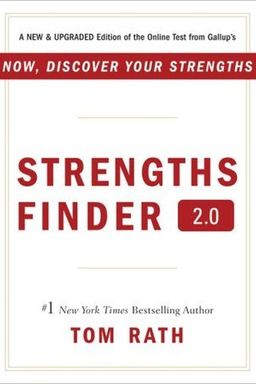
How often have you been told to “improve your weaknesses”? In StrengthsFinder 2.0, Tom Rath, building on Donald Clifton’s pioneering work at Gallup, turns that notion upside down. He argues that your greatest potential for success lies not in fixing deficiencies but in discovering and cultivating your natural strengths. As Rath and his colleagues put it, the path to growth begins with asking what's right with you — not what's wrong. This simple shift unleashes higher engagement, happiness, and performance in both life and work.
Drawing from decades of Gallup research and interviews across industries, Rath reveals that people who focus on their strengths are six times as likely to be engaged in their jobs and three times as likely to report high well-being. Yet most individuals — thanks to cultural conditioning and institutional focus — do the opposite. We spend our education and careers trying to patch our weak spots, and in the process, we neglect what could make us exceptional.
The Strengths Revolution
Rath’s purpose is both practical and transformative: to create what he calls a “strengths revolution” in homes, schools, and workplaces worldwide. Building on Clifton’s “strengths-based psychology,” the book introduces the Clifton StrengthsFinder assessment—a scientifically validated tool that identifies your top five of 34 talent themes, from Achiever and Activator to Relator and Strategic. Armed with this language, you can name, claim, and develop your strengths intentionally. The goal isn’t self-indulgent; it’s about aligning what you naturally do best with how you live and work, ultimately contributing more effectively to the people and causes you care about.
Gallup’s data show that people who apply their talents daily not only perform better but are emotionally healthier. Organizations that nurture these talents see drastically reduced disengagement. For instance, Rath cites a study showing that when managers focus on employees’ strengths, active disengagement plummets from 40% to just 1%. This means even small changes in focus—like a leader helping employees use their strengths each day—can transform company culture overnight.
From the Path of Most Resistance to Natural Flow
Rath contrasts the strengths philosophy with what he calls the “path of most resistance.” Society idolizes people who overcome their limitations, from Hollywood underdogs to heartwarming sports stories like Rudy. Yet as inspiring as these examples are, they often misdirect us. Trying too hard to become what we are not drains time and energy from the talents that could make us truly great. Rath proposes a reframed credo: You can’t be anything you want — but you can be a lot more of who you already are.
Through relatable narratives — such as a shoemaker in Mexico whose productivity tripled once he partnered with a natural salesman who complemented his strengths — Rath demonstrates that success comes from working with your nature, not against it. The key is awareness: you must first identify your innate patterns (your “themes of talent”), then develop them into mature strengths through knowledge, skill-building, and practice.
Building a Strengths-Based Life
A “strength” in the Gallup model is more than a natural bent; it’s a talent that’s been refined into performance capacity. Rath shows that success rests on multiplying your innate talent by investment—practice, learning, and effort. Someone with low talent but high effort can achieve competency (like Rudy did with football), but someone with high talent and equal effort can achieve mastery. This means development isn’t about becoming well-rounded—it’s about becoming well-honed.
Ultimately, StrengthsFinder 2.0 challenges you to abandon perfectionism and embrace potential. It invites you to explore 34 unique strengths categories, from analytical thinking to empathy, and use your personalized report to design your career, relationships, and goals around what you naturally do best. Rath’s message is audacious but liberating: when you stop trying to fix who you aren’t and start refining who you are, engagement, productivity, and joy follow. In short, this book is a roadmap to becoming the best version of yourself—not by striving to change your wiring, but by magnifying it.