
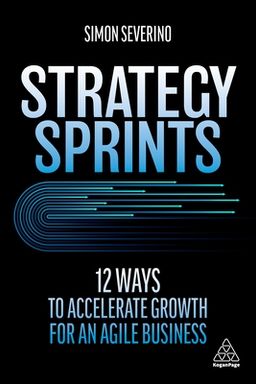
Strategy Sprints cover

Strategy Sprints

by Simon Severino

Strategy Sprints (2022) dives into strategic innovation and rapid business growth, offering out-of-the-box methods to distinguish your brand. Learn to master time, nurture customer relationships, and ensure steady growth. This book empowers you to break free from the ordinary and succeed in the business world.

Building an Agile Business That Truly Runs Itself

Have you ever felt that your business runs you instead of the other way around? In Strategy Sprints, Simon Severino argues that an agile business isn’t just a dream—it’s a disciplined reality you can create with simple, iterative systems that double your revenue in 90 days. His central claim is that freedom and rapid growth don’t come from working harder or chasing more opportunities, but from focusing on fewer, higher-impact activities through a sprint-based methodology that fuels both profit and personal freedom.

Severino’s premise starts with a painful truth every entrepreneur knows but rarely admits: many of us are stuck in the daily grind, working too much in the business and not enough on it. He tells his own story of rapid initial success—earning half a million euros in his first year—coupled with misery from constant exhaustion and disconnection. His wake-up call came when his wife became pregnant and he realized he needed a smarter model that worked even while he slept. That moment birthed his “Strategy Sprints” framework: a 12-part system designed to automate decision-making, sales, productivity, and team alignment into repeatable, agile cycles.

The Core Argument: Simplicity Creates Scale

The book’s primary contention is that scaling a business requires subtraction before addition. Severino compares it to The Minimalists documentary, where simplicity isn’t emptiness—it’s clarity that lets what remains breathe. Businesses often drown in complexity: redundant meetings, untracked data, unclear responsibilities, or poorly defined offers. Strategy Sprints removes the clutter so you can focus on measurable growth levers—pricing, productivity, systematizing, and sales rate—within precise 90-day cycles. Each week becomes a sprint toward a specific, trackable goal, and each month a reflection point to realign toward long-term freedom.

Why This Matters Now

In today’s fast-moving, volatile market, agility has replaced stability as the ultimate competitive advantage. Severino’s method equips entrepreneurs to make real-time decisions rather than waiting for outdated quarterly reports. His Strategy Sprints Compass—a visual roadmap of daily, weekly, and monthly habits—functions like a business GPS, showing you where you are, who’s responsible for what, and what direction to go next. You stop guessing which fires to put out and start proactively steering the company toward measurable outcomes.

The Book’s Journey and Structure

Throughout twelve chapters, Severino distills his experiences coaching thousands of leaders—from tech start-ups to global giants like Roche and Google—into actionable frameworks. He begins with positioning and differentiation (“Eliminate the Competition”), urging readers to be a category of one rather than competing on price. Then he moves into message mastery (“Nail Your Brand and Message”), teaching entrepreneurs storytelling based on the Hero’s Journey model used by Pixar and Apple’s “Think Different” campaign. The next chapters guide readers through creating a growth plan with four levers, establishing real-time decision systems, designing daily flow routines, and crafting an ideal week that balances business traction with personal energy.

Later sections tackle pragmatic business growth: building a value ladder of offers, instituting predictable sales systems, leveraging feedback as a growth engine, mastering marketing through seven essential elements, and developing dense social proof and authority assets. The final chapters dive into talent—how to hire and retain A-players using scorecards, SOPs, and creative recruiting funnels that run almost automatically.

Why Strategy Sprints Works

Severino’s approach works because it combines mindset and mechanics. His mantra—“With freedom comes responsibility”—frames entrepreneurship as a gym for personal mastery. You can’t lead a high-performing team if you’re exhausted or chaotic. His daily and weekly habits teach CEOs to systematize their calendars, delegate non-energy-giving tasks, and review data weekly instead of yearly. Strategy Sprints turns leadership into a rhythm: focused, measurable, and joyful. By organizing your business around cycles of refinement, you stop operating on hope and start managing by numbers.

The Promise and the Payoff

Ultimately, Severino promises that by using these sprint systems, your business can work without you. The company becomes a self-sustaining organism—a “category of one” that scales even while you take the summer off. It’s not just about revenue; it’s about reclaiming your autonomy and designing a life that feels more like freedom than firefighting. As he says, “You can never have one without the other.” Strategy Sprints is both a mindset and a method—a masterclass in how structure creates liberation.


Becoming a Category of One

Simon Severino begins his program with identity—the foundation of strategy. In Chapter One, “Eliminate the Competition,” he asks a provocative question: why compete at all when you can make competition irrelevant? Using vivid stories from a billion-dollar tech start-up and his own TEDx talk on “Being a Category of One,” Severino shows that businesses stagnate not because they’re bad, but because they’re vanilla—too similar to everything else in the market.

From Fear to Bold Differentiation

Severino tells a story about freezing on the football field as a child, afraid to take a shot even when his coach yelled for him to score. That fear—of standing out or failing—is the same one that keeps businesses in mediocrity. The antidote is differentiation. He borrows from Blue Ocean Strategy (Kim & Mauborgne) to explain that crowded industries, or “red oceans,” force companies into price wars, bleeding profits. But a blue ocean, where you define your own category, allows infinite growth.

Four Steps to Standing Alone

  • Identify if you’re vanilla: Audit how customers compare you with competitors. If your team can’t answer clearly “why you?” you’re swimming in red water.
  • Define your business: Reposition based on your best customers, not your product. Severino’s example start-up shifted from generic enterprise software to specialized “global shipping software” and unlocked explosive growth.
  • Determine who you serve: Go nine layers deep beyond demographics into aspirations, dreams, and fears. He illustrates this difference by comparing Prince Charles and Ozzy Osbourne, who share surface demographics but utterly divergent inner worlds.
  • Embody your vision: Vision isn’t a statement—it’s a physical experience. Severino recommends daily visualization, where you feel, smell, and emotionally relive success until it becomes second nature.

Embodied Vision vs. Paper Mission

Traditional mission statements, Severino warns, are “fantasyland.” They look good on walls but fail when crisis hits. Instead, CEOs must “embody” vision—living it through sensory practice. He likens this to marathon training: visualizing the crowd and the finish line daily until your body automatically chooses commitment over comfort on rainy mornings.

Lesson from Ali Abdaal’s YouTube Empire

One of Severino’s most powerful case studies is YouTuber Ali Abdaal, who scaled his online academy from an estimated 15 students to 350 in his first cohort, amassing over $273,000. Abdaal’s secret was his clarity of audience—defining his “avatar” down to hobbies, cultural background, and emotional drivers. That specificity turned vague marketing into magnetic resonance. As Severino insists, “You don’t need hundreds of clients. You need one client hundreds of times.”

“To be a category of one, stop doing what everyone else is doing. Vanilla gives comfort, not growth.”

This idea redefines entrepreneurship as creative rebellion: by daring to be incomparable, you escape the exhaustion of competition and return to authentic purpose. Severino’s mantra for positioning could replace a hundred other business books—it’s not about being the best at what exists, it’s about inventing the space nobody else occupies.


Designing a Message That Converts

Once you define what makes you unique, Severino urges you to communicate it so clearly that your clients recognize themselves as the hero of your story. Chapter Two, “Nail Your Message and Brand,” transforms your website or pitch into a storytelling engine based on Pixar’s and Apple’s narrative formula. The principle: your brand isn’t the hero—you are the guide helping the customer win their mission.

The Five-Element Story Blueprint

  • Define the hero and mission: Your website should show prospects achieving their dream through your help. Think Luke Skywalker’s journey—you’re Yoda, not Luke.
  • Pick one villain: Confusion kills. If your message fights too many dragons—price, time, overwhelm, technology—it loses impact. Choose one core problem.
  • Call to action: Wake your customers up from the “zombie trance.” Repeat your CTA three to four times per page.
  • Describe success and failure: Paint both—the paradise if they say yes and the pain if they stay stuck (echoing Daniel Kahneman’s loss aversion research).
  • Summarize transformation: Show how you bring clients from A to B. Tesla masters this by making buyers feel like heroes advancing global sustainability.

The Psychology Behind Simplicity

Severino contrasts Apple’s failed 1983 “Lisa Campaign,” which listed technical features, with the legendary “Think Different” ad that simply showed revolutionary icons. Complexity confuses; emotion converts. By positioning your offer as a story of transformation, you cut through the noise of feature-driven marketing to reach the limbic brain—the part that buys.

Warm-Up Before the Sale

Using the Karate Kid analogy, Severino explains that before making the main offer (“wax on, wax off”), you must warm up prospects. He differentiates between two CTAs: the warm-up (free audits, webinars, masterclasses) and the solve (your paid offer). This sequencing transforms curious visitors into ready buyers. Repeat warm-ups generously—value first, money later.

“Fall in love with the problem, not your solution.”

That single sentence reframes the purpose of marketing itself: people don’t hire you because of what you sell—they hire you because you understand their struggle better than anyone else. Severino’s storytelling framework is less about crafting words and more about empathy at scale.


The Four Levers of Rapid Growth

In Chapter Three, Severino reveals the mechanics behind his 90-day business acceleration model. While most entrepreneurs chase leads or work harder, his Strategy Sprints method focuses on pulling four precise levers repeatedly to double revenue predictably. Each lever targets a different aspect of growth, and the genius lies in their compounding effects.

Lever #1: Price and Packaging

Severino’s example of designer Lara shows how shifting from one-on-one freelance work to a membership model transformed burnout into recurring revenue. When she packaged her offer into a scalable subscription, she gained energy and predictability. His rule of thumb: create one clear offer for one customer at one price. Simplify your business to strengthen your profits.

Lever #2: Sales Time and Rate

Copywriter Tom discovered that prospects followed him for months but rarely converted. With Severino’s coaching, he improved his sales scripts, cut the decision window from ten months to three weeks, and increased his close rate from 13% to 47%. Instead of chasing more leads, improve how fast and how often you convert the ones you already have.

Lever #3: Systematizing

Most growth stalls because CEOs hoard tasks. Severino’s client Hasan, an overworked consultant, systematized his side hustle with SOPs and key hires, freeing himself from eighty-hour weeks. Systems liberate creativity; without them, you become your own bottleneck.

Lever #4: Exponential Productivity

Growth is impossible without personal mastery. Severino credits his mentor’s habits—diet, exercise, reflective mornings—for restoring his focus. Productivity isn’t about optimization; it’s about intentional energy management. If you don’t lead yourself well, you can’t lead others.

The 90-Day Growth Plan

From these levers emerges the 90-Day Growth Plan—a sprint roadmap with three goals, clear KPIs, and a weekly rhythm of measurement. Each sprint cycles between action and reflection, ensuring every improvement fuels the next. Like agile development for software, these short iterations eliminate guesswork. You plan, act, measure, and adapt—until your business moves like clockwork.

“Stop hustling—start sprinting.”

The difference between hustle and sprinting is structure. Where hustling scatters effort, sprinting channels it. Severino’s growth levers systematize clarity, replacing anxiety with actionable data. It’s the strategic antidote to entrepreneurial burnout.


Decision-Making in Real Time

If the growth levers are the engine, Chapter Four gives you the navigation system. Severino’s Strategy Sprints Compass organizes everyday decisions into a tri-level habit structure—daily, weekly, and monthly—so CEOs stop reacting and start directing. This framework replaces complexity with rhythm.

Daily Habits: The Time Finder

Each morning, Severino spends ten minutes using his “Time Finder” table to review the last 72 hours, classify tasks into tiers (admin, technician, manager, executive), and decide what to cut, systematize, or delegate. His discovery: the CEO’s job is Tier 4 work—vision, growth, hiring, partnerships. Anything less should be documented or delegated. This radical awareness helps leaders stop “doing everything” and refocus on what matters most.

Weekly Habits: Numbers and Prototypes

Weekly one-hour meetings replace endless discussions with metrics. Teams bring solutions, not problems—hypotheses instead of complaints. The group reviews marketing, sales, and operations numbers against the dashboard. Severino demands prototypes (“Try this”) before permission. His rule: “No prototype, no meeting.” This habit turns weekly check-ins into momentum builders.

Monthly Habits: Positioning and Mindset

Every 30 days, CEOs step out of the business to reflect on positioning and mindset. Using feedback scores and confidence ratings (“How sure are we that we’re the best solution?”), teams recalibrate belief and strategy. This links psychology with data—the “confidence transfer” principle: if you believe at 100%, the customer believes at 70%. Lower conviction means lower conversion. Monthly reflection keeps purpose and performance aligned.

“Less strategy documents. More strategic habits.”

By structuring habits around measurable cadences, Strategy Sprints turns chaos into clarity. Severino’s Compass shows how to steer any business with small, daily course corrections instead of massive pivots. Decision-making becomes continuous rather than episodic—a hallmark of an agile organization.


Mastering Time Freedom and Daily Flow

Once systems are running, Severino shifts attention to time—the most precious entrepreneurial resource. In Chapter Five, “Daily Flow,” he shows how productivity equals freedom. Drawing from David Allen’s Getting Things Done, he teaches CEOs to organize tasks into three concentric systems: Project List, Daily Flow, and Protection Systems.

The Project List

Your life and business aren’t separate. By mixing “CEO out of sales” with “children’s swim practice,” Severino illustrates holistic focus. Each project has a clear end date and a definition of done. His rule: no milestones, no risk analysis, just the next action. This clarity eliminates procrastination and creates measurable progress.

The Daily Flow

A predictable routine replaces firefighting. Every morning, you schedule your top three priorities and align them with energy levels. Morning belongs to deep, high-energy tasks; afternoons to calls and collaborations. At day’s end, reflect: “Which activities could be done better by someone else?” This daily rhythm compounds into liberation.

Protection Systems

Freedom requires boundaries. Severino installs digital shields: Chrome’s Momentum extension for focus reminders, Slack for collaboration, and Gmail blockers to delay email delivery until noon. This creates uninterrupted creative flow and avoids what he calls “infinity pools”—social media rabbit holes that drain genius. His minimalist inbox of three folders (Action, Support, Templates) embodies his ethos of intentional simplicity.

“Freedom starts when your business day runs on autopilot.”

The Daily Flow system makes time an ally rather than a constraint. Every entrepreneur claims they want more time; Severino shows you how to earn it back by designing your routines around energy, not exhaustion.


Creating Traction with an Ideal Week

If Daily Flow gives you consistent rhythm, Chapter Six scales it to the week. Severino compares effective scheduling to football boots—traction that lets you run fast without slipping. Mapping your “Ideal Week” distinguishes reaction from creation. His philosophy: if you don’t have time, you don’t have priorities.

Mapping Intentions

Design your week around five daily intentions—Sales Day, Team Day, Marketing Day, Growth Day, and Me Day—each tied to core business functions. This intentional structure reduces cognitive overload and ensures each task advances a strategic objective. For example, reserving Mondays for sales protects creative energy for later project work.

Creating Traction vs. Distraction

Identify recurring “elements” in your business, like fulfilling orders or reviewing contracts, and assign them to specific time blocks. By color-coding tasks—blue for growth, yellow for team, green for life, red for delegation—you visualize balance and eliminate chaos. The exercise forces hard choices: what gets delegated, paused, or deleted altogether.

Energy and Reality

Severino integrates personal energy rhythms into scheduling. Mornings go to creative work; afternoons to collaboration. He reminds that Ideal Weeks evolve—as your business matures, replace “red” fulfillment blocks with “blue” CEO activities. His progression from year one (chaos) to year four (freedom) exemplifies this evolution.

“You either work on your priorities or the priorities of others.”

Your week becomes your traction field—a simple visual map guiding every commitment. The outcome is more focus, less fatigue, and growing time for life beyond the screen.


The Ladder to Predictable Revenue

The heart of Severino’s sales philosophy lies in Chapter Seven, “Value Ladder.” Instead of chasing endless new clients, create a staircase of offers that move customers from first contact to lifelong loyalty. The Value Ladder simplifies complexity into relationship-building.

Five Steps of the Ladder

  • Main Product: Choose the offer with the highest client impact. Analyze what your data proves sells best and delivers the deepest results. Raise prices by 5% with every new client until conversion drops to 60%—that’s your sweet spot.
  • Sample: Create a low-cost or free “taste” that showcases value, like audits or mini-courses. These micro-commitments filter ideal buyers (similar to Chet Holmes’s ladder framework in The Ultimate Sales Machine).
  • Winning Channels: Focus marketing on two to five platforms that consistently bring qualified leads and stop wasting time elsewhere.
  • Main Upsell: Offer a premium step for those who want faster or deeper transformation—a done-for-you service, advanced features, or higher interaction.
  • Continuity Offer: A recurring subscription or community keeps superfans engaged and revenue stable.

Warm Leads and the 80% Ready Page

Before scheduling calls, Severino’s teams send visitors to an “80% Ready Page”—a mini sales page packed with social proof, FAQs, and trust builders. By warming leads from 10% readiness to 80%, sales calls become effortless. He teaches: never sell cold; prepare the buyer’s belief first.

Simplify and Scale

When your Value Ladder is complete, you have a self-sustaining system where each level feeds the next. Marketing becomes nurturing, not chasing. Satisfied customers climb naturally toward higher offers. Severino’s method turns sporadic revenue into steady recurring income.

“You move what you measure—and you scale what you simplify.”

By clarifying what you sell, how people buy, and how you upsell, the Value Ladder transforms chaos into predictable flow. It’s the operational spine of the Strategy Sprints model.


Hiring A‑Players Who Match Your Mission

Severino ends the book on people—the true growth lever behind every system. His hiring framework transforms recruitment from guesswork into design. A CEO’s job isn’t to chase the cheapest résumé but to build a tribe of aligned, world-class players who share your values and elevate your mission.

The Job Scorecard

Before posting a job, create a scorecard describing the role’s vision, core KPIs, responsibilities, and company values. This blueprint becomes both hiring and performance review tool. Define success clearly (“raise conversion rate from 25% to 45% in 90 days”). When expectations are visible, accountability thrives.

Standard Operating Procedures (SOPs)

Processes guide people. Severino’s turning point came when an outstanding coach, Giorgio, quit because no SOPs existed. He learned that A-Players don’t just need freedom—they expect structure. SOPs are the rails that keep trains running fast and straight, ensuring excellence scales beyond individuals.

Humanized Hiring

Applicants meet a video-driven, emotionally authentic outreach process—job pages written like invitations, not bureaucratic checklists. He personalizes screening with three tests: demo task, behavioral profile, and professional process challenge, each automatable. Trials last sixty days, enough to test collaboration under pressure.

Retention Through Culture

Severino’s core values—focus, freedom, flow, humble, hungry, happy—filter candidates and nurture long-term fit. The smartest hire isn’t the one with the best credentials, but the one who reanimates the team’s energy when you’re drained. The result: recruitment becomes a self-renewing ecosystem, not a chore.

“Surround yourself with those who share your mission—and your leadership will outlive you.”

By aligning people, processes, and purpose, Strategy Sprints transforms hiring into a strategic engine of joy. When your team embodies your ethos, your business becomes unstoppable and you finally gain the freedom Severino built this entire book to deliver.

Dig Deeper

Get personalized prompts to apply these lessons to your life and deepen your understanding.

Go Deeper

Get the Full Experience

Download Insight Books for AI-powered reflections, quizzes, and more.