
Idea 1
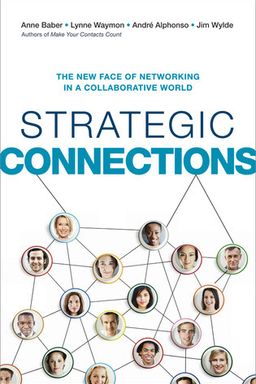
Strategic Connections: Building Trust in a Collaborative World
How can you thrive in a world where success depends less on hierarchy and more on connection? In Strategic Connections, Anne Baber, Lynne Waymon, André Alphonso, and Jim Wylde argue that collaboration—not control—defines the modern workplace. They contend that the future belongs to those who can build trust-based relationships across boundaries, using face-to-face skills that turn fleeting interactions into opportunities for impact.
At its heart, the book presents what the authors call the Network-Oriented Workplace, a shift away from command-and-control systems to environments where innovation, engagement, and results arise from strong interpersonal networks. This isn’t networking for job hunting or mere socializing—it’s a strategic, deliberate process of creating, cultivating, and capitalizing on meaningful relationships. The authors draw on their decades of consulting and research at Contacts Count LLC to show how the most successful professionals use their networks to drive strategy execution and organizational growth.
The Big Picture: From Connection to Collaboration
At the foundation of Strategic Connections lies the belief that collaboration is impossible without trust. The authors depict this progression through what they call “The Big Picture”: you commit to a new identity as a networker, develop trusting relationships, connect with intention, converse meaningfully, and finally, collaborate to create new value. Each stage builds on the one before it, requiring deliberate attitude shifts and skill development.
According to Baber and colleagues, connection is more than digital linking—it’s personal presence. While technology offers infinite possibilities, true influence still comes from face-to-face contact. They cite Ben Waber of MIT’s Media Lab, whose research found that people with robust in-person networks are twice as productive as those relying mainly on email. The conclusion? Connectivity tools matter, but human trust accelerates results.
Why This Shift Matters
The authors situate this shift within wider organizational trends. As companies flatten hierarchies and digitize operations, traditional management approaches fail to harness their people’s potential. Yet 80% of employees, they note, lack effective networking skills. The Network-Oriented Workplace demands that everyone—not just leaders or salespeople—become adept at building connections. Whether you’re an engineer, educator, or IT professional, your job today is “Job + N”, meaning your technical task plus the networking skills to get it done collaboratively.
This new identity as a “strategic networker” means exchanging self-interest for generosity. It means giving ideas, information, and support freely, not keeping score. Networking, once treated as manipulative or careerist, becomes a form of teaching and learning. When you share insights or offer help, you model trustworthiness—what the authors call your Character and Competence. These two elements define whether people will believe in you and refer opportunities your way.
The Eight Competencies: A System for Success
From this foundation, the book unfolds through eight core competencies: committing to a new identity, taking a strategic approach, envisioning your ideal network, developing trust, increasing social acumen, deepening interactions, communicating expertise, and creating new value. Each skill builds toward the ability to connect intentionally and collaborate effectively. You learn not only how to reframe networking, but also how to act as the champion of a collaborative culture.
The authors illustrate these ideas with dozens of stories—from engineers who struggle to expand client relationships to CPA firms cultivating “rainmakers,” and executives who turn casual hallway chats into enterprise-wide innovation. Each anecdote highlights how small shifts in conversation and mindset produce measurable outcomes. Throughout, the tone is practical and encouraging: you can learn networking no matter your personality type. Introverts, the authors note, often excel because of their listening and planning skills.
Why Trust Is the Currency of Collaboration
Trust-building is the through line of the book. The authors describe six stages—Accidents, Acquaintances, Associates, Actives, Advocates, and Allies—that mark how relationships deepen over time. You teach others to trust you by demonstrating reliability, respect, and competence through repeated encounters. “Networking,” they write, “is not about talking and taking; it’s about teaching and giving.” This philosophy transforms what many see as a transactional activity into a professional way of life.
Why You, Not Technology, Build the Future
In the end, Strategic Connections argues that human connection is the ultimate competitive advantage. Technology enables communication, but trust enables collaboration. As command-and-control management fades, those who master personal interaction will lead the future. This book offers not just techniques, but a mindset: see yourself as a resource, a giver, and a connector who amplifies opportunities for everyone. If you can network with authenticity and strategic purpose, you’ll reshape both your career and your organization’s success.