
Idea 1
Climbing the Empathy Wall
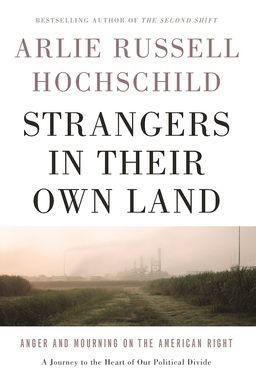
How can you truly understand people whose politics feel alien to you? Arlie Russell Hochschild’s Strangers in Their Own Land asks you to start not with facts or policy but with feelings. Through five years of fieldwork in Louisiana’s industrial corridor, Hochschild investigates why conservative white communities, facing pollution and poverty, often support politicians who promise to dismantle the very protections they seem to need. Her answer lies in what she calls the deep story—a narrative of emotion that feels true to those who live it, regardless of factual precision.
This book is both sociological inquiry and empathic experiment. Hochschild invites you to cross what she terms the empathy wall—the barrier that makes others’ experiences seem incomprehensible or even repulsive. To climb that wall, she uses tools of ethnography and emotional sociology, including deep listening and narrative reconstruction. What emerges is a portrait of Americans who feel abandoned by national elites, sidelined in their own homeland, and humiliated by shifting moral hierarchies of worth.
The Great Paradox
The core puzzle, which Hochschild calls the Great Paradox, is striking: regions that endure the highest levels of pollution, inequality, and poor health frequently resist federal programs meant to alleviate those very problems. Her Louisiana fieldwork highlights this contradiction. Communities reliant on oil, petrochemicals, and fracking live amid contaminated bayous and eroded wetlands, yet they often demand less rather than more regulation. Hochschild reframes the issue—not as ignorance or false consciousness—but as emotional coherence. When faith, honor, and distrust of outsiders combine, opposing environmental rules can feel morally righteous.
The Deep Story Method
To understand this moral logic, Hochschild develops the concept of the deep story: an imagined emotional truth that organizes how people make sense of fairness and belonging. Her participants often describe feeling like they are standing in line for the American Dream, waiting patiently while others—immigrants, minorities, public employees—are allowed to cut ahead. When a distant government enforces those perceived injustices, resentment deepens. You can see why the “waiting in line” story resonates: it captures patience, effort, and perceived betrayal all at once. Material grievances (pollution, low wages) are filtered through this moral-emotional frame.
People Behind the Stories
Hochschild’s chapters unfold through vivid characters: Lee Sherman, the pipefitter-turned-whistleblower who dumped toxic waste and later exposed his company; Harold and Annette Areno, who remember their beloved Bayou d’Inde turning from fertile home to poisoned ground; Mike Schaff, a Tea Party organizer turned environmental activist after a sinkhole swallowed his home; and Janice Areno, who clings to faith, family, and Republican pride even as environmental ruin erodes her community. Each person embodies a version of Louisiana’s complex relationship between pride and pain, loyalty and disillusionment.
Faith, Media, and Emotional Infrastructure
Faith and media networks form the twin pillars that reinforce the deep story. Evangelical churches help people process loss and maintain self-respect through prayer, endurance, and the virtue of self-reliance. Cable news, especially Fox, amplifies fear and resentment while confirming communal values. These institutions become emotional infrastructures, assuring believers that suffering signifies endurance, not victimhood. They define moral worth less by environmental health or economic mobility than by steadfastness under pressure.
Crossing the Divide
Hochschild’s fieldwork—attending Sunday luncheons, rallies, and family gatherings—demonstrates how empathy operates as empirical method. You don’t have to agree with your subjects to understand them. In fact, as she finds, sustained empathy reveals shared emotional needs across ideological lines: dignity, recognition, and a sense of control. Even pollution victims who vote against regulation express a human longing for honor rather than pity. Through that realization, Hochschild shows how emotions structure political life as powerfully as income or policy.
By the book’s end, you recognize that the empathy wall is not just cultural—it’s emotional and historical. It divides Americans not only by ideology but by what they feel permitted to feel. Hochschild doesn’t suggest dissolving political conflict, but she offers a way to illuminate it: by tracing how emotion becomes politics, and how understanding emotion might rebuild trust. (Parenthetical note: like Lilliana Mason or Carol Gilligan, Hochschild invites a politics of recognition rather than persuasion.) The journey through Louisiana thus becomes a mirror for the nation—a study in how empathy, if practiced with discipline, might be the first step toward bridging America’s emotional divide.