
Idea 1
The Paradox and Power of True Altruism
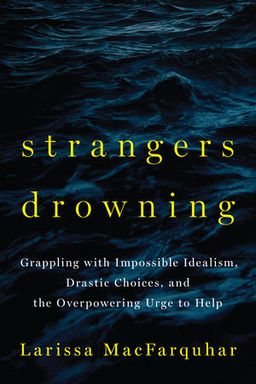
Would you risk your own life—or even your happiness—to help a stranger? The question seems extreme, yet it lies at the heart of the fascinating exploration this book presents: the nature, challenges, and hidden rewards of altruism. Across diverse stories—from a nurse healing her enemies in war-torn Nicaragua to a monk nearly losing his life to compassion fatigue—the book reveals how altruism shapes not only the lives we touch but also our understanding of morality, purpose, and well-being.
At its core, the author argues that true altruism is both indiscriminate and transformative. It’s not simply kindness; it’s the radical decision to help others regardless of who they are, even when it may hurt us personally. But altruism isn’t one-dimensional—it can uplift, consume, or even distort the self. The book challenges you to consider where the line lies between noble self-sacrifice and unhealthy self-erasure.
Redefining What It Means to Help
The story begins with Dorothy Granada, an 80-year-old nurse who opened a clinic in conflict-torn Nicaragua. When her colleagues refused to treat rebel fighters, Dorothy insisted on healing everyone—Sandinistas and Contras alike. Her decision to help ‘the enemy’ nearly cost her life, yet it also saved her clinic. When a rebel she’d saved heard of an impending attack, he intervened and spared her team. This illustrates altruism’s paradox: by risking everything to help others, we often protect more than we realize—including ourselves.
The Ethical Lens: Utilitarianism’s Demands
The book then contrasts this selfless spirit with the almost mathematical logic of utilitarianism—a moral philosophy that seeks the greatest good for the greatest number. Peter Singer’s famous drowning-child thought experiment challenges readers to ask: if you’d ruin your $500 shoes to save a child before you, why not give $500 to prevent a child’s death overseas? Utilitarianism, though rigorous, can feel inhumanly detached—it asks us to erase personal preference, even love. If two strangers and your spouse were drowning, a pure utilitarian says you must save the two strangers. This moral framework pushes altruism to its logical—but emotionally impossible—extreme.
When Purpose Trumps Comfort
From philosophy, the story moves to real-life examples of people who transform their lives in pursuit of meaning. Baba, a wealthy Indian lawyer, gave up his privileged career to open a leper colony. This shift brought him not status or comfort but profound fulfillment. Yet even he faced painful choices when altruism clashed with personal duty: when his wife fell ill, Baba chose to stay with his 65 patients rather than help her travel for treatment. She forgave him—she, too, shared his altruistic worldview. Here, altruism is portrayed not as a moral accessory, but as a calling that demands sacrifice and redefines love itself.
The Toll of Boundless Compassion
The book also explores the dangers of relentless giving. Paul, a businessman from Philadelphia, donated a kidney to a stranger after reading about MatchingDonors.com. Despite his good deed, Paul’s story ends with emotional burnout—a depression triggered by the loss of purpose once the act was done. Likewise, Nemoto, a Buddhist monk counseling suicidal people, nearly worked himself to death before realizing he needed boundaries to continue serving others. These stories remind us that even compassion must coexist with self-care.
When Helping Becomes Harm
The exploration deepens with cases of pathological altruism—when the desire to help becomes obsessive and self-destructive. Lois Wilson, co-founder of Alcoholics Anonymous, illustrates this tragic pattern. Her devotion to her alcoholic husband, Bill, gave her identity—but when he recovered, she felt useless and resentful. This prompted her to create Al-Anon, a group for people who love addicts. The lesson is profound: helping others can sometimes mask an avoidance of our own wounds.
Culture’s Distrust of the Do-Gooder
Why, then, does our society so often belittle altruists? In literature, from Camus’s stoic Dr. Rieux in The Plague to Cervantes’s absurd Don Quixote, the ‘good man’ is seen as delusional or naïve. Western storytelling, the book suggests, mirrors our discomfort with virtue. True selflessness exposes our own shortcomings—and that can be hard to bear.
Toward a Mature Understanding of Altruism
Finally, the author traces how our view of altruism has evolved—from Darwin’s self-preserving strategy to sociologist Samuel Oliner’s recognition of pure moral courage. Studying non-Jewish rescuers during the Holocaust, Oliner found that many acted out of simple human empathy, not calculation. Their bravery reminds us that altruism, at its best, is not a tool for survival but an expression of shared humanity. Across these diverse stories, the message is clear: while altruism can cost us dearly, it’s also the force that keeps civilization humane.