
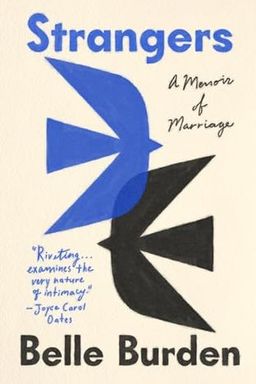
STRANGERS cover

STRANGERS

by Belle Burden

Burden retraces her marriage of 20 years in search of clues to help shape her understanding about its demise and to find a way forward.

Home Is A Person: Choosing Belonging Over Plans

When was the last time your plan looked perfect on paper but felt wrong in your bones? In Stars, Strangers & Sweet Tea, Belle Bryson argues that the truest version of home isn’t a dot on a map—it’s a person (and a community) you find when you stop outrunning your fears. She contends that love asks you to lay down the armor of perfection, to move at the speed of trust, and to let place, history, and people re-teach you how to belong.

At its heart, this sweet, closed-door romance follows Soleil Rhodes—a high-achieving Houston marketer reeling from a career-and-heart betrayal—and Myles Vaughn, a taciturn former New York corporate lawyer turned Texas rancher. Their collision (literally: Soleil crashes her Audi into a ditch to avoid a deer) strands her in Laurel Cove over Juneteenth weekend, forcing two people with opposite coping strategies—she runs forward, he roots down—to negotiate need, pride, and attraction under a sky of fireworks and porch-light truths.

What You’ll Learn From Their Story

You’ll see how ambition without honest belonging becomes a trap, and how community rituals (here, Laurel Cove’s multigenerational Juneteenth celebration) can nudge you toward healing. You’ll watch a slow-burn romance unfold through acts of care—pancakes, a loaned landline, a creek day, and even a bobby pin improvisation for a sagging fence—until care becomes courage. And you’ll feel the stakes when silence almost costs them everything, and the power when Soleil makes the most cinematic (yet deeply human) U-turn: she turns around on the highway and drives back to choose an uncertain love over a certain plan.

Why This Matters Now

If you’ve ever measured your worth in promotions, color-coded calendars, or the perfect apartment key, Soleil’s arc will feel uncomfortably familiar. Bryson’s case is not anti-ambition. It’s pro-integration. The book asks: what if the life that fits is slower, more relational, and more rooted than the one you’ve been performing? What if belonging—especially Black belonging in places that hold memory, like Laurel Cove founded by freed families—can expand what success looks like? (Compare to K.A. Tucker’s The Simple Wild for the “city-to-rural healing” arc, with Bryson adding a vital Black Southern heritage thread.)

The Core Moves of the Book

First, we meet Soleil in flight: her partner-colleague Vincent steals her work and her promotion, detonating her career and relationship in one blow. She aims for Austin (and then Atlanta), but a dead phone, a deer, and a ditch deliver her to Myles and his niece Harry. Myles offers what he lives by: steadiness, not spectacle. In his kitchen, with rotary phones and alphabetized spices-that-aren’t, acts of quiet hospitality (pancakes, a charger, a guest room with a grandmother’s quilt) become the first threads of trust.

Second, Laurel Cove itself steps in. Miss Ruby presses sweet tea into Soleil’s hands and ropes her into the children’s face-painting booth. Harry, a nine-year-old comet of joy, becomes the bridge: she tethers two cautious adults to play, horses, and banner-making. Through town gossip (the “telegraph” faster than Wi-Fi), we see how community—sometimes intrusive, often affectionate—makes love less about a couple and more about a place learning you.

Third, the romance matures not by heat but by honesty: a porch where Myles admits why he left Manhattan and how casual racism carved at his worth; a creek day where he tells Soleil she’s not “too trusting”—she’s been playing a rigged game. Their first kiss blooms under Juneteenth fireworks—a ritual of freedom layered onto their personal liberation.

Finally, choice. Myles, burnt once by a city girl, goes stoic at the gate just as Soleil’s car is fixed. He says “Safe travels.” She leaves, sobbing on the shoulder an hour later. A friend (Dani) gives the nudge, but Soleil chooses: she U-turns and returns to the porch light. The epilogue seals the thesis: love and heritage can create the forever-kind-of-home—ring, banner, fireworks, and all.

The Book’s Claim in One Line

“Sometimes home isn’t a place on the map. It’s a person you find when you finally stop running.”

In the ideas that follow, you’ll see how Bryson turns that sentence into scenes: running versus rooting; masculinity as care; found family as repair; Juneteenth as communal heartbeat; the cost of silence and the relief of saying the important thing; and practical ways you can renegotiate your own plans. This is a romance that’s tender by design—the bedroom door respectfully closed—but the emotional stakes are wide open. And that, Bryson argues, is where the real courage lives.


From Hustle To Stillness

Bryson sketches Soleil as someone you might recognize in your mirror: a competent, caffeinated woman who schedules control to keep chaos at bay. When Vincent steals her strategy and promotion, the loss isn’t only professional—it’s existential. The car crash that strands her in Laurel Cove literalizes the book’s first reframe: sometimes your body halts when your brain refuses to. Stillness isn’t failure; it’s a summons.

Stop Running, Start Noticing

Soleil’s opening mantra—“New city, new plan, new me”—is a performance of reinvention. But the Hill Country forces a different tempo: dead GPS, deer in the road, a truck with a bench seat, a landline that clicks and whirs. Myles’s home is a museum of slowness (grandmother’s quilt; rotary phone), yet nothing about it is nostalgic apology. It’s functional grounding. You feel that in pancakes for dinner, in the way he names chores (“I need to check that fence”) and lets the day shape his tasks rather than his calendar dictating his attention. (Compare to Emily Henry’s small-town rhythms; Bryson turns the dial toward domestic care as transformation.)

Work That Re-Teaches Worth

At the children’s booth, Soleil’s first stars-and-unicorns are clumsy, and that’s the point. Kids don’t require flawless deliverables; they reward presence. As she face-paints butterflies, her hands relearn competence that isn’t tied to approvals or promotions. Later, grooming Daisy the mare becomes tactile therapy: circular strokes, a soft muzzle, an animal leaning into her care. Myles adds the crucial narrative reframe: “It’s not about you being tougher—it’s about a rigged game.” The book pivots Soleil’s grief from self-blame to system critique, an essential move for readers holding similar corporate wounds. (In Kennedy Ryan’s Before I Let Go, healing also reframes professional pressure; Bryson’s tone is gentler but similarly liberating.)

Let Joy Interrupt Control

Harry—nine, kinetic, honest to a fault—interrupts Soleil’s need to “not be a bother.” She distributes assignments (“You take the morning shift”), invents community (“MY FAMILY” drawing), and drags adults into play (cotton candy, creek cannonballs). Joy becomes a practice that loosens Soleil’s perfection grip. Even the bobby pin fence fix says it out loud: use what you have; perfection can wait until morning.

An Experiment You Can Try

If you’re living in hustle, Bryson proposes small-scale stillness: cook one meal start-to-finish without screens; do one unproductive task with a kid; mend one small, literal fence with an imperfect tool. Notice how competence shows up differently when nobody’s grading you. Then ask the question Soleil finally allows: “What if running fast is how I avoid feeling?”

Key Shift

From performance to presence; from timelines to touch; from ‘prove’ to ‘belong.’

By the time Soleil reaches the fireworks, she’s not a different woman so much as a truer one. The rest of the book tests whether she’ll keep that truth once her car is fixed. Your parallel test might arrive as an email offering “the next step.” The question is the same: is it a step forward, or a step away from yourself?


Myles’s Quiet, Courageous Masculinity

Bryson counters the loud, swaggering cowboy trope with a gentler model: a Black rancher who leads with steadiness, cooks as love language, and protects boundaries without punishing feelings. Myles is compelling not because he throws his weight around but because he carries weight well—history, grief, responsibility—and lets it make him kinder.

Strength As Care, Not Control

From the first rescue—carrying Soleil to his truck with a dry joke about coyotes—you see Myles’s power expressed in care. He’s guardian to Harry (pancakes with cinnamon and vanilla; a dollhouse built from scrap wood), steward of Solace Hill Ranch, neighbor who knows Miss Ruby’s rhythms and Luke’s ladder habits. He’s also a man who left a prestigious M&A track after recognizing how the firm saw him (“our diversity hire with surprising talent”). That wound could have hardened him. Instead, home made him soft in the best way—available, listening, generous.

Boundaries That Invite Safety

Myles isn’t endlessly pliant. He draws lines (“Not a bachelor; just single”), states facts (“Tow won’t come on a holiday weekend”), and, tellingly, does not ask Soleil to stay when her car is ready. That restraint reads like rejection to her—but it’s protection shaped by his history with Taylor, a city partner who couldn’t breathe in Laurel Cove. Bryson uses his boundary to raise the book’s central tension: love can’t require erasing yourself, but it can require risking again.

Vulnerability That Leads

On the porch at night—crickets, honeysuckle, a beer—Myles leads with truth. He names what the city did to him (“made me forget who I am beneath all the noise”) and normalizes Soleil’s hurt (“You’re brilliant; the game was rigged”). This isn’t fix-it talk; it’s mirror-holding. When he finally says the important thing (“I want to kiss you”), he does it with consent forward—an ask, a wait, a hand at her cheek like a promise. (If you loved the respectful heat of Sarah Adams’s romances, you’ll recognize this tenor.)

Masculinity You Can Emulate

Try Myles’s three-beat practice: 1) Name the real (what’s true about your work, your energy, your fear). 2) Offer care (cook, fix, carry, listen—choose verbs, not speeches). 3) Hold a boundary (protect your values without punishing others). The impact, as with Soleil, is profound: people relax around you because they know where you stand and that you’ll help them stand, too.

What Makes Him Swoon-Worthy

He fixes fences with bobby pins, flips perfect pancakes, and asks for the dance “with no expectations—just now.” He’s steady in a world addicted to spectacle.

By the epilogue, when Myles kneels under Juneteenth lights with a ring, it doesn’t read as grand gesture instead of goodness—it’s grand gesture on top of a year of small, faithful tenderness. That’s the masculinity Bryson offers: love as a daily verb that sometimes wears a tuxedo of fireworks.


Found Family, Fastened Gently

Laurel Cove isn’t a cute backdrop; it’s the book’s nervous system. The town’s small-scale infrastructure—the general store, the mechanic’s bay, the gazebo, the green—moves plot and metabolizes emotion. Through it, Bryson argues that healing often happens in community microwaves: warm, noisy, nosy.

Miss Ruby, Big Rig, Luke & Co.

Miss Ruby Moore is Laurel Cove’s benevolent general—organizer, tradition-keeper, and sugar-dusted strategist who conscripts Soleil into the children’s booth and later co-curates the banner. Big Rig Tate tows and tunes Soleil’s Audi while telling stories about his ’68 Mustang (first loves matter, even when they’re cars). Luke Dawson, best friend energy, wires the speakers, spots the sparks, and drops the “offer her the dance” nudge Myles needs. Eboni and Kohlman (Harry’s parents) anchor the wider Vaughn family, modeling partnership and rooted ambition.

The Small-Town Telegraph

Bryson has fun with the gossip circuit: Mrs. Linley, passing the porch at night, notices the silhouettes. “Everyone saw you dance,” Harry reports, solemn as a court stenographer. The telegraph can feel invasive, yes, but it also protects: neighbors notice, gather, bring banners and cobbler, and hold you accountable to the person they’ve seen you becoming. (Think Gilmore Girls’ Stars Hollow, but render it Southern and Black with deeper historical roots.)

Children As Belonging Makers

Harry is the conduit through which Soleil is fastened to this place. She presses peppermint sticks and assignments, places Soleil’s name onto schedules, and draws a three-person family portrait labeled “MY FAMILY.” No one in town could have given Soleil that exact permission slip. A nine-year-old did. Sometimes kids give us language our adult caution withholds.

Your Playbook For Joining A Community

  • Say yes to a small role (face-paint unicorns; pass out stickers). Contribution precedes comfort.
  • Learn the names and the origin story (ask who founded what and why it matters).
  • Let the town telegraph soften you (assume most nosiness is care).
  • Bring back what you borrowed (harvest reciprocity—like Soleil returning not just the scarf, but herself).

Found Family Truth

Communities don’t test you with grand hazing; they hand you glitter and say, “Start here.”

When Soleil finally turns her car around, she’s not just choosing Myles. She’s choosing Miss Ruby’s lists, Big Rig’s parables, Luke’s cables, Eboni’s side-eye, and Harry’s stars. Found family isn’t soft background light—it’s the glow that lets two people see each other clearly enough to stay.


Juneteenth: Heritage That Heals

Juneteenth isn’t mere setting decoration; it’s the book’s cultural and emotional spine. Laurel Cove, founded by freed families after Emancipation, has celebrated for generations. The weekend layers public remembrance over private risk, making space for a Black love story to unfold beneath a canopy of collective freedom.

Ritual As Courage Practice

Face painting, parade flags, children’s races, barbecue lines, and Harvest Hall’s dance aren’t just cute—ritual teaches rhythm. In that predictable beat, Soleil and Myles do unpredictable things: he asks for “just one dance—no expectations”; she leans into a kiss under fireworks. The community’s celebration of freedom opens a corridor for them to claim their own. (Farrah Rochon’s The Boyfriend Project also threads Black joy into modern love; Bryson ties it to Southern ritual and land.)

History That Holds The Present

Myles explains Laurel Cove’s founding and Miss Ruby’s grandmother reviving the celebration in the 1950s. That legacy frames every tender beat: the banner phrase—“Rooted in Strength, Growing in Freedom”—becomes both town motto and couple’s north star. In the epilogue, a year later, Soleil co-designs the banner with Harry. That’s not just graphic design; it’s adoption. She’s inscribing herself into the story and letting the story inscribe itself into her.

Public Joy, Private Truths

Juneteenth amplifies two pivotal conversations. On the porch, Myles narrates the Manhattan microaggressions that sent him home; by the creek, he reframes Soleil’s corporate erasure as systemic. Heritage doesn’t minimize pain—it contextualizes it. Freedom ceremonies can be where you realize the burden you’ve been carrying isn’t your fault to begin with.

Make Ritual Work For You

  • Attach a brave conversation to a communal calendar (holidays, reunions, neighborhood festivals).
  • Let the day’s theme guide the ask (on a freedom day, ask for a freer future).
  • Create keepsakes that anchor memory (banners, drawings, photos taken by a kid—like Harry’s porch shot).

Why It Matters

Black joy isn’t an epilogue—it’s a method. In Laurel Cove, joy gathers people until they’re brave enough to tell the truth and tender enough to receive it.

Bryson’s gift is to show how collective freedom rituals underwrite intimate freedoms—permission to slow down, to love again, to choose a home that loves you back. The fireworks aren’t just pretty—they light a path home.


Say The Important Thing

For all its sweetness, the book is unsparing about how silence almost ruins everything. Myles’s “safe travels” is a perfectly reasonable sentence that lands like a door slamming. Soleil’s fear of asking to stay nearly ships her to a life she no longer wants. A nine-year-old names it best: “Sometimes grown-ups think too much and don’t say the important stuff out loud.”

How They Miss Each Other

The porch almost-kiss becomes a masterclass in cautious people circling a risk. Myles steps back at a noise (Harry in the house), and both revert to safety scripts. Later, even after a transcendent dance and kiss, they each wait for the other to cross the final inch. When Big Rig arrives early with the fixed car, clock and silence align to pry them apart.

How They Find The Words

It takes three truth-tellers to catalyze speech: Dani (on the phone), who says, “Don’t think so much you talk yourself out of happiness” (the best friend nudge); Harry, who calls out the grown-up flaw; and Myles himself, who, when Soleil returns, finally says what he’d withheld: “I wanted to ask you to stay.” Once one person tells the truth, the other can meet them there: “The right direction is here,” Soleil says on his porch. That’s a thesis statement and a love confession in one line.

A Communication Framework You Can Steal

  • Name desire plainly (“I want to dance with you,” “I want to kiss you,” “I want you to stay”).
  • State the fear without dramatizing it (“I’ve been burned,” “I don’t want to erase myself”).
  • Offer a present-tense ask (“Just one dance—no expectations,” “Day by day—together”).

Signs You’re Avoiding The Important Thing

You’re delegating words to logistics (packing instead of asking, finishing a fence instead of finishing a sentence). You’re outsourcing decisions to fate (waiting for a Monday tow to decide your life). You’re letting your ex write the script for your current risk (Taylor’s leaving means Soleil will, too). When you notice these patterns, try the Myles move: find a porch, turn off the noise, and name one thing you want.

The Payoff

Once the words arrive, the world follows: a hand to a cheek, a U-turn on an empty highway, a ring under lantern light. Truth doesn’t guarantee ease; it guarantees clarity.

Bryson doesn’t demonize caution; she dignifies it and still insists: say the important thing while the porch light is on.


Plans, Detours, And The U-Turn

The novel offers a compassionate blueprint for remapping your life when the plan that once saved you now shrinks you. Soleil’s journey from “Atlanta-or-bust” to “day by day—together” is a study in how to revise without collapsing.

When A Plan Becomes A Cage

Soleil’s plan safeguarded her after Vincent’s betrayal: new job, new lease, precise start date. But the creek, the banner, the porch recalibrate her metrics: aliveness replaces accomplishment as the signal. The tipping point is visual—a crayon drawing labeled “MY FAMILY” tucked in her pocket. On the highway shoulder, she finally cries long enough to admit it: she’s leaving the thing she wants most.

The Decision Framework

Bryson offers three questions by implication (voiced through Dani, Harry, and Myles): 1) Do you feel more alive on this road? (Dani: “I haven’t heard you this alive in years.”) 2) Is your silence writing the ending? (Harry: grown-ups don’t say the important stuff.) 3) Can you choose yourself without abandoning your values? (Myles: he chose the ranch and himself.) When all three point back to Laurel Cove, Soleil makes the U-turn.

Practical Steps To Your U-Turn

  • Pull over. Cry. Let your nervous system catch up to your calendar.
  • Phone a truth-teller who knows your laugh (Dani-level friend).
  • Name the sentence that terrifies you and feels right (“The right direction is here”).
  • Return without a script. Offer presence before plan.

What About Work?

Bryson doesn’t ask Soleil to choose love over purpose; she change-orders the blueprint. In the epilogue, Soleil runs national brand work from Laurel Cove while co-creating community culture. It’s the both/and many modern readers seek. (This echoes Jasmine Guillory’s heroines who balance career and intimacy; here the setting adds rural Black heritage.)

The Lesson

Plans are scaffolding, not prophecy. When the building changes shape, so should the scaffold.

The final image—banner unfurled, ring catching lantern light, fireworks overhead—confirms it: detours can be destinations disguised as delays. Your job is to recognize the disguise and turn the wheel.


Cozy, Closed-Door, Big-Feeling Love

If you crave tenderness without explicit scenes, this book understands you. Bryson’s romance is sensorial and slow—the sizzle is in cinnamon, cedar, and second chances. Doors stay closed; hearts stay open. That choice concentrates desire into dialogue, gesture, and place.

The Texture Of Intimacy

A hand lingering at a waist as Myles lifts Soleil into the truck. A shared grin over a rotary phone. A creek wade in jeans, water beading on forearms. Banners designed by auntie-and-niece. The kiss under fireworks feels earned not because of heat but because of the accumulation of care. (Fans of Sarah Adams and Talia Hibbert’s gentler beats will feel at home.)

Representation That Matters

Black love at the center; Black Southern history in the frame; a Black cowboy who cooks and holds boundaries; a heroine whose professional excellence isn’t coded as “too much.” The town’s Juneteenth heartbeat refuses to flatten heritage into set dressing. It’s rare and necessary—and joyful.

Satisfying Structure

The beats land: meet-cute via mishap; forced proximity at the ranch; public ritual as midpoint dance; “all is lost” on the Sunday goodbye; the literal U-turn; epilogue proposal under the next year’s banner. Each turn reinforces theme: home chosen, not assigned.

Why It Lingers

Because Bryson doesn’t rush the staying. After “I came back,” she gives us a year of proof: remote work configured, niece adored, neighbors become kin, tradition co-authored, ring offered. Love is not only sparks; it’s a calendar filled with exactly the right things.

Line To Keep

“Sometimes home isn’t a place on the map.” In this book, it’s a porch, a banner, a niece’s drawing, a hand held under lantern light.

If you’re measuring whether this romance will comfort you: yes. It’s warm without being saccharine, earnest without being naive, and grounded enough to make you consider your own porch, your own banner, your own U-turn.

Dig Deeper

Get personalized prompts to apply these lessons to your life and deepen your understanding.

Go Deeper

Get the Full Experience

Download Insight Books for AI-powered reflections, quizzes, and more.