
Idea 1
The Human Story of Radiation
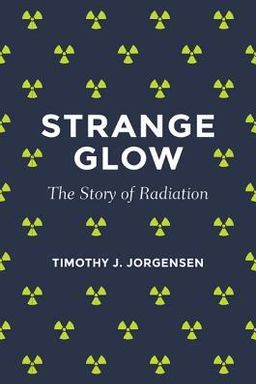
From the moment Wilhelm Roentgen saw a fluorescent screen glow in 1895, humanity’s relationship with radiation became a paradox — a force that could diagnose and cure, but also injure and kill. This book traces that dual story: how invisible energy unlocked both the modern medical age and some of history’s most devastating tragedies. You begin with the physics of light and end with the politics of nuclear risk — a journey that connects Roentgen’s x-rays to the atom bomb, radon in basements, and even the headlines about cell phones and tuna after Fukushima.
Radiation as a single physical phenomenon
The narrative opens with a simple but transformative insight: radio waves, visible light, ultraviolet, x-rays, and gamma rays are all forms of electromagnetic radiation — the same phenomenon differing only by wavelength and energy. Once you accept that, radiation stops being mysterious. Long wavelengths carry less energy and primarily heat; short wavelengths pack enough punch to knock electrons loose and break bonds. That distinction — ionizing vs. non‑ionizing — becomes the biological dividing line between harmless warmth and molecular damage.
Discovery, wonder, and early misuse
Roentgen, Becquerel, and the Curies turned those waves and particles into discovery. X-rays made bones visible and radium glowed with ghostly beauty. But the wonder quickly outpaced knowledge. Edison’s assistant Clarence Dally died from chronic burns; the radium girls suffered from necrotic jaws; and watchmakers learned that lip-pointed brushes could seed their bones with decay. The same glow that charmed the public in radium paint and tonic bottles became evidence of unseen danger. These tragedies transformed enthusiasm into regulation, creating the early scaffolding for occupational health and safety.
From atoms to weapons
The book then pivots to nuclear physics. Rutherford’s scattering experiments revealed the atomic nucleus; Chadwick’s neutron discovery unlocked fission and fusion. Those discoveries unleashed a chain of events — both scientific and political — that culminated in Hiroshima, Nagasaki, and the Cold War. Uranium‑235 and plutonium‑239, once obscure isotopes, became triggers for both power and annihilation. The same neutron that made controllable reactors possible made uncontrollable bombs inevitable. (Note: This duality echoes throughout the book—each advance contains both promise and peril.)
The biological target revealed: DNA
Radiation’s effects make sense only when you understand what it hits. The discovery of DNA — from Miescher’s nuclein to Hershey and Chase’s labeled viruses — revealed radiation’s true cellular target. X‑ray crystallography then visualized the structure itself, connecting physical energy to biological consequence. Every burned radiologist’s hand and every atomic‑bomb survivor’s leukemia pointed to one mechanism: ionizing radiation damages DNA. How intensely, and in what tissues, depends on dose and exposure type.
From tragedy to quantitative science
Out of Hiroshima’s ruins came the Life Span Study (LSS)—a decades‑long cohort analysis of nearly 94,000 survivors. This study turned catastrophe into calibrated data, defining the dose–response for cancer and heritable effects. Its central equation—about 0.005% increased fatal‑cancer risk per mSv—anchors nearly every modern protection standard. From roentgens to rads to sieverts, units evolved from skin redness to measurable energy deposition, allowing doctors and regulators to speak a common language of risk.
Radiation as healer and hazard
Medicine embraced radiation’s paradox fully. From Grubbe’s first x‑ray cancer treatments to Kaplan’s linac‑based cures for Hodgkin’s disease, carefully fractionated doses transformed deadly tumors into treatable ones—yet always at a cost. The same DNA breaks that killed tumor cells could, years later, seed secondary cancers. The equation was never moral, only biological: benefit versus quantified risk. Diagnostics like mammography and CT scans are judged by similar arithmetic, comparing a procedure’s potential life‑saving benefit against its minuscule added risk (often less than one in 100,000).
Living with background radiation
By the modern era, the book shifts from extraordinary doses to everyday exposure. Radon accumulation in basements, residual fallout, and even potassium‑40 in your food all contribute to your background dose of roughly 3 mSv per year. These small exposures complicate risk perception because they blur the boundary between “safe” and “unsafe.” The conservative policy model—Linear No Threshold (LNT)—treats every increment of dose as linearly related to risk, emphasizing caution even where uncertainties remain.
Technology, communication, and skepticism
From Fukushima’s meltdowns to rumors about cell phones and tuna, the common thread is how we communicate risk. Every episode highlights the need for clear explanation: numbers matter more than adjectives. The radon panic in the 1980s and the N‑ray fiasco in Blondlot’s lab illustrate different faces of the same problem — overconfidence without evidence. The final lesson is philosophical: be open to wonder, but arm yourself with skepticism. Only by demanding rigor, transparency, and reproducibility can society balance radiation’s benefits against its existential risks.
This comprehensive arc — from discovery and misuse to measurement, medicine, accident, and myth — leaves you with a single enduring principle: radiation is neither angel nor demon, but a fact of nature that demands respect and literacy.