
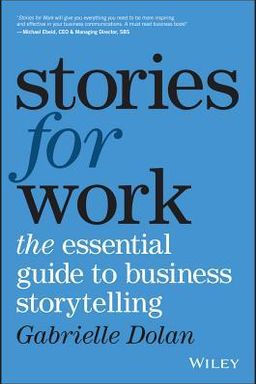
Stories for Work cover

Stories for Work

by Gabrielle Dolan

In ''Stories for Work,'' Gabrielle Dolan reveals how storytelling is a powerful tool for business success. Learn to craft compelling narratives that connect, motivate, and persuade. With practical advice, discover how to apply storytelling to various business scenarios and elevate your communication skills.

The Power of Storytelling in Business

When was the last time you remembered a presentation full of stats and bullet points? Probably never. But you can easily recall a moving story that someone told years ago — one that made you feel something. In Stories for Work: The Essential Guide to Business Storytelling, Gabrielle Dolan argues that storytelling is not only a natural human trait but an essential leadership skill that strengthens trust, communication, and engagement in the modern workplace.

Dolan’s core claim is that facts and logic may inform, but stories transform. Backed by neuroscience and decades of leadership experience, she contends that great business communication relies less on polished slides and more on authentic stories that stir emotion, resonate with shared values, and connect people on a human level. Her book demystifies storytelling, teaching leaders how to find their own stories, construct them purposefully, and apply them in every professional setting—from meetings and job interviews to major organizational change.

Why Storytelling Matters More Than Ever

We live in a world of information overload. Most corporate communication is dry, logical, and forgettable. Dolan explains that while facts engage the rational brain, they rarely inspire action. Emotional connection—what neuroscience calls limbic engagement—is what actually drives decision-making and trust. She draws on Paul Zak’s neuroeconomics research showing that oxytocin, the hormone related to trust and connection, increases when we hear stories, and Uri Hasson’s studies demonstrating that storytelling synchronizes brain activity between storyteller and listener, literally putting them ‘on the same wavelength.’

These findings explain why leaders who tell authentic stories are not only heard but remembered. Data may convince, but stories connect. Whether you are pitching an idea, leading change, or building culture, storytelling works because it makes you relatable and trustworthy—and trust is the currency of influence in every business relationship.

Emotion as a Strategic Tool

Dolan shows that emotional influence doesn’t mean sentimental manipulation. Instead, it’s about showing humanity and inviting empathy. Referencing Aristotle’s model of persuasion—logos (logic), ethos (credibility), and pathos (emotion)—she affirms that business communication often overuses logic while neglecting emotional connection and credibility. The balance of all three, with emotion at its heart, is what converts transactions into relationships. Dale Carnegie once wrote that we are “creatures of emotion, not logic,” and Dolan demonstrates this with real-world stories of leaders who transformed resistance into engagement simply by replacing PowerPoint slides with personal anecdotes.

Authenticity Over Perfection

A consistent theme throughout the book is authenticity. People don’t want perfect stories—they want real ones. Dolan warns against manufacturing tales for effect; doing so erodes credibility faster than any corporate scandal. Authentic storytelling means sharing snippets from everyday life—about parenting mishaps, mentors, or small personal insights—and linking them to a business message. As she puts it, “Storytelling in business isn’t about being dramatic, it’s about being real.” Vulnerability, when shared appropriately, builds trust and makes your leadership more human.

From Science to Skill

Unlike purely theoretical books, Stories for Work blends storytelling science with method. Dolan outlines four universal story types—triumph, tragedy, tension, and transition—that capture the range of human experience and can be adapted for work contexts. She teaches how to find these stories from your memories, construct them with clear purpose, and share them strategically across situations like presentations, coaching sessions, and company-wide transformations.

Each part of the book reinforces the same mission: helping leaders replace jargon-filled communication with authentic, emotionally charged storytelling that inspires trust, action, and change. Through dozens of case studies—from Australia Post, Bupa, and Spark New Zealand—Dolan illustrates how stories ripple through organizations, embedding values, shifting behavior, and improving culture far beyond what traditional corporate communication achieves.

Ultimately, Dolan’s message is both simple and profound: storytelling is leadership. It’s not a soft skill reserved for extroverts but a strategic capability for anyone who wants to lead effectively. As she writes, “Stories aren’t the icing on business—they’re the whole cake.” This book shows you how to bake yours well, serve it authentically, and watch people come back for another slice.


The Science Behind Storytelling

To persuade, inspire, or lead, you must first understand why stories work. Dolan roots her methodology in neuroscience, psychology, and communication theory. Our brains, she explains, are not wired for bullet points but for narratives—they process facts through emotion before logic. This section of the book reveals the biological reasons storytelling is such a powerful leadership tool.

How Stories Hijack the Brain (In a Good Way)

The human brain lights up when it hears a story because multiple areas—language centers, motor neurons, and emotional circuits—activate together. Uri Hasson’s research at Princeton shows that storytelling creates “neural coupling,” aligning the storyteller’s and listener’s brain patterns. Essentially, telling a story lets another person experience your memory as if it were their own. This synchronization builds understanding faster than logic ever could.

Similarly, neuroeconomist Paul Zak found that emotionally engaging stories trigger oxytocin release—the hormone linked to empathy and trust. This chemical connection signals safety, allowing collaboration and influence to flow naturally. That’s why a well-told story often opens doors logic can’t: our brains want to believe people we emotionally connect with.

Emotions Drive Decisions

Dolan cites neuroscientist Antonio Damasio’s discovery that individuals with damage to the brain’s emotional centers struggle to make even simple decisions. We may think we act logically, but our choices stem from how we feel. Storytelling, then, becomes a strategic way to activate the emotional brain and motivate behavior. As marketing data confirms, purely logical campaigns achieve about half the success rate of emotional ones—a truth every leader should internalize when communicating strategy or driving change.

Emotion Improves Memory and Engagement

Emotionally charged information is easier to recall. Studies show we remember emotional stories far longer than data points because hormones like cortisol (which sharpens attention during tension) anchor key moments in memory. Dolan illustrates this with Air New Zealand’s famously creative in-flight safety videos: by combining humor, narrative, and surprise, they transformed dull compliance messages into viral sensations remembered by millions.

By merging science and story, Dolan makes a bold conclusion: logic might explain, but emotion transforms. That’s why storytelling is the single most human and effective communication tool at work. If you want people to believe, remember, and act, stop presenting and start telling stories.


Finding the Stories Hidden in Your Life

After grasping the science, Dolan teaches how to uncover your own rich library of stories. She insists that everyone—not just charismatic leaders—has meaningful experiences worth sharing. The problem isn’t a lack of stories but a lack of awareness of them.

The Story Wheel: Four Core Types

To guide you, Dolan introduces four foundational story types for business: Triumph, Tragedy, Tension, and Transition. Triumph stories celebrate success and learning moments. Tragedy stories involve regret or failure—but they show self-awareness and growth. Tension stories explore inner conflict or hard choices driven by values, while Transition stories capture change or transformation. Collectively, these form your personal “Story Wheel”—a balanced portfolio of experiences you can use for different messages.

Digging for Story Gems

Dolan compares story-finding to using a metal detector: you must sweep slowly through the sand of your memory to uncover what’s just below the surface. She suggests creating two tables—one for work-related events and one for personal ones—and mapping each experience across her four story types. Even mundane memories can hold profound meaning once linked to a lesson. She recounts paying her daughter five dollars each time she borrowed a family anecdote for workshops, proving that everyday life is storytelling gold.

Once gathered, stories must pass two tests: authenticity (they must be true) and purpose (they must connect clearly to your message). A simple experience—say, missing a flight or fumbling a presentation—can illustrate resilience, learning, or leadership if framed purposefully.

Her advice is simple but powerful: never underestimate small memories. Even a child confusing “Brexit” with “breakfast” can become a metaphor for miscommunication in leadership. The best stories aren’t the most dramatic but the most relatable. They prove that authenticity beats perfection every time.


Crafting Stories That Stick

Once you’ve unearthed stories, Dolan shows you how to shape them into powerful narratives. Drawing on Aristotle’s timeless structure—beginning, middle, and end—she breaks down the mechanics of crafting engaging, concise, and purposeful stories for business communication.

The Essential Three-Part Structure

The beginning sets context with time and place (“When I was a kid in Grade 4…”). The middle is where tension builds through specific detail and imagery. The end delivers your message via a clear bridge (“I’m sharing this with you because…”), a link to business relevance, and a pause to let it land. There’s no need for “The moral of the story is…”—authentic conclusions let your audience draw their own insight.

Discipline and Detail

In storytelling, discipline matters more than drama. Dolan urges you to eliminate unnecessary detail, numbers, or “self-indulgent” tangents that derail focus. Use first names and vivid but minimal description to make characters real yet relatable. Eschew corporate jargon (“deliverables” and “KPIs”) for human language. Instead of “my objectives weren’t met,” try “I missed out on my dream job.” Simplicity drives connection.

Practice, Don’t Perform

Contrary to belief, great storytellers aren’t born—they rehearse. Dolan reveals that skilled speakers write their stories down, refine tone, and practice delivery until natural. When executed properly, it sounds effortless because it is embodied. Brevity is crucial: in business, most stories should last no longer than one to two minutes. People adore stories but hate rambling.

Finally, Dolan reminds you that storytelling opportunities are everywhere: blogs, meetings, pitches, or even on product packaging—like the Melbourne shoe brand Django & Juliette, which prints its founding story on every insole. If stories can sell shoes, they can certainly sell ideas, values, and change within any organization.


Using Stories to Transform Communication

The heart of Dolan’s work lies in application. She dedicates the bulk of the book to showing how storytelling enhances nearly every business function—presentations, change management, sales, values communication, branding, coaching, and hiring. Each context has its nuances, yet the universal principle remains: sharpen the human connection through story.

Stories for Presentations

Presentations should open with a story, not objectives. Suzanne Smith grabbed attention with her mother’s financial struggle to introduce a talk on women and money—instantly humanizing the topic. Erika Lanza used her Grade 4 “big blue whale” project to encourage her team to plan their gala dinner early. These examples show that personal anecdotes transform “update meetings” into memorable experiences.

Stories for Change and Leadership

Dolan is at her best when showing how stories help manage organizational change. Logical arguments for new systems rarely inspire; personal stories do. Consider AECOM’s Nathan Jenson, who used a reflection about misjudging a coworker to help his team rethink “grumpy” attitudes toward safety protocols. Or Barbara Hepponstall, who told her migrant journey story to reassure her fearful new team that she’d stand by them through uncertainty. Vulnerable truth cuts through resistance faster than any top-down directive.

Stories for Sales, Branding, and Trust

In sales, emotion seals deals. Audiologist Keith Chittleborough didn’t overwhelm clients with product specs; he shared how a father wearing new hearing aids finally heard his newborn’s cries—a story that sold empathy, not hardware. Likewise, author Jane Anderson used a “test drive a car” anecdote to encourage clients to “test drive” her personal brand consulting. These authentic narratives prove that emotional resonance outperforms logical persuasion in the marketplace.

Whether you’re changing culture, coaching performance, or driving sales, Dolan’s message is clear: information explains what; stories reveal why. And people follow the why.


Storytelling for Values, Vision, and Personal Brand

A company’s values and its people’s stories should move in unison. Dolan explores how storytelling brings corporate ideals—like integrity or collaboration—from posters on the wall into daily action. When employees tell stories that illustrate these principles, culture becomes lived, not lectured.

From Posters to “The Grapevine”

Dolan contrasts outdated corporate “rollouts” of values (coffee mugs and mousepads) with her “grapevine” approach—seeding authentic stories that spread organically through peer networks. Organizations can't control the grapevine, but they can influence it by feeding it positive, real-life stories that exemplify company values.

Living Values Through Story

Angela Middleton of ME Bank used a story about quitting her stable job and moving cities to illustrate the courage behind her company’s “Go to the Moon” value. Stefani Adams admitted her own failure to show respect—until her teenage son called her out—making her message about humility strikingly relatable. And National Australia Bank’s Matthew Ricker shared a short but poignant story about wanting to make his nana proud, embodying the bank’s vision to regain customer respect.

Personal Brand as Living Narrative

Your brand, Dolan insists, is the sum of stories people tell about you when you’re not there. To shape it, she introduces the “SEA model”: Strategy (what you want to stand for), Evolution (how your brand grows), and Authenticity (staying real). Leaders like Stephen Purcell or Aishwarya Rao demonstrate this through stories that reflect their core values—mentorship, integrity, resilience—rather than generic career summaries. These stories reinforce what makes you uniquely trustworthy and memorable in business.

By intertwining personal narratives with company values, storytelling turns abstract ideals into human behavior. It’s how culture breathes.


Storytelling at Scale: Case Studies from Industry

To prove storytelling’s organizational impact, Dolan closes her book with in-depth corporate case studies. Each demonstrates how embedding storytelling into leadership, communication, and culture yields measurable results in engagement, trust, and productivity.

Australia Post: The Grapevine Effect

Facing transformation, Australia Post created the “Grapevine Program,” gathering influencers across departments to share stories that embody new company values like respect, safety, and customer delight. Personal narratives—from Scott Mansell teaching safety through his wife’s bike accident to Paul Kelly’s Pride March story on inclusivity—made abstract values concrete. Survey results showed a 13% engagement increase and a 19% rise in organizational pride among participants. Stories didn’t just communicate change—they fueled it.

Bupa: Living Values Through Seven Stories

To launch its new global values—Passionate, Caring, Open, Authentic, Accountable, Courageous, and Extraordinary—Bupa trained seven leaders to share personal stories for each. A mother creating a “sensory room” for disabled children embodied Passionate; a leader recalling her son’s vegetarian revelation illustrated Open; a humble “cricket dad” story showed Authentic. The result: values became viral behaviors, embedded across 80,000 employees. Surveys confirmed dramatic improvements in cultural alignment and engagement.

Spark New Zealand: Storytelling as Leadership Training

At Spark, New Zealand’s largest telco, storytelling became a strategic capability. HR Director Heather Polglase integrated story-based workshops into leadership development, teaching 900 employees to connect their own experiences to Spark’s four values: “We listen,” “We’re straight up,” “We get stuck in,” and “We win together.” Stories like Wendy Ireland’s reflection on learning empathy redefined straight talk, while Neal Richardson’s “old shirt” story metaphorized personal renewal. The result: 98% of participants reported increased communication confidence and cross-team collaboration.

Through these case studies, Dolan shows storytelling’s ripple effect: one authentic story can influence thousands through retelling, multiplying impact far beyond any memo.


Secrets of Great Storytelling

In her final section, Dolan shares advanced tips—her “five secrets”—to master your storytelling voice. These go beyond frameworks and touch the spirit of effective communication.

1. Embrace Vulnerability

Following Brené Brown’s research, Dolan argues that courage and vulnerability are inseparable. Revealing imperfection invites trust. But vulnerability requires boundaries: share experiences you’ve processed, not fresh wounds. Trust is built when honesty meets restraint.

2. Be Succinct

The best business stories last two minutes or less. Leaders lose impact when they over-elaborate. Dolan recalls a client who told a ten-minute board story—only to be interrupted with “Get to the point.” Like good comedy, storytelling thrives on timing; always stop talking before listeners stop listening.

3. Use Humor Wisely

Humor disarms audiences but must be inclusive, never alienating. Self-deprecating humor softens triumph stories; light wit can defuse tension. But Dolan cautions: avoid political, sexist, or painful jokes. The goal is empathy, not entertainment.

4. Prepare Meticulously

No one is a “natural” storyteller. Great communicators prepare like athletes: write, test, refine. As Dolan reminds, practiced authenticity still reads as sincerity—it just takes rehearsal to sound effortless.

5. Have Variety

Finally, keep your stories fresh. Rotate themes, draw from new life events, and beware of becoming “the person with just one story.” Authentic storytelling is alive—it evolves with you. Variety not only sustains your credibility but proves you’re paying attention to life, where new stories are always waiting.

With these techniques, storytelling becomes less about performance and more about presence—a habit of leading with heart, intellect, and humanity combined.

Dig Deeper

Get personalized prompts to apply these lessons to your life and deepen your understanding.

Go Deeper

Get the Full Experience

Download Insight Books for AI-powered reflections, quizzes, and more.