
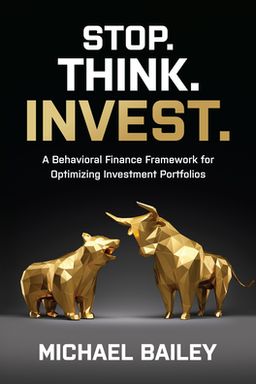
Stop Think Invest cover

Stop Think Invest

by Michael Bailey

Stop Think Invest offers a groundbreaking look into behavioral finance, revealing how emotional biases influence investment decisions. Author Michael Bailey provides actionable strategies to enhance decision-making, optimize portfolios, and achieve financial success. Discover how to navigate today''s complex market with a clear, informed perspective.

Stop. Think. Invest.: Mastering the Psychology of Investing

Why do so many smart investors make the same mistakes over and over again? Why do we hold onto bad stocks, chase hot trends, or panic when the market drops? In Stop. Think. Invest., Michael Bailey argues that the real enemy of investing success isn’t market volatility – it’s us. Our emotions, biases, and overconfidence distort rational thinking, causing us to buy high, sell low, and repeat painful cycles. Bailey contends that understanding behavioral finance – the marriage of psychology and economics pioneered by Daniel Kahneman, Amos Tversky, and Richard Thaler – can help every investor make better, calmer, more profitable decisions.

Bailey’s premise is deceptively simple: if you want to invest wisely, you need to stop acting impulsively, think deliberately about your choices, and only then invest based on sound, researched convictions rather than emotional whims. But while the phrase is short and catchy, the practice requires mastering a complex web of biases that shape every decision you make about money. These biases – from overconfidence to loss aversion to familiarity – are deeply human. Left unchecked, they erode returns and create an emotional cost of investing that can be just as painful as financial losses.

Behavioral Finance Meets Real-World Investing

Drawing on decades as a professional investor and research director, Bailey translates the abstract theories of Nobel laureates into a practical framework for real-world investing. Instead of merely explaining cognitive flaws, he walks readers through the entire investment life cycle – 12 stages of researching, buying, managing, and selling a stock – and demonstrates how behavioral pitfalls lurk at each stage. From overconfidence when discovering new ideas to risk aversion during a downturn, Bailey maps how our brains sabotage us at every turn. He organizes over a hundred behavioral ‘tools’ into accessible strategies investors can use as mental guardrails.

Bailey populates his framework with vivid examples: the emotional rollercoaster of General Electric shareholders who clung to faith in doomed earnings targets; overconfident CEOs like those at AOL or AT&T who overpaid for disastrous mergers; and self-aware investors who learned the hard way that ego kills portfolios. Through these stories, he makes behavioral finance tangible, showing that even seasoned professionals are susceptible to irrational behavior.

From System 1 to System 2 Thinking

At the core of Bailey’s method lies Kahneman’s influential distinction between two modes of thought. System 1 is fast, automatic, and emotional – it’s our gut response, the impulse that makes us buy a hot stock or panic-sell during a downturn. System 2 is slow, deliberate, and rational – the mental gear we engage when we stop to analyze, verify, and plan. Bailey’s mantra “Stop. Think. Invest.” is essentially an invitation to switch gears, to halt our System 1 reflexes and activate our analytical System 2 mind before putting money to work.

This shift from emotion to discipline, he argues, can be learned through awareness and consistent practice. In that sense, Bailey reframes investing as a form of behavioral coaching. Just as athletes train to maintain composure under pressure, investors can use repetition and reflection to make more rational choices in the face of fear and greed. The book becomes not just a financial guide but a playbook for mental conditioning.

Building the Behavioral Edge

Bailey believes that in today’s hyper-efficient markets, traditional informational and analytical advantages are shrinking. Almost everyone has access to the same data and computing power. The only sustainable advantage left is behavioral – the ability to stay calm, rational, and contrarian when others are emotional or irrational. He quotes investor Bill Miller, who identifies three possible edges – informational, analytical, and behavioral – and argues that behavioral discipline is the most attainable for most investors.

This behavioral edge, achieved through patience, reflection, and self-awareness, distinguishes amateurs from professionals and successful professionals from the rest. Mastering your own psychology, Bailey explains, may add as much as 1.5% in annual portfolio returns by avoiding suboptimal emotional decisions – a compounding advantage that can translate into immense long-term gains.

Why This Matters Today

In a world of meme stocks, social-media hype, and algorithmic trading, Bailey’s argument feels especially urgent. The democratization of investing through platforms like Robinhood has given everyone the power to trade – but also amplified emotional decision-making. Behavioral biases no longer affect a handful of stock pickers; they shape entire markets. Bailey’s book is thus both a personal guide and a social commentary on how emotion, bias, and herd behavior ripple through digital-age finance.

Ultimately, Stop. Think. Invest. is a map for self-mastery. By recognizing when animal spirits take over, learning to pause before reacting, and using behavioral tools as mental checkpoints, you can lower the emotional cost of investing and increase the odds of success. It’s not about being perfect; it’s about improving your decision process slightly every day. As Bailey writes, echoing psychologist Carol Dweck’s “growth mindset,” good investors, like good athletes, view each mistake as practice. The goal isn’t just higher returns—it’s becoming a wiser, calmer, happier investor.


Spotting Biases Before You Invest

Before you even buy your first share, your brain is already sabotaging you. Bailey begins his 12-step investment life cycle by showing how the early stages—exploring new ideas and doing initial research—are hotbeds of cognitive bias. These biases steer us toward easy, familiar, or emotionally satisfying choices rather than rational ones. Recognizing them early can prevent costly detours later.

Familiarity, Overconfidence, and the Inside View

Most investors gravitate toward what they know. We buy household brands and domestic stocks, even if better opportunities exist elsewhere. This “familiarity bias,” Bailey explains, keeps us comfortable but underdiversified. He shares a story of his son’s elementary-school stock-picking club, where the kids bought a company called Wins Finance simply because the ticker symbol was “WINS.” Predictably, it crashed. Adults do the same on a bigger scale, mistaking recognition for understanding.

The fix? Take the outside view—seek data beyond your personal experience. Talk to experts. Research competitors. Look for changing markets and unknown unknowns, as former U.S. Secretary of Defense Donald Rumsfeld once put it. The outside view forces you to test your beliefs rather than confirming them.

Risk Aversion and Framing the Decision

Humans hate losing twice as much as we enjoy winning. When applied to investing, that instinct makes us overly cautious. Bailey notes that most investors prefer “sure things” like consumer-staple stocks over riskier, potentially higher-return companies. He illustrates this with data showing how investors have historically paid a premium for defensive sectors.

To escape this trap, broaden your frame. Instead of looking at one stock in isolation—a narrow frame—compare multiple options at once. Seeing the big picture helps recalibrate your sense of risk. In practice, Bailey recommends simultaneously analyzing several themes—for example, cybersecurity, cloud computing, and self-driving cars—and comparing trade-offs across them.

The External Web of Bias

Even if you conquer internal bias, you still face external influences: media pundits, overconfident analysts, and clients obsessed with dividends or short-term performance. Bailey calls this the “economic web of bias.” Confidence bias from charismatic experts is especially dangerous. Television commentators or star fund managers may sound authoritative but are often wrong as often as they’re right. (Bailey cites a study of 80,000 expert predictions that performed worse than a coin toss.)

The antidote is skepticism and independence. Don’t outsource your thinking. When a guru gushes about a stock, pause, breathe, and verify. In short: stop, think, then invest.


Turning Research into Rational Insight

Once you’ve found an idea worth pursuing, the real work begins. Bailey’s chapters on deep research highlight how investors can balance curiosity with skepticism. Emotions like excitement or comfort (what Kahneman calls “cognitive ease”) often lull us into trust when we should be cautious.

Using System 2 Due Diligence

Bailey describes due diligence as a workout for your analytical brain. The goal is to replace gut feeling with data-driven judgment. That means taking the time to interview experts, test assumptions, and build models to verify your thesis. He calls this “System 2 due diligence,” borrowing Kahneman’s term for slow, deliberate thinking. For example, when researching Covidien, a medical-device company spun out of Tyco, Bailey didn’t rely on company presentations. He analyzed the incentive structures of everyone involved—the hospital buyers, surgeons, insurers, and patients—to understand who profited and why.

Judging CEOs and the Human Factor

People drive business outcomes, yet investors often view management through rose-colored glasses. Bailey warns that CEO overconfidence—the “mother of all biases,” as Howard Marks calls it—can lead to disastrous acquisitions. He recounts cases like AOL-Time Warner, where a confident manager believed past success guaranteed future mastery. Statistically, such mega-deals fail more often than they succeed. His advice: look for humility. The best leaders rely on evidence, not ego, to make decisions.

Turning Numbers into Foresight

Investors crave certainty, but forecasting the future is inherently uncertain. Bailey adapts Kahneman’s four-step forecasting method to investing: establish base rates (historical norms), form an intuitive estimate, gauge correlation between trends, and then adjust expectations back toward reality. It’s a way to discipline optimism. He uses Zoom Video as an example—during the pandemic, many predicted infinite growth. His method grounds those expectations by comparing them with long-term averages for software companies.

By combining behavioral awareness with rigorous analysis, Bailey teaches you not only how to gather facts but how to think critically about them.


Crafting Your Investment Thesis

After research comes the hardest step: synthesizing data into a clear, testable investment thesis. Bailey urges investors to balance confidence with humility—constructing a story that explains why a stock should outperform while remaining alert to what could go wrong.

Avoiding Noise and Extreme Predictions

Markets teem with noise—contradictory data, constant news, and emotional chatter. Bailey warns that this environment encourages extreme forecasts. Investors tend to make bold predictions based on limited evidence, especially when they rely on the “inside view,” focusing narrowly on their own analysis. The cure is the outsider’s discipline: incorporate historical base rates and scenario analysis to moderate enthusiasm. Amazon’s foray into online advertising, for example, looked like limitless potential—but examining industry context revealed slower, noisier growth.

Pre-Mortems and Planning Fallacy

Bailey recommends doing a “pre-mortem”—an exercise from psychology where you imagine your investment has failed and ask what went wrong. This counteracts the planning fallacy, our tendency to overestimate timelines and profits. He models this by listing reasons Amazon’s advertising business might disappoint (competition, regulatory shifts, or customer fatigue), turning optimism into preparedness.

Bold Forecasts, Timid Choices

Finally, Bailey highlights a paradox: professionals often make aggressive forecasts but take minimal positions (“timid choices”) to avoid career risk. This behavior dilutes conviction. His solution is self-awareness—recognize your fear of being wrong, but act proportionally to your evidence. It’s better to make one well-studied, decisively sized investment than many half-hearted ones.


Mastering Group Dynamics and Decision Debates

Investing is rarely solitary. Bailey devotes several chapters to how collaboration can enhance—or poison—decisions. His experiences chairing investment committees reveal that meetings, like markets, are emotional systems.

The Perils of Groupthink

Groups crave harmony, especially when senior voices dominate. Bailey cites Mark Twain’s advice: “Whenever you find yourself on the side of the majority, it’s time to pause and reflect.” Writing opinions before discussion, he suggests, helps preserve independent thinking. Otherwise, teams fall into the halo effect—agreeing with charismatic leaders without scrutiny. (This echoes Kahneman’s research showing that strong-willed personalities can distort collective judgment even in expert panels.)

Hunger, Emotion, and Timing

Even physical states matter. Study data show judges make fairer decisions after lunch; investors are no different. Bailey humorously advises never to schedule heated debates before a meal. Hunger and fatigue nudge teams toward the easiest option, typically inaction. Similarly, emotions like fear or frustration push committees to seek comfort in consensus rather than truth. Scheduling isn’t trivial—it’s part of emotional hygiene.

Building Psychological Safety

Ultimately, the healthiest teams build trust. Members should be free to propose unconventional ideas without punishment—“love the process, not just the winners,” Bailey writes, referencing Richard Thaler’s idea of evidence-based cultures. His leadership lessons mirror the best practices of Silicon Valley or agile organizations: encourage curiosity, debate without fear, and make decisions visibly grounded in data, not personalities.


Navigating Market Emotions After You Buy

Once you’re in the market, the emotional rollercoaster begins. Prices move, emotions surge, and your carefully reasoned thesis faces its first test. Bailey’s advice here combines psychology and stoicism: recognize emotions but don’t let them dictate action.

Loss Aversion and Myopia

Losses hurt twice as much as gains feel good. That pain drives investors to sell winners too early or cling to losers. Bailey describes the “myopic loss aversion” effect: checking your portfolio daily magnifies pain and undermines patience. His fix is practical—look less often. Frame performance over years, not days, and remind yourself that short-term drawdowns are the price of long-term returns.

Avoiding the Availability Cascade

Media narratives can create feedback loops where fear breeds more fear. Bailey terms this an availability cascade. For instance, when headlines blamed e-cigarette deaths on nicotine vaping, shares of Altria collapsed—even though evidence was ambiguous. He urges you to separate news hype from fundamentals through secondary research before reacting emotionally.

Practicing Optimism and Reflection

Optimism, when grounded in reality, is an asset. Bailey shares stories from coaching his son’s sports teams to illustrate resilience: practice builds confidence even when outcomes disappoint. In investing, optimism means believing you can improve your process with every loss. Review mistakes systematically; treat each as data, not drama.


When to Trade, When to Wait

In the middle of the investing life cycle, you’ll often feel torn between action and patience. Bailey’s guidance on follow-on trades strikes a balance between agility and restraint.

The Myth of Market Timing

Popular slogans like “sell in May and go away” tempt investors to time the market. Bailey dismantles these myths: trying to beat the market twice—selling and then perfectly re-entering—is nearly impossible. He jokes that behavioral biases double your chances of being wrong. Instead of timing seasons, focus on valuation and thesis strength.

Hope vs. Experience

Hope is a poor substitute for evidence. Investors often chase gains after success, a behavior known as the “house-money effect.” After winning with Nike stock, for instance, Bailey resisted the urge to double down merely because profits felt like free money. Healthy skepticism—anchored in data, not dopamine—keeps portfolios balanced.

Less Is More: Combating Overconfidence

Too many trades eat into returns and inflate confidence. Bailey cites fund manager Bill Miller, who once said his best quarter involved doing nothing. Building a checklist for trades—and speaking up when rules bend—helps maintain discipline. In other words, activity isn’t achievement; staying still is often the hardest, most profitable move you can make.


Overcoming Attachment and Letting Go

Selling is the hardest decision in investing. Bailey dedicates two chapters to understanding why investors struggle to part with stocks—even when logic demands it. He calls it the emotional hangover of ownership, driven by the endowment effect.

Falling in Love with Your Stocks

Humans overvalue what they own. Bailey parallels finicky eaters defending their dinner to investors clinging to old favorites like AT&T or GE. These “comfort stocks” spark joy merely because they’ve been in our portfolios for years. Unfortunately, nostalgia clouds judgment. The antidote is external perspective: invite colleagues or mentors to re-evaluate your holdings without emotional baggage.

Complacency and Status Quo Bias

Long success breeds laziness. Bailey recalls interviewing at T. Rowe Price, where an investor kept two words on his monitor—complacency and overconfidence—as daily warnings. Over time, steady performers like AT&T seduce investors into neglecting risk. Periodic checklists and fresh analysis keep portfolios dynamic.

Comparing Trash to Treasure

To break the endowment spell, Bailey recommends comparative analysis: would you still buy this stock today if you didn’t already own it? Treat every position as replaceable. He sold AT&T only after comparing it head-to-head with Verizon and realizing where future value truly lay. Letting go isn’t loss—it’s opportunity.


Closing the Loop: Selling, Learning, and Improving

The final stage of Bailey’s framework is both technical and philosophical: deciding when to sell and how to learn from every trade. Selling is not the end of the journey—it’s a chance to refine your process for the next cycle.

Anchors, Regret, and Framing Losses

Anchoring traps you in the past, fixating on old purchase prices. GE investors waited years for shares to rebound to $30 instead of asking whether future prospects justified holding. Bailey advises reframing losses as “costs of doing business.” You pay tuition in the market through mistakes; the key is learning faster than your peers.

Fighting Procrastination and Regret

Behavioral economists like Dan Ariely show we delay unpleasant tasks because pain is immediate but benefits are distant. Selling losers feels awful now, while relief comes later. Bailey borrows Carol Dweck’s “how, when, where” method of planning: make concrete sell plans and stick to them. Regret is inevitable; paralysis is optional.

Adopting a Growth Mindset

Finally, Bailey returns to a theme that unites investing and personal development: treat each cycle as practice. After finishing a sale, conduct a post-mortem—what worked, what didn’t, and how can you improve? This mindset, inspired by Carol Dweck and echoed by Warren Buffett and Pat Summitt, transforms repetition into mastery. Great investors, like great athletes, thrive on continuous improvement, not perfection.

Dig Deeper

Get personalized prompts to apply these lessons to your life and deepen your understanding.

Go Deeper

Get the Full Experience

Download Insight Books for AI-powered reflections, quizzes, and more.