
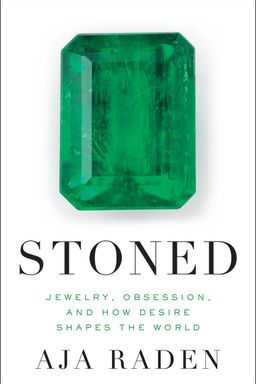
Stoned cover

Stoned

by Aja Raden

Stoned unravels the intricate dance between human desire and the value we assign to luxury items. Aja Raden takes readers on a journey through history, revealing how our pursuit of beauty and status has shaped economies, redefined cultures, and altered destinies. Discover the power of perception and marketing in transforming the mundane into the magnificent.

The Psychology and Power of Value

Why do some objects command fortunes while others gather dust? This book argues that value is never purely objective—it is psychological, historical, and political. You learn how scarcity, symbolism, and desire intertwine to shape human economies, from beads used to buy Manhattan to diamonds engineered into love rituals. It’s a journey through how perception, culture, and power create worth—and how you can decode those forces in your own decisions.

Perception and the Scarcity Trap

Scarcity isn’t just an economic condition, it’s a mental trigger. Neuroscience shows that perceived shortage activates arousal pathways—narrowing focus, suppressing analysis, and heightening desire. Whether in seventeenth-century tulip mania or modern real estate, the illusion of limited supply fuels irrational bidding. This first principle—scarcity makes you feel urgent—runs through every case that follows.

Culture as Value Engine

The book shows how societies manufacture value by attaching emotion to objects. De Beers transformed carbon into commitment with the slogan “A diamond is forever.” Elizabeth I turned pearls into moral capital and propaganda. Fabergé turned gems into state ritual. Lenin, by contrast, melted those same objects for currency. Across centuries, value shifts with narrative: the same stone can sanctify love, legitimize a throne, or pay for revolution.

Economic Alchemy: From Ornament to Infrastructure

Jewelry operates as an early financial technology. Wampum belts were currency and contract; emeralds financed empire and birthed sovereign debt; pearls launched naval wars. As you move through history, these stories show objects evolving from ornaments into economic infrastructure. The first banking systems and trade economies often depended not on abstract numbers but on tangible, portable wealth—stones and metal that carried trust across borders.

Symbols, Revolt, and the Politics of Display

Adornment can also catalyze revolution. The Affair of the Necklace turned Marie Antoinette’s perceived frivolity into political fury. The Fabergé eggs became symbols of Romanov detachment. When society feels injustice, luxury ceases to be admiration—it becomes proof of corruption. Understanding this dynamic teaches that symbols are accelerants: when social inequality meets excess display, iridescent stones ignite unrest.

Value in Modernity: Innovation and Mass Desire

The twentieth century industrialized luxury. Mikimoto cultivated pearls; wristwatches became tools of coordination; Hammer converted looted treasures into capitalist goods. You see a consistent theme: innovation makes rarity reproducible—but marketing keeps emotional scarcity alive. Even when abundance arrives, firms use narrative, precision, and prestige to maintain exclusivity.

Core insight

Value is not in the gem but in the story it carries—and those stories are written by marketing, monarchy, and mythology as much as by minerals. Once you understand that, you can read history and markets alike as systems of belief more than of substance.

Through its chapters, the book moves from micro to macro—from how individuals overvalue scarce cookies to how empires collapse under their own jewels. It ends by teaching you to see every market and symbol as molded perception. Whether you covet an emerald, a watch, or a pearl, ask: is it rare in nature or rare in imagination? The answer defines both economics and identity.


Scarcity and Social Perception

Scarcity begins as perception and ends as behavior. Experiments, such as the cookie study where people preferred the color others chose, show that scarcity cues hijack normal reasoning. Psychologically, you fear missing out, and that fear frames purchase as survival. The book connects this mechanism to history’s grand bubbles—the Dutch tulip craze where bulbs equaled farmland and collapsed overnight when collective belief dissolved.

Historical Scars of Scarcity

From beads buying Manhattan to modern urban real estate, scarcity constructs value rather than measuring it. The Lenape accepted beads not out of ignorance but because those beads were locally rare and culturally meaningful currency. Economic outrage across centuries stems from misunderstanding relative scarcity—what’s abundant in one culture can be priceless in another.

Psychological takeaway

Perceived shortage narrows thought and inflates desire. Recognizing this bias protects your judgment from manipulation in markets and media alike.

Modern Echoes

Every “limited edition” ad or countdown timer exploits the same neural pathway. Scarcity sells because it signals status and triggers fear. Understanding this helps you pause before urgency dictates irrational choices—and explains collective delusions from speculative assets to social trends. True rarity is geological; constructed rarity is psychological, and knowing which is which is financial self-defense.

When you next face a shiny offer—whether an NFT, designer drop, or bidding war—the book advises one question: is scarcity real, or just reframed belief? That pause is power.


Manufactured Desire and Cultural Myth

The diamond story epitomizes engineered value. De Beers didn’t just sell stones; it sold emotion. By controlling global supply and wiring love into advertising, it turned disposable carbon into enduring sentiment. Dorothy Dignam and Frances Gerety’s campaign made diamonds synonymous with romance through celebrity placement and the immortal phrase that equated eternity with ownership. Sociologically, that rebranding created a universal ritual: two months’ salary, one ring, one lifelong myth.

Neuromarketing: Desire in the Brain

Neuroscience confirms that emotion and value converge in the ventromedial prefrontal cortex. When love is paired with a commodity, valuation becomes visceral. De Beers exploited this fusion so effectively that few dared sell their stones afterward—emotional guilt prevented secondary markets, ensuring stable prices. It’s economic manipulation through neurochemical conditioning.

Lessons for Autonomy

The book challenges you to distinguish cultural programming from personal meaning. Are your gifts expressions of affection or echoes of a century-old campaign? It’s not cynicism but clarity: understanding how supply control and psychological design co-create rituals lets you decide what deserves emotion. Real beauty isn’t manufactured; it’s chosen consciously despite marketing’s mythmaking.

Industrial psychology made luxury behavior predictable. The De Beers case reminds you that advertising doesn’t just persuade—it rewires culture itself, proving that social necessity can be built from nothing but clever storytelling.


Jewels as Money and Memory

Jewelry once served as both bank and Bible. In Native America, wampum belts recorded treaties and paid debts. In Europe, hallmarks enforced purity and trust—the origin of hallmarking laws that equate forgery with currency counterfeiting. Across cultures, beads, shells, and metals performed triple duty: ornament, record, and money. The book illustrates that before electronic ledgers or steel vaults, society relied on wearable wealth to carry value and promise.

Global Arbitrage

Venetian trade beads exemplify cross-market arbitrage—cheap in Venice, precious in the Americas. Traders profited from cross-cultural scarcity, much like modern financiers arbitrate currency differences. Jewelry thus becomes an early global commodity system linking perception, geography, and trust.

Trust and Fungibility

Hallmarked metals institutionalized reliability. Gold marked “750” became legal tender in any upscale exchange. This standardization allowed jewelry to finance war, migration, and trade. The Chicago appraisal anecdote shows that even centuries later, tampering with those marks is treated as economic crime—proof that jewelry remains portable evidence of trust.

Insight

Before banks, people wore their savings. Understanding jewelry as ledger—not just decoration—reframes both history and modern value systems.

Across centuries, gems embody trust more durably than paper promises. They illuminate how beauty became credit—and why aesthetics have always been financial.


Emeralds, Empires, and Economic Innovation

Emeralds carved the link between geology and geopolitics. Their rarity stems from unique chemical convergence—beryl meeting chromium through tectonic collision—and that natural scarcity delivered Spain both riches and ruin. When conquistadors seized Colombian mines, emerald fleets funded wars and inflated royal spending. It’s the classic paradox: too much treasure turns prosperity poisonous.

From Sacred Stone to Sovereign Debt

Spanish priests once smuggled emeralds as divine relics; the Crown soon used them as collateral. But wealth came unevenly and intermittently, prompting innovations like the juro—bonds backed by future shipments—effectively inventing sovereign debt. Credit replaced cargo, marking a decisive shift from mineral to paper economy. The emerald became the seed of modern financial abstractions.

Lesson

Real scarcity can build stable value; unchecked inflow or mismanagement destroys it. "The dose makes the poison"—too much treasure destabilizes policy and perception alike.

Emeralds thus act as a mirror of modern resource economies: they remind you that rarity attracts empire, conquest, and speculation—and that every abundance conceals eventual imbalance.


Pearls, Power, and Performance

Pearls illustrate how microscopic biology can drive macroscopic history. La Peregrina’s journey—from Panamanian oyster bed to Spanish and English thrones—symbolizes how beauty triggers rivalry. Philip II’s gift to Mary I displayed wealth and dominion; Elizabeth I’s envy spurred maritime aggression. Private emotional politics turned geopolitical policy, leading to privateering and eventually the defeat of the Spanish Armada.

Symbolic Economics

The pearl embodies purity yet provokes power contests. Its rarity in nature made ownership a statement of divine favor. When nations equated pearls with prestige, they justified wars to control coastal sources. Elizabeth’s use of pearls as visual propaganda showed the same double function: ornament and deterrence.

Strategic moral

Symbols sway strategies. Emotional competition over beauty often precedes military confrontation, turning envy into empire.

Reading pearls as diplomatic scripts helps you see objects not as passive luxury but as active levers of political history—a lesson continued throughout the book’s exploration of how appearances drive actions.


Aesthetics as Governance: The Virgin Queen

Elizabeth I mastered symbolic governance. In a patriarchal world doubting female rule, she constructed divine authority through spectacle. Pearls signified chastity; white paint purity; elaborate portraits became state icons. Each public ritual reinforced Protestant identity and national unity. By performing virginity as public service—her “marriage to England”—Elizabeth replaced diplomacy with rhetoric and controlled dissent via devotion.

Pageantry and Politics

Festivals, jousts, and portrait templates turned monarchy into theater. Every portrait was policy—a deliberately regulated image of strength and virtue. She weaponized aesthetics, transforming femininity into moral capital. (Note: John Guy’s analyses of her iconography highlight how faith and propaganda merged seamlessly.)

Political insight

Image can substitute for institution. Where armies fail, myth can govern.

Elizabeth proved that charisma and costume could secure borders better than cannon alone. Her pearls and performances became England’s soft power long before diplomats coined the term.


Piracy as Policy and Empire

When power lacks funds, creativity fills the gap. Elizabeth’s England turned pirates into privateers—outsourced naval aggression for profit. Letters of marque legalized raids; loot funded government and morale. The blend of entrepreneurship and warfare forged an identity that outlived the queen herself: bold, maritime, mercantile England.

Economic Outsourcing of War

Drake and Raleigh acted as state-sponsored robbers, funneling treasure to the Crown while establishing global routes later formalized under the East India Company. Piracy was financing, foreign policy, and propaganda at once. England’s lighter ships and tactical innovation—culminating in the Armada’s defeat—proved how economic ingenuity can substitute for military might.

Strategic insight

Profit and policy often align; those who read opportunity in constraint can redraw empires.

Privateering represents political audacity wrapped in economic pragmatism. It’s the art of turning scarcity and risk into empire—a theme mirrored in modern venture behavior where daring investment drives global influence.


Opulence and Collapse: Fabergé to Revolution

Fabergé’s eggs encapsulate monarchical fantasy. Each imperial Easter gift—mechanical peacocks, miniature cathedrals—expressed devotion and hierarchy. But such beauty also signaled alienation. The Romanovs’ jeweled rituals glittered as Russia starved. The Khodynka tragedy, when thousands died at Nicholas II’s coronation, exposed the divide between spectacle and suffering. Opulence became indictment.

Innovation within Excess

Carl Fabergé’s workshops were technical marvels—pioneering enameling, tension setting, and humane labor practices. His decentralized creative enterprise anticipated modern design firms. Yet revolution turned artists into exiles: his humane capitalism crushed under ideology. Bolshevik nationalization dissolved cultural capital into bullion.

Lenin’s Financial Reversal

The Gokhran transformed art into currency. Looting and melting treasures yielded temporary liquidity but permanent cultural loss. When Armand Hammer later sold those remnants in America, Soviet ideology met capitalist consumption—heritage traded for survival.

Moral insight

When art becomes fiscal policy, culture dies twice—once in the melting and once in the buying.

Fabergé’s trajectory from artisan glory to ideological liquidation warns that beauty without empathy invites revolt, and wealth without cultural stewardship becomes its own undoing.


Innovation, Standardization, and Democratized Luxury

Mikimoto’s cultured pearls and the wristwatch’s evolution represent industrial creativity turning rarity into accessibility. Mikimoto combined biology and entrepreneurship, grafting mantle tissue to produce millions of pearls—democratizing a gem once limited to royalty. Similarly, watches evolved from jeweled bracelets into synchronized military instruments, then symbols of punctual modernity. Both stories show how invention redefines luxury as utility.

From Craft to Industry

Like Fabergé, Mikimoto built vertically integrated production but oriented toward mass quality, even burning flawed pearls publicly to maintain trust. His spectacle-based marketing echoed earlier strategies yet served an egalitarian goal—making perfection inclusive. Meanwhile, wartime practicality transformed the ornament into infrastructure: wristwatches synchronized armies and later economies, privatizing time across the planet.

Technological insight

When technology meets aesthetic aspiration, luxury becomes system—beauty industrialized without losing symbolic power.

The book closes with this modern transformation: from geology to psychology, from monarchy to marketing, from scarcity to scalability. Value endures not because matter is rare but because meaning is maintained.

Dig Deeper

Get personalized prompts to apply these lessons to your life and deepen your understanding.

Go Deeper

Get the Full Experience

Download Insight Books for AI-powered reflections, quizzes, and more.