
Idea 1
Stillness as the Ultimate Human Power
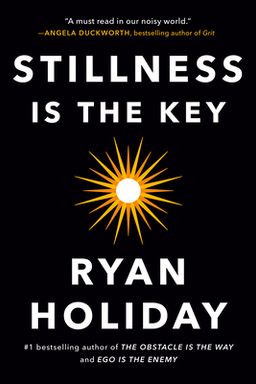
Have you ever felt trapped in the noise of modern life—pulled in every direction by notifications, deadlines, and endless chatter—and wondered if peace is still possible? In Stillness Is the Key, Ryan Holiday argues that the ability to be still is not a luxury or a spiritual ideal but the ultimate human skill, essential for happiness, excellence, and inner freedom. Holiday contends that stillness—the calm clarity that allows us to act wisely and live meaningfully—is the secret shared by history’s greatest thinkers, artists, warriors, and leaders.
The Ancient Pursuit of Inner Peace
From the Roman philosopher Seneca to Buddha and Confucius, nearly every major wisdom tradition has sought what Holiday calls the stillness that sits beneath the chaos. Each culture had its name for this state: ataraxia in Greek philosophy, upekkha in Buddhism, hishtavut in Hebrew mysticism, and samatvam in Hinduism—all signifying an unshakable calm within action. Drawing on this timeless lineage, Holiday’s book blends ancient philosophy with modern stories—linking Stoic thinkers like Marcus Aurelius and Seneca to contemporary figures such as Tiger Woods, Fred Rogers, John F. Kennedy, and Winston Churchill—to show how stillness remains just as vital in our hyperconnected century.
The Core Argument: Three Domains of Stillness
Holiday structures his book around three “domains” of stillness—the Mind, the Spirit (or Soul), and the Body. In each, he shows how turbulence within one dimension disturbs all the others, much like a storm rippling through an ecosystem. The mind must quiet its racing thoughts and distractions through reflection and awareness. The spirit must tame its urges, desires, and emotions through virtue and love. The body must slow its frantic pace and overwork through rest, solitude, and simplicity. Together, these domains form what Marcus Aurelius called a “citadel within the self”—an inner fortress of tranquility that no external storm can shake.
Why It Matters
In a world ruled by speed, reaction, and distraction, Holiday insists that our biggest challenge is not scarcity of information but a “poverty of attention.” Like Napoleon—who told his secretaries never to wake him with good news—our effectiveness depends on limiting inputs, cultivating silence, and thinking deeply instead of reacting to every update. Stillness is how leaders like Kennedy prevented nuclear catastrophe, how writers like Anne Frank found grace under terror, and how thinkers like Churchill restored their spirit amid war. It was through stillness that Lincoln could stand firm on principle, that artists could create transcendent beauty, and that philosophers could see what others overlook.
A Practical Philosophy for Turbulent Lives
Holiday’s tone is not mystical but practical. He treats stillness like a skill that can be trained through habits—solitude, journaling, walking, sleep, reflection, and attention. Being still does not mean withdrawal from action; rather, it means acting from a place of grounded calm. A mind aligned with virtue and a body shaped by discipline create space for clarity and compassion. In this way, Holiday reframes success itself: what matters is not frantic effort but clarity of purpose. He reminds you that all breakthroughs—creative, moral, or strategic—happen in moments of quiet comprehension, not frenzied activity.
The Promise of Stillness
Stillness is not inactivity—it’s awareness. It’s the pause before wisdom, the patience before progress. Through stories that span art, politics, sports, and philosophy, Holiday invites you to look inward, to stop running, and to start seeing. In doing so, he offers a bold message for anyone overwhelmed by the world: you already possess stillness within you—the challenge is remembering how to access it. This book is your guide to restoring that equilibrium, unlocking the calm that allows you to think clearly, perform brilliantly, love deeply, and live freely.