
Idea 1
The Science and Art of Ecstasis
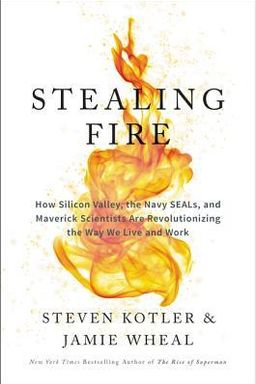
What if the ability to transcend ordinary consciousness was not a mystical accident but a repeatable skill? In Stealing Fire, Steven Kotler and Jamie Wheal argue that humanity’s recurring quest to transcend itself—what they call ecstasis—is the hidden engine of peak performance, creativity, healing, and innovation. From Navy SEAL teams to Silicon Valley, from Burning Man to psychotherapy labs, the same altered states of consciousness drive breakthroughs across seemingly unrelated domains.
They define ecstasis as the state where the ordinary sense of self temporarily disappears and cognition reorganizes itself for exceptional clarity and capability. Attention narrows, time dilates, and the body and mind synchronize as if guided by something greater than personal identity. These experiences share four qualities summarized by the acronym STER: Selflessness, Timelessness, Effortlessness, and Richness. When activated, these states grant deep connection, insight, and performance leaps.
The Hidden Engine of Human Potential
Across disciplines, humans tap this engine through meditation, psychedelics, extreme sports, communal rituals, and technology. The SEALs' "Switch" moment—in which a unit acts as one mind under fire—is a military expression of ecstasis. The same neural signatures appear in musicians at peak improvisation, coders deep in flow, and spiritual practitioners in trance. Neurobiologically, transient hypofrontality quiets the brain’s self-critical regions, while neurochemicals like dopamine, norepinephrine, and anandamide spike, creating faster learning and euphoric creativity.
From Mysticism to Mechanism
The authors trace how four interlocking forces—psychology, neurobiology, pharmacology, and technology—turned ecstatic experiences from sacred mysteries into measurable, trainable phenomena. Psychology gave cultural permission (through Esalen, EST, and positive psychology) to talk about transformation. Neurobiology revealed the brain circuits behind mystical unity and flow. Pharmacology opened access via Shulgin’s chemistry and clinical psychedelic research. Technology scaled it through neurofeedback, immersive VR, and biometric feedback tools. Together these forces built a scientific and social infrastructure to unlock states historically reserved for monks or mystics.
An Economy of Transcendence
The authors quantify our hunger for altered states through a startling statistic: the Altered States Economy—a $4 trillion annual global spend on consciousness-changing goods and experiences, from alcohol to mindfulness apps. This figure exposes an evolutionary drive not just for survival or pleasure but for self-escape and expansion. It also reveals tension: society invests equally in healthy and destructive routes to transcendence, making governance and ethics crucial.
Risks, Rewards, and Responsible Access
Ecstasis is powerful but double-edged. The authors outline predictable pitfalls within the STER framework—ego inflation, temporal distortion, bliss addiction, and fixation on novelty. Hedonic calendaring and integration practices become essential to harness ecstasis sustainably. Without discipline, people risk psychosis, burnout, or exploitation—issues mirrored historically in religious cults, military weaponization, and neuromarketing.
Crossing the Chasm: Mainstream Adoption
Once fringe, ecstasis is crossing into mass adoption through wellness, corporate mindfulness, and legalized psychedelics. As Geoffrey Moore’s technology diffusion model suggests, when phenomena like meditation or neurotech achieve measurable ROI (Aetna’s mindfulness savings, Apple's biosensory programs), they shift from marginal to mainstream. The authors celebrate this transition but warn of commercialization risks—where companies harvest biometric data or manipulate desire, turning transcendence into profit.
Cognitive Liberty and Open Access
The final message is political and ethical: who controls the means to change consciousness? Borrowing Tim Wu’s concept of The Master Switch, the authors warn that ecstatic technologies follow the same pattern as communication media—from open innovation to monopolized control. To protect cognitive freedom, pioneers like Shulgin and Lilly chose transparency over secrecy, open-sourcing tools that democratize access. You, the reader, are urged to do the same: learn, share responsibly, and oppose any attempt to privatize the mind.
Central Thesis
Ecstasis isn't escapism—it’s an evolutionary adaptation that expands what humans can perceive, create, and coordinate. The challenge is not to suppress it but to govern it—personally, ethically, and culturally—so that transcendence becomes a force for flourishing rather than manipulation or harm.
In sum, Stealing Fire reveals that our capacity for altered consciousness is humanity’s oldest and most powerful technology. The question now is not whether we can access it, but how we choose to use it.