
Idea 1
The World Is a Stage: Performing with Purpose in Every Moment
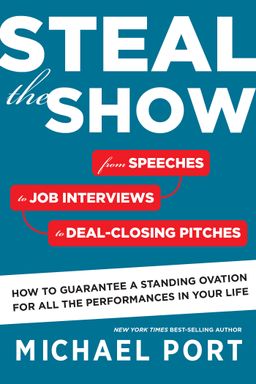
When was the last time you had to perform—even if it wasn’t on a stage? Maybe it was during a job interview, an important meeting, a toast at a wedding, or a conversation that could change your life. Whether you realized it or not, you were performing. In Steal the Show, Michael Port argues that the secret to success in modern life isn’t found only in technical skill or even preparation—it’s found in knowing how to perform when the curtain rises. Life, Port insists, is full of what he calls “spotlight moments”—those situations when stakes are high and the spotlight is undeniably on you. His core premise: you don’t have to be an entertainer to be a performer, but you do have to learn to approach your life like one.
From Acting to Authenticity
Drawing on his classical training as an actor at NYU’s Graduate Acting Program and his own transition into business and public speaking, Port demystifies the craft of performance. Acting, he asserts, is not about pretending to be someone else—it’s about expressing truth intentionally. Just as great actors find authentic emotion in their roles, great performers in everyday life—leaders, executives, entrepreneurs, teachers, parents—learn to access real confidence, presence, and empathy whenever the moment calls for it. Performance becomes a tool not for deception but for honest connection.
He reminds readers that many people “perform small” in life because they’re scared—scared of being judged, scared of failing, scared of looking foolish. But the irony, as Port puts it, is that we’re always performing anyway. Every email, every meeting, every pitch, every relationship involves communication, intention, and presence. The question isn’t whether you perform—the question is whether you perform well.
The Three Acts of Stealing the Show
Port structures Steal the Show like a theatrical play in three acts. In the first act, The Performer’s Mindset, he tackles the inner game—your fears, self-talk, and beliefs about what it means to stand in the spotlight. He helps you find your voice, play authentic roles, and silence both internal and external critics. This is where you move from seeing performance as pressure to seeing it as power.
In the second act, Powerful Performance Principles, Port introduces six actor-inspired principles that shape every great performance: having a clear objective, acting “as if,” raising the stakes, saying “yes, and…,” being in the moment, and choosing early and often. These aren’t just stage directions—they’re disciplines that enhance creativity, courage, and clarity. They help you embrace risk, remain genuine, and turn uncertainty into artful adaptability.
Finally, in A Master Class in Public Speaking, Port brings his philosophy down to earth, translating performance psychology into practical tools. He shows you how to craft compelling speeches and stories, rehearse like a professional, command openings and closings, improvise under pressure, and connect with audiences emotionally. The goal: not to deliver information, but to deliver transformation.
Why Performance Matters Beyond the Stage
In the twenty-first century, Port argues, performance is not optional—it’s essential. In a world where communication drives careers and emotional intelligence drives leadership, those who know how to perform authentically stand out. The book’s promise goes beyond public speaking: it teaches you how to respond rather than react, how to master nerves, and how to turn self-consciousness into service. That’s why he calls his methodology “heroic public speaking”—because to perform well in life is to serve your audience well, whether your audience is one person or one thousand.
Throughout the book, Port weaves inspiring stories—from shy accountants who found their voice to CEOs who reinvented their presence, from astronauts and coaches to Broadway legends. These stories remind us that performance isn’t about glamour or ego. It’s about presence, empathy, and boldness. You learn that your performance is not about impressing others—it’s about impacting them. As he writes, you don’t steal the show by grandstanding; you steal it by serving it.
A Call to Action: Becoming the Hero of Your Story
In the book’s epilogue, Port frames your next steps as a heroic journey: Act One is your current reality, Act Two is your conflict—fears, contradictions, the “performer’s paradox” that makes you afraid of both failure and success—and Act Three is your transformation. He invites you to script your own life story, raise the stakes, and step into roles that once felt too big for you. “You are the writer, director, and star of your own life,” he writes. “Anyone can start something. Few finish. But you—you are a finisher.”