
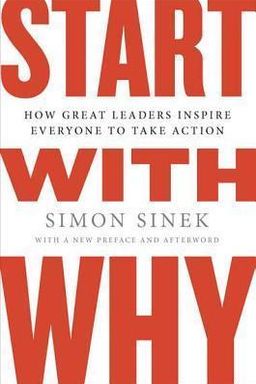
Start with Why cover

Start with Why

by Simon Sinek

Simon Sinek’s ''Start with Why'' explores the power of purpose in leadership. By focusing on ''why'' rather than ''what'', Sinek reveals how great leaders inspire action, foster loyalty, and achieve lasting success. Through engaging examples, the book provides a practical blueprint for innovation and influence.

Start With Why: The Power of Purpose-Driven Leadership

Why do some leaders effortlessly inspire loyalty, while others struggle to motivate even with generous rewards and flashy promotions? In Start With Why, Simon Sinek explores this fundamental question and argues that leadership and influence are not simply about tactics, products, or incentives—they’re about purpose. Great leaders, he insists, start with a clear sense of why they exist: their deeper cause, belief, or reason for being. They inspire others from that center of clarity, turning mere transactions into trust-based relationships.

Sinek contends that whether you’re leading a team, launching a company, or motivating yourself, success and sustained impact depend on knowing your Why—the belief that drives all your actions. Without it, you’re forced to rely on manipulation: discounts, promotions, or fear-based strategies that may work short-term but never create loyalty. “There are leaders, and there are those who lead,” he says. Leaders hold positions of power; those who lead inspire others to act not because they must, but because they want to.

The Golden Circle: A Map of Inspiration

At the core of Sinek’s argument lies his model of the Golden Circle, a simple yet profound visualization of how people and organizations communicate. Most begin from the outside in—starting with what they do and sometimes how they do it—but the inspired few start from the inside out, leading with why. In the circle’s center lies purpose (Why), surrounded by process (How), and finally product (What). When you start from Why, you appeal to the limbic brain—the part responsible for decision-making and feelings, not rational analysis—creating emotional resonance that motivates loyalty and trust.

Looking at companies like Apple, the Wright Brothers, and Martin Luther King Jr., Sinek shows how each was able to mobilize followers not because of superior resources or intelligence but because they articulated a cause that ignited action. Apple’s message wasn’t simply “we make great computers,” but “we believe in challenging the status quo.” The products were just proof of that belief.

Why This Matters

In today’s world, crowded with nonstop promotions, manipulative ad campaigns, and competitive noise, the ability to inspire stands out as the most sustainable advantage. Sinek argues that purpose-driven communication helps people connect emotionally, transcending the rational metrics of price and quality. The leaders who start with Why spark motivation that’s intrinsic—the kind that endures setbacks and inspires innovation. It’s what drives followers to contribute not because they’re paid or pressured but because they believe.

From Manipulation to Inspiration

In contrast to purpose-driven leadership, most organizations rely on “carrots and sticks”—short-term manipulations to influence behavior. Sinek catalogs these tactics: price cuts, promotions, fear appeals, peer pressure, and novelty. While effective temporarily, these undermine trust and loyalty over time. True leadership, he argues, doesn’t manipulate—it inspires. It gives people a reason to care and belong.

Why It’s More than Business

Starting with Why extends far beyond corporate strategy—it deeply affects personal fulfillment and human motivation. Sinek’s research reveals that over 80% of Americans don’t love their jobs. He imagines a world where the reverse is true—where people wake up inspired to go to work, feeling trusted and valued. In such a world, creativity flourishes, relationships strengthen, and companies don’t just grow—they inspire movements.

“People don’t buy what you do; they buy why you do it.” This refrain runs throughout the book, encapsulating Sinek’s belief that what separates great leaders from the rest is clarity of purpose, not clever tactics.

Across six parts, Sinek takes you from understanding how the world’s best inspire action to discovering your own source of purpose. He moves from diagnosing manipulation (“Carrots and Sticks”) to laying out a biological foundation (“This Is Not Opinion, This Is Biology”), to explaining how great leaders build trust and loyalty, rally followers, and sustain success. Ultimately, he challenges you to stop chasing achievements and start finding meaning—because success without purpose is fleeting, but inspiration endures.


The Golden Circle and How Inspiration Works

Sinek’s central framework, the Golden Circle, offers a simple but revolutionary way to understand leadership and influence. It consists of three concentric rings: Why (your purpose or belief), How (your process or values), and What (your product or result). Most people and companies explain themselves from the outside in—starting with What—but the most inspiring begin with Why, creating an emotional bridge that resonates before rational arguments even matter.

The Layers of Leadership Communication

At the outer edge—the What—organizations describe what they sell or produce. Every company can articulate this. The middle layer—the How—is where they explain how they’re different (a unique selling proposition or value process). But it’s at the center—the Why—where inspiration lives. Few can clearly say why they do what they do. “By Why,” Sinek clarifies, “I don’t mean to make money—that’s a result. I mean your purpose, cause, or belief.”

Only when the circle is balanced can a company achieve authenticity—a word often used but rarely understood. Authenticity means your What and How perfectly align with your Why, so everything you say and do proves what you believe. Without this balance, trust breaks down.

Apple: A Company That Starts from Why

To illustrate, Sinek turns to Apple—the enduring case study for purpose-driven inspiration. If Apple were like everyone else, they’d advertise by saying: “We make great computers. They’re beautifully designed and easy to use. Wanna buy one?” Instead, Apple communicates from the inside out: “Everything we do, we believe in challenging the status quo. We believe in thinking differently. The way we challenge the status quo is by making our products beautifully designed, simple to use, and user-friendly. And we happen to make great computers.”

By flipping the order of information—starting with Why—Apple connects emotionally, not logically. It attracts followers who believe what they believe: independence, creativity, and rebellion against the ordinary. Apple’s customers and employees aren’t just consumers—they’re believers.

Trust, Biology, and the Brain

Sinek grounds this idea in biology, not opinion. The Why corresponds to our limbic brain—the emotional center responsible for feelings like trust and loyalty but incapable of language. The What links to the neocortex—the rational brain responsible for words and logic. This explains why we struggle to explain our gut decisions (like why we love the person we love) and why logical explanations of brand superiority rarely create loyalty. We “feel” inspired leaders before we can rationalize their appeal.

“People don’t make decisions based on facts; they make decisions based on feelings, and then use facts to justify those feelings.”

Loyalty Is Built from Shared Belief

When companies communicate their Why clearly, people who believe in the same thing naturally gravitate toward them. That’s why some customers tattoo the Harley-Davidson logo on their body or defend Apple against criticism—they see those brands as symbols of their own identity. “People buy products that prove what they believe,” Sinek writes. Without Why, an organization becomes just another commodity, competing on price and features instead of purpose.

In short, the Golden Circle isn’t just a marketing model—it’s a map of human decision-making and the foundation of trust. Once you master Why, How, and What, you don’t simply sell products—you inspire movements.


Manipulation vs. Inspiration

Most organizations rely on manipulation to drive behavior: discounts, fear, peer pressure, novelty, and aspirational promises. In the short run, these tactics work. But as Simon Sinek warns, “Manipulations lead to transactions, not loyalty.” They create temporary gains that cost trust in the long term. Companies addicted to manipulations find themselves competing in a downward spiral of ever-lower prices, ever-higher stress.

The Many Faces of Manipulation

  • Price cuts—effective in the short term, but addictive like heroin; once customers expect low prices, it’s almost impossible to raise them again.
  • Promotions—“Buy one, get one free” or rebates create dependence and erode margins. Companies become “cash-back junkies.”
  • Fear and peer pressure—used by politicians (“your opponent will raise taxes”) or ads (“four out of five dentists prefer this brand”) manipulate emotions rather than build trust.
  • Novelty—Mistaken for innovation, novelty masquerades as progress. The Motorola RAZR looked revolutionary but was merely a shiny object; true innovation transforms industries.

The Cost of Short-Term Thinking

Manipulation works like a sugar rush—it feels good, then crashes. General Motors, for example, maintained short-term growth through endless sales incentives but eventually collapsed under the weight of shrinking margins and eroded trust. Stock prices, memos, and marketing “buzz” may look healthy, but the culture underneath is sick. You don’t breed loyal followers that way. You breed addicts.

“Carrots and sticks are a perfectly valid strategy for driving a transaction. But for loyalty, they don’t help.”

Inspiration as a Better Strategy

Inspiration begins with clarity of Why. When people are inspired, they’ll endure inconvenience, pay a premium, and even step up to protect the brand they love (as Southwest Airline customers did after 9/11, sending unsolicited checks to support the company). Loyal followers act from belief, not bribery.

Sinek urges us to replace manipulation with trust, empathy, and shared purpose. When you start with Why, you don’t need to push customers; they pull themselves toward you.


Clarity, Discipline, and Consistency

In keeping the Golden Circle in balance, Sinek teaches that inspiration requires three ingredients: clarity of Why, discipline of How, and consistency of What. Nature, he reminds us, abhors imbalance. When companies lose clarity or consistency, manipulations thrive and trust erodes. To inspire sustainably, you must align cause, actions, and results.

Clarity of WHY

If people don’t buy what you do but why you do it, then you must know your purpose clearly. A founder who can’t articulate why their company exists beyond “to make money” leaves everyone confused. Herb Kelleher of Southwest Airlines embodied clarity by defining his airline’s purpose as “to champion the common man and make air travel accessible.” Cheap tickets were just the manifestation, not the mission.

Discipline of HOW

Your values and methods must be consistent with your Why. Sinek offers the example of verbs replacing nouns: Instead of “integrity” on a company wall, say “always do the right thing.” Values must be actionable, guiding behavior. It’s this discipline of practice that turns lofty missions into daily habits.

Consistency of WHAT

Every tangible output—products, services, communication—should prove what you believe. When the How supports the Why, your What becomes authentic. Authenticity is when everything you say and do actually reflects what you believe. Apple achieves this effortlessly; Dell does not. Every Apple product, from computers to phones, embodies the same belief in challenging the status quo and empowering individuals.

Without this triad—clarity, discipline, consistency—companies fall into inauthenticity, forced to compete with price, features, or fear. Those who maintain balance inspire loyalty that lasts.


Trust and the Power of Belonging

Sinek argues that trust is the emotional currency of leadership. It's not built through checklists or policies, but through shared beliefs. When people feel like they belong—to a culture, a movement, or an organization—they are willing to take risks, work harder, and stand by each other even in crisis.

The Biology of Trust

We trust those who share our values and beliefs. This is rooted in our limbic brain—the same part responsible for feelings of belonging. It's why we instinctively prefer familiar groups or brands that feel aligned with us. When leaders communicate a clear Why, they create emotional safety, inspiring cooperation and innovation.

Building Cultures of Trust

Great organizations act like tribes. Continental Airlines, under Gordon Bethune, turned from one of the worst airlines in America into one of the best simply by rebuilding trust. Bethune removed executive privileges, made himself accessible, and rewarded all employees equally for on-time performance. Employees trusted that leadership cared about them first—and they reciprocated with loyalty and excellence.

Herb Kelleher at Southwest Airlines echoed the same principle, famously stating: “Employees come first; if employees are treated right, they treat the outside world right.” Trust flows inside-out, never the other way around.

“Great organizations become great because the people inside feel protected. The strong sense of culture gives them confidence to take risks and push the organization further.”

For leaders, cultivating belonging requires clarity of belief and consistent behavior. Fear-based organizations breed competition and distrust; belief-based ones foster collaboration and innovation. Trust isn’t a strategy—it’s a result of inspired leadership.


The Law of Diffusion of Innovations

Have you ever wondered why some products create movements while others fizzle? Sinek applies the Law of Diffusion of Innovations—a principle from Everett Rogers and Geoffrey Moore—to show how ideas spread. According to the law, innovation adoption follows a bell curve divided into five categories: innovators (2.5%), early adopters (13.5%), early majority (34%), late majority (34%), and laggards (16%). Inspiration must start with the left side of the curve—the early believers—before crossing the “chasm” to the masses.

Why Early Adopters Matter

Early adopters and innovators are driven by belief, not features. They trust intuition, take risks, and help spread ideas. They are the ones lining up overnight for Apple’s iPhone, not because it’s rational but because it expresses their identity. Once about 15-18% of the population believes in your idea, a tipping point occurs and the majority follows—because the early believers validate the cause.

When You Start with WHY

TiVo’s failure demonstrates what happens when companies start with What instead of Why. They launched with features (“pause live TV,” “skip commercials”)—appealing to logic, not belief—and failed to gain traction. A better message—“If you crave total control over your time, here’s the technology for you”—would have spoken to a cause, not a commodity. As Sinek says, “They didn’t fail because they had a bad product; they failed because people didn’t understand why it existed.”

Movements, Not Markets

Martin Luther King Jr. understood the law intuitively. His “I Have a Dream” speech didn’t list legislative points—it articulated a belief, inviting millions to share it. People didn’t show up for him; they showed up for themselves. Mass influence, in Sinek’s view, comes not from louder messages but from clearer purpose. Speak to those who already believe, and they will bring others along.

“Give people something to believe in, not something to buy.”

Understanding diffusion isn’t just marketing—it’s leadership science. You don’t influence through persuasion; you mobilize through belonging.


The Challenge of Success and Losing Your Why

Success is seductive. Sinek argues that the greatest threat to any organization is not failure—it’s achievement without purpose. As companies grow, their clarity of Why often fades. They become obsessed with What—profits, products, shareholder value—while forgetting the cause that inspired them in the first place. This phenomenon, the Split, marks the point when meaningful success turns into routine achievement.

The Split and the School Bus Test

The split happens when founders or leaders who embody the Why grow distant or leave, and the organization loses focus. Sinek’s “School Bus Test” asks: if your founder were hit by a bus, would your organization continue to inspire or merely operate? Most fail. When Steve Jobs left Apple, the company lost its soul; only upon his return did it rediscover clarity and innovation. When Bill Gates stepped back from Microsoft, the company’s purpose—helping people achieve potential—gave way to product management and spreadsheets.

Wal-Mart vs. Costco: A Tale of Two Whys

Wal-Mart’s founder, Sam Walton, built his empire on serving people and communities. After his death, the company confused “how” (low prices) for “why” (service). Profit replaced purpose, and scandals followed. Costco’s founder, Jim Sinegal, meanwhile, kept his Why—respect for employees and customers—alive. Costco paid workers 40% more and maintained loyalty without advertising, proving that clarity of purpose drives sustainable success.

“Money is a perfectly legitimate measure of performance, but it’s not a measure of value.”

Rediscovering Your Why

Sinek himself went through the split. After his early business success, he lost purpose, sunk into depression, and eventually rediscovered his Why: “to inspire people to do the things that inspire them.” Once he reconnected with that belief, his work gained meaning and traction. His journey illustrates that regaining Why isn’t about new strategies—it’s about clarity, truth, and authenticity.

The cure for success without soul is simple: return to purpose. Leadership that endures isn’t just efficient—it’s inspired.


Finding Your Own Why

At the book’s close, Sinek turns the lens inward. Discovering your Why isn’t about inventing a mission statement; it’s about rediscovering your origin story. It’s the process of looking backward to identify recurring patterns of inspiration that have driven you throughout life. As he writes, “Finding WHY is a process of discovery, not invention.”

The Power of Reflection

Like an archer who must draw backward before releasing an arrow, inspiration requires looking to your past before envisioning your future. Your Why comes from meaningful experiences—moments where you felt most alive, useful, or fulfilled. For Sinek, his lifelong pattern of optimism and motivating others led him to realize his purpose: “to inspire people to do the things that inspire them.”

Living the Why Every Day

Once discovered, your Why becomes the foundation for authenticity. Every decision, partnership, or opportunity should pass Sinek’s Celery Test: when faced with multiple choices, choose only what aligns with your beliefs. If your Why is health, you’ll buy celery and rice milk—not Oreos and M&Ms. The test reminds you to stay disciplined and visible in your purpose; others should recognize what you stand for from what you do.

From Competition to Contribution

In one of the book’s final stories, Sinek writes about Ben Comen, a runner with cerebral palsy who finishes last but inspires everyone to run beside him. Ben competes not against others but against himself—never losing sight of his Why for running. Sinek urges leaders and readers alike to adopt the same mindset. When you run for your Why, others will join you—not out of competition, but belief.

“When you compete against yourself, everyone wants to help you. When you compete against others, no one does.”

Discovering your Why isn’t a theoretical exercise. It’s the foundation for leading, living, and loving with purpose. When you know Why, everything else—How and What—aligns naturally. The result is not just success, but significance.

Dig Deeper

Get personalized prompts to apply these lessons to your life and deepen your understanding.

Go Deeper

Get the Full Experience

Download Insight Books for AI-powered reflections, quizzes, and more.