
Idea 1
Leading Without Fear: Becoming a Whole Leader in a VUCA World
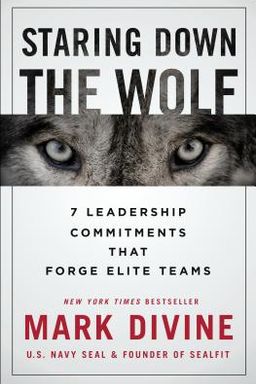
What does it take to lead courageously when everything around you feels uncertain, complex, and volatile? In Staring Down the Wolf: 7 Leadership Commitments That Forge Elite Teams, retired Navy SEAL Commander Mark Divine argues that the true mark of leadership today is not authority or charisma—it’s emotional and spiritual wholeness. Divine contends that the battlefield of modern leadership isn’t found in boardrooms or warzones, but in the leader’s internal terrain. To transform teams, he insists, you must first stare down the metaphorical wolf of fear within yourself.
Drawing from his own journey—from the SEAL Teams and Zen monasteries to corporate failures and coaching executives—Divine explores how modern leaders can shift from ego-driven achievers to heart-centered servants. His core message: until leaders confront their hidden fears, biases, and emotional conditioning, they will remain limited by old patterns that sabotage trust, authenticity, and performance. By developing courage, trust, respect, growth, excellence, resiliency, and alignment, leaders can create the kind of elite, deeply connected teams that thrive in a VUCA (volatile, uncertain, complex, and ambiguous) world.
The Inner Battlefield: Facing the Fear Wolf
At the heart of Divine’s philosophy lies the metaphor of the two wolves, drawn from a Native American story. The first is the Fear Wolf, nourished by self-doubt, blame, and ego. The second is the Courage Wolf, fueled by trust, compassion, and self-mastery. Every leader, Divine explains, faces a daily choice about which wolf to feed. Staring down the wolf doesn’t mean destroying fear—it means recognizing it, starving its control, and turning your energy toward the Courage Wolf through conscious practice.
From Command-and-Control to Conscious Leadership
Divine compares traditional corporate leadership styles—rooted in control, measurement, and ego—to a commander barking orders from a distance. These methods worked in stable, predictable systems, but in today’s chaotic environment, they fail. He describes how many executives now face what he calls a “crisis of relevance”—trained for a world that no longer exists. To win in modern VUCA conditions, they must shift from rigid control to whole leadership, characterized by moral courage, authenticity, and adaptability.
The key shift is inward. Divine, citing influences such as Ken Wilber’s Integral Theory and Zen teachings, breaks down leadership development into three lifelong journeys: “clean up” (healing emotional shadows), “wake up” (discovering your essential nature), and “grow up” (expanding your capacity for inclusive awareness). Together, these form the foundation of authentic, world-centric leadership.
The Five Plateaus of Leadership Growth
To diagnose where a leader might be stuck, Divine introduces the Five Plateaus model of development. Each plateau represents a shift in consciousness:
- Survivor (first plateau): Egocentric focus on self-preservation and personal security.
- Protector (second plateau): Tribal loyalty and rigid moral absolutes.
- Achiever (third plateau): Driven, competitive, and materialistic, yet often isolated emotionally.
- Equalizer (fourth plateau): Caring and inclusive but sometimes hypersensitive or indecisive.
- Integrator (fifth plateau): World-centric leadership that transcends ego and unites head and heart.
Most people, he notes, hover between the second and fourth plateaus. The fifth plateau, which only about five percent of humanity achieves, represents complete authenticity and wholeness. A leader here embodies compassion, humility, and strength—a “servant warrior” mindset.
The Seven Commitments: A Path to Wholeness
Divine’s framework for reaching that fifth plateau consists of seven leadership commitments. Each represents a virtue paired with a fear to conquer:
- Courage — staring down the fear of risk.
- Trust — confronting the fear of failure.
- Respect — overcoming the fear of judgment.
- Growth — challenging the fear of discomfort.
- Excellence — embracing the fear of being unique.
- Resiliency — defeating the fear of obstacles.
- Alignment — releasing the fear of sharing.
Each commitment integrates practical SEAL strategies, personal anecdotes of failure, and lessons from coaching high-level executives. Courage draws from battlefield risk-taking; trust is embodied through Admiral William McRaven’s transparency after a training accident; respect emerges from Captain Jim O’Connell’s unwavering integrity in war; growth is illustrated through brutal BUD/S training; and excellence is modeled in the innovation of SEAL Team Six under Richard Marcinko. Together, these commitments are designed to help you starve your fear wolf and feed your courage wolf daily through disciplined self-awareness, authenticity, and heart-centered leadership.
Why It Matters Now
Divine concludes that the leadership crisis facing businesses, governments, and even societies stems from internal fragmentation—ego over empathy, intellect over intuition, fear over trust. To heal this division, we must commit to personal evolution and cultural transformation simultaneously. “You can’t outsource transformation,” he writes. “The only transformational leader available is you.” By doing the inner work to integrate mind, body, and spirit, and by living the seven commitments, you don’t just build stronger teams—you contribute to the evolution of humanity itself. Staring down the wolf, then, becomes more than a leadership practice—it becomes a spiritual imperative for the twenty-first century.