
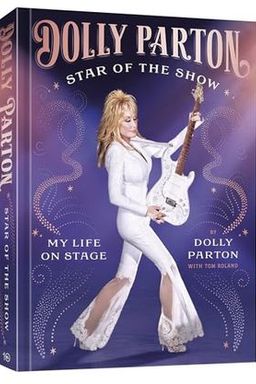
Star Of The Show cover

Star Of The Show

by Dolly Parton With Tom Roland

Stories and photographs documenting the country music icon’s career on stage.

From Mountain Roots to Global Brand

How do you turn a one-room-cabin childhood into a global cultural force that spans hit songs, movies, a theme park, and a world-scale literacy program? In this book, the author argues that Dolly Parton’s durability comes from a braid of forces you can trace from the Smoky Mountains to Hollywood: Appalachian memory-work, relentless craft apprenticeship, a deliberately engineered persona, savvy business pivots, and an ethic of reinvestment in community. The throughline is simple and powerful: Dolly knows how to convert personal roots into public value—artistic, commercial, and philanthropic—without losing control of her story.

Mountain DNA as artistic engine

Dolly’s Sevier County childhood—Locust Ridge, Pittman Center Road, Birds Creek—matters because it’s where storytelling, church music, and domestic ingenuity become a lifelong toolkit. The book shows how the region’s layered histories—Scots-Irish balladry, Cherokee presence (Trail of Tears, Qualla Boundary), and evangelical hymnody—imprint her voice and themes. Poverty and resilience (quilt scraps, corncob dolls, moonshine in false wagon bottoms) become both subject matter and sensibility, culminating in songs like "Coat Of Many Colors" that turn household memory into universal currency.

Apprenticeship, platform-hunting, and persona design

Before she’s a star, Dolly is a working learner. Cas Walker’s Farm And Home Hour in Knoxville, small-label recordings (Goldband’s "Puppy Love" in 1957), and Grand Ole Opry spots (introduced by Johnny Cash) form her practical school. She learns timing, camera rapport, and how to pitch songs—skills that prime her for national lift-off. In parallel, she engineers a high-visibility image—wigs, rhinestones, hyper-femininity—used as a funnel: the spectacle commands attention so that the songwriting can convert it into loyalty. (Note: like David Bowie or Elton John, she treats image as a business instrument; but unlike many, she centers authorship and catalog ownership.)

Partnerships, contracts, and emancipation

The pivot from regional to national fame runs through Porter Wagoner’s TV juggernaut. Their duets (“The Last Thing On My Mind”) and The Porter Wagoner Show multiply her exposure, but the 1970 contract (Owepar publishing, net-income percentages, management provisions) later binds her ambitions. Her cleanest artistic statement on the split—"I Will Always Love You"—becomes the emotional and financial hinge of her independence, underscoring a core lesson: early boosters often come with strings that you must someday cut.

Songwriting as memory, market, and moral grammar

The book positions songwriting as Dolly’s engine. She composes orally (singing into tape recorders, with Judy Ogle often transcribing), moving quickly from spark to structure. Signature pieces—"Jolene" (a minor-key plea born from a real redheaded autograph), "In The Good Old Days (When Times Were Bad)" (affectionate critique of hardship), "Just Because I’m A Woman" (gender double standards)—prove that specific, small scenes can travel globally when voiced plainly and honestly. You see a moral grammar learned in church and family, retooled for the marketplace.

Crossing over—and the price of scale

With Sandy Gallin’s management (Katz, Gallin & Cleary), Dolly moves from Nashville to Los Angeles studios and pop producers. "Here You Come Again" repositions her as a crossover force; 9 To 5 crowns the move with a film hit and a chart-topping anthem. But Hollywood magnifies risk: lawsuits ("Money World" claims; fiddler Benny Martin’s assertion), hostile press, and creative compromise (Rhinestone’s production chaos) reveal how expanded reach trades off against control. The savvy response is structural: stronger contracts, selective projects, and a recalibration back to music and ownership.

Image labor, health costs, and boundaries

The iconic look requires constant maintenance: wigs, corsets, sequins, and cosmetic surgeries (her "1,000-mile maintenance"). Extreme diets (Scarsdale, Atkins, Liquid Protein), smoke-filled venues, and sleepless tours yield vocal strain and gynecological crises that force cancellations and under-alias surgeries. The book refuses tabloid treatment: it frames health as operational risk for creative workers—and argues for boundaries, medical foresight, and staff you trust (Judy Ogle as gatekeeper) as part of any sustainable public career.

Community capital and reinvention

Dollywood (opened 1986) becomes Dolly’s template for reinvesting fame into place. It markets Smoky Mountain culture respectfully—craftspeople, dulcimers, quilting—while driving regional tourism (1.34 million visitors in its first season). The Dollywood Foundation and the Imagination Library (1996) extend that ethic into early literacy, mailing monthly books to children and scaling through public–private partnerships (hitting a million books by 2003). Artistically, she cycles back to roots with Trio (Emmylou Harris, Linda Ronstadt) and a bluegrass renaissance (The Grass Is Blue, Little Sparrow), using label shifts (RCA to Columbia, Blue Eye, Sugar Hill leases) to recover creative autonomy. The pattern is consistent: widen the circle, then return to center.

Taken together, the book reads like a field manual for creative longevity. It shows you how to turn place into voice, voice into brand, brand into business, and business back into community—without losing the capacity to reinvent when markets change or to retreat when health or safety demands it.


Mountain Roots, Faith, Storycraft

Dolly Parton’s art begins in a tightly woven Appalachian world. Sevier County, Tennessee—Locust Ridge, Pittman Center Road, Birds Creek—anchors her imagination. When you hear her songs, you’re hearing Scots-Irish and English ballads filtered through Baptist hymnody and Cherokee-shadowed history. The book insists you treat this setting as cause, not backdrop: it furnishes Dolly’s melodic modes, her narrative economy, and her habit of using story to metabolize hard times.

Landscape and ancestry

The Great Smoky Mountains shape how a family survives and celebrates. Settlers from Scotland, Ireland, England, and Germany brought ballad traditions that prize spare melodies and tragic turns; the region’s Cherokee legacy, including the Trail of Tears and Qualla Boundary, underlines themes of loss and endurance. Dolly’s grandparents and elders—Mammy, Lindy, Grandpa Jake Owens—bequeath not just tunes but the ethic that music explains life and keeps community stitched together.

Home economy and resourcefulness

One-room cabins, no indoor plumbing, and quilt-making become Dolly’s storehouse of images. Her mother, Avie Lee, endlessly pregnant and endlessly resilient, turns scarcity into ritual and beauty—coats of many colors, stone soup, corncob dolls. These details reappear as emotional currency in songs that never pity the poor but dignify them. (Note: like James Agee’s prose in Let Us Now Praise Famous Men, Dolly’s lyrics linger on specific domestic textures to make hardship legible.)

Religion as moral grammar and performance school

Church gives Dolly language, drama, and cadence. Grandpa Jake’s hellfire sermons, house-of-prayer revivals, and hymns teach her to pause, testify, and lift a congregation. She’s baptized at six by Reverend L. B. Smith, learning early how music can teach right from wrong and move a crowd. Midwives and healers like Grandma Cass blend herbal knowledge with stories, reinforcing a worldview where songs are medicine.

Doctor, snow, and memory-work

Even cameo figures carry weight: Dr Robert F. Thomas delivering Dolly on a snowy night later becomes a lyrical icon of care and community. Family members—Willadeene, Stella, Frieda, and others—populate anecdotes that ripple through later writing. You learn to hear "Coat Of Many Colors" not as a clever metaphor but as a historical document of a mother’s love translating scarcity into identity.

What this equips you to do

If you make things—songs, startups, curricula—Dolly’s upbringing models how to convert local truth into universal resonance. You don’t need to generalize; you need to particularize so vividly that listeners find themselves inside your scene. That’s the Appalachian secret: the smaller the detail (a quilting scrap, a creek name), the wider the reach when it’s carried by melody and moral clarity.

Key Idea

Dolly’s childhood doesn’t just inform her art—it structures her method. She treats memory as material and faith as form, turning household life into portable parables.


Apprenticeship and Persona Engineering

Before awards and arenas, Dolly masters craft in small rooms with live mics and unforgiving cameras. Cas Walker’s Farm And Home Hour (WIVK, Knoxville) lets a ten-year-old Dolly rehearse in public, learn to hit time cues, and “make friends with the camera.” Bill Owens, her uncle, acts as early manager and chauffeur, hustling demos and auditions. The lesson is straightforward: repetition on modest stages—plus mentors—beats waiting for a big break.

From local platforms to national stages

Early sessions include a Goldband single ("Puppy Love," 1957), a Mercury cut in 1962, and a low-budget Somerset LP of Kitty Wells and Patsy Cline covers. Chet Atkins passes at first, citing her age, proving that rejection can be a timing issue, not a talent verdict. Then the Opry moment arrives: Johnny Cash’s introduction, Dolly’s "You Gotta Be My Baby," encores, and instant industry notice. The Opry, with its live national broadcast, functions as an amplifier for everything she learned back home.

Image as instrument, not ornament

In a male-dominated market with limited slots for female voices, Dolly reframes visibility as strategy. She builds an exaggerated femininity—big hair, glitter, a wink toward sexuality—not as vanity but as sales funnel. She says plainly: "I look one way and am another... I think of her, the Dolly image, like a ventriloquist does his dummy." The persona draws eyes so the songwriting can keep ears. (Parenthetical comparison: like Mae West, she uses humor to defang moral panic while retaining control of the joke.)

Managing the public–private split

Treating “Dolly” as a character allows the person behind her to stay intact. She scripts interviews, leans on rehearsed quips, and deflects intrusions about Carl Dean or her body. This is not inauthenticity; it’s boundary-setting in a media economy that monetizes exposure. You see how the dummy speaks loudly so the ventriloquist—songwriter, wife, friend—can work unharassed.

Your actionable playbook

Whatever your field, start where you are: build reps on small platforms, find a mentor, and make proximity plays to industry hubs. Craft an image that opens doors, but separate role from self so you can walk away healthy. The point isn’t to be seen; it’s to be seen doing work that sticks after the spotlight swings on.

Key Idea

Radio and TV were Dolly’s conservatory, and the persona was her megaphone. That combination—craft school plus spectacle—translates across industries.


Porter Wagoner: Boost and Bind

Porter Wagoner’s partnership is Dolly’s great accelerant—and her first major constraint. Porter’s syndicated TV show reaches 100 markets; he needs a new girl singer after Norma Jean, and Dolly needs a national platform. Their blend—Porter’s traditionalism with Dolly’s tone and writing—produces quick traction: the duet "The Last Thing On My Mind" hits the Top 10, and weekly exposure makes Dolly a household face.

Creative electricity and emerging tension

In studio, their chemistry sells, but Dolly increasingly seeks textures outside Porter’s control—sleeker productions, more pop-inflected arrangements. Porter wields authority over band, arrangements, and repertoire; Dolly pushes back on artistic direction. The dissonance is less about talent than governance: who decides what Dolly sings, wears, and releases?

The 1970 contract—and its tail

Dolly signs an agreement (without a lawyer) that extends Porter’s reach into Owepar publishing, net-income percentages, and management options, with Fireside Studio entangling their assets. Those structures, practical at first, become handcuffs when ambitions diverge. The eventual fallout lands in court (1979), splashed across the press, before a settlement reportedly near $1 million and asset division.

A song as exit letter

"I Will Always Love You" begins as Dolly’s private farewell to Porter, a loving yet resolute declaration of independence. Its later life—two country #1s by Dolly herself; a global smash via Whitney Houston—turns a personal boundary into a financial engine for freedom. That’s art doing legal work.

What you take with you

Mentorships and launchpads are vital, but contracts outlive moods. Retain counsel, specify exit ramps, and beware of equity arrangements that blur friendship and finance. The paradox holds: Porter made Dolly a star, and the same structures later constrained her—proof that scale requires governance you can grow with, not just get through.

Key Idea

A great partnership can be both bridge and barrier. Build the bridge; plan the toll and the off-ramps.


Songwriting: Memory To Market

If you want Dolly’s center of gravity, analyze the songs. She writes by humming into tape recorders, catching ideas on scraps (the dry-cleaning tag that birthed "Coat Of Many Colors"), and finishing fast, as if dictating from a trance. Judy Ogle often helps capture lines. The styles draw on Appalachian ballads—minor keys, plainspoken arcs, O. Henry twists—married to pop-savvy hooks learned by relentless radio work.

Signature pieces and their seeds

"Coat Of Many Colors" fuses Avie Lee’s quilting with a Joseph tale to craft dignity from want. "Jolene" begins with a real redheaded autograph seeker (“To Porter, love Jolene”), into which Dolly pours jealousy and prayer. "I Will Always Love You" translates a business break into tenderness. "In The Good Old Days (When Times Were Bad)" refuses nostalgia without losing affection. These aren’t generic country tropes—they’re micro-histories reframed as melodies.

Women’s voice, moral clarity

In "Just Because I’m A Woman," Dolly indicts double standards with a steady eye, not a shout. She often centers women’s perspectives, not as polemic but as daily truth-telling, smuggling critique into singable stories. This moral clarity—shaped by church cadences—lets her preach without scolding, a craft move that broadens her coalition.

Form, function, and performance

Dolly pairs deceptively simple melodies with densely evocative scenes. She knows radio wants brevity and hooks; she also knows audiences want to inhabit characters. That’s why callers still request "Jolene" and "I Will Always Love You" decades on: the architecture serves both commerce and catharsis.

Applying the method

If you create, start from one true detail and write it plain. Let images carry argument. Draft fast to catch heat, then edit for clarity and singability (or its equivalent in your field). Dolly proves that specificity is the shortest route to scale: a quilt stitch becomes an anthem; a private farewell becomes a global love song.

Key Idea

Dolly’s catalog is living proof that memory, shaped with moral intent and melodic economy, can double as both autobiography and mass-market product.


Crossovers, Films, and Control

Dolly’s crossover arc is deliberate: sign with RCA, hire West Coast management (Katz, Gallin & Cleary), record in Los Angeles with pop producers, and hit mainstream TV (Carson, Parkinson). "Here You Come Again" delivers a gold single and platinum album—the first such feat for a female country artist—proving she can carry country forward without leaving it. Then film magnifies the bet: 9 To 5 (1980) pairs Dolly with Jane Fonda and Lily Tomlin and gives her a title song that tops country and pop while minting a cultural slogan.

Law in the spotlight

As "9 To 5" soars, lawsuits follow. Neil and Jan Goldberg claim she copied "Money World"; Dolly sings in court to prove originality and wins in thirty minutes of jury deliberation (with expenses). Fiddler Benny Martin asserts overlap with “Me And My Fiddle”; Dolly files for a declaration of originality and reportedly settles quietly to avoid noise. Success, the book shows, multiplies exposure—and legal risk.

Best Little Whorehouse and the Rhinestone wobble

The Best Little Whorehouse In Texas (1982) leans into Dolly’s folksy charm opposite Burt Reynolds and grosses big even as critics shrug. Her on-screen reprise of "I Will Always Love You" lands emotionally, reinforcing that music remains her credibility well. Rhinestone (1984) with Sylvester Stallone is the cautionary tale: director churn, awkward star pairing, and box-office drag despite Dolly’s efforts. She writes dozens of songs; few make the cut. The lesson is not “avoid risk,” but “price the loss of control.”

Managing expansion

Dolly adapts by tightening contracts, choosing projects where she can influence script and soundtrack, and pivoting back to music and business initiatives when Hollywood’s calculus looks punishing. She treats film as brand amplifier, not home base. The net effect: broader fame, sharper negotiating instincts, and a renewed focus on where her leverage—songwriting and voice—remains maximal.

Key Idea

Big opportunities widen your audience and your attack surface. Take them, but bring guardrails: creative vetoes, legal readiness, and a clear path back to your core strengths.


Image Labor and Health Costs

Dolly’s look—wigs, rhinestones, engineered bras, skin-tight dresses—isn’t incidental; it’s part of the product. But image has carrying costs. Through the late 1970s and 1980s, Dolly cycles through rigorous diets (Scarsdale, Atkins, Liquid Protein), keeps multiple dress sizes, and insists that if she can touch the floor, the outfit is too loose. Vegas residencies (Riviera, 1980) showcase the spectacle and likely earn $6–9 million, but also require corsets and push her voice to the edge in smoky, sleep-thin conditions.

Vocal strain and medicine’s trade-offs

Cortisone quiets inflamed vocal cords, but side effects—including immune suppression and tension—can trap a singer in a boom–bust cycle. In August 1982, abdominal pain forces cancellations; she flies under assumed names for tests and later surgery in Los Angeles to protect privacy. Procedures for gynecological issues (D&C, later tubal ligation to avoid hysterectomy) underline a painful reality: touring calendars and urgent medical needs often collide.

Cosmetic surgery, wigs, and expectation management

Dolly frames cosmetic work as maintenance, not obsession—“1,000-mile maintenance”—and shrugs off tabloid mockery (e.g., 1993 paparazzi shots post-surgery). Elaborate wigs sometimes get only two wears before retirement, illustrating how expensive and relentless the upkeep is. The paradox is stark: procedures keep the brand iconic but invite critiques about authenticity. Dolly’s response is practical; she keeps the mask bright so the songs get heard.

Mental health and boundaries

The book surfaces depression and near-suicidal moments in her darkest period, reminding you that output without recovery has a bill. Dolly builds a private refuge (Willow Lake Plantation), leans on confidantes like Judy Ogle, and practices operational secrecy (aliases for medical care) as protective infrastructure. If you’re a public-facing professional, the message is clear: image is labor, and your health deserves the same planning rigor as your tour routing.

Key Idea

Sustained visibility is a physiological job. Budget for it—time, money, and medical governance—or it will budget you.


Dollywood, Philanthropy, Reinvention

Dollywood is Dolly’s masterstroke in converting celebrity into community capital. Opened in 1986 on the Silver Dollar City site near Pigeon Forge, it centers Smoky Mountain heritage—quilters, blacksmiths, dulcimer makers—rather than a pure celebrity shrine. Branded as “the Smoky Mountain Family Adventure,” it reframes Appalachian culture as skilled and proud. Visitors pass a museum, yes, but they primarily encounter a curated region—music, crafts, and rides—that dignifies the place that made Dolly.

Economic lift—and local tension

The first season draws 1.34 million visitors (the millionth by August 20), catalyzing hotels, restaurants, and souvenir businesses—and spiking property values and taxes. The book refuses a one-note triumphalism: tourism jobs can be low-wage; long-time residents can feel squeezed. Dolly pushes for roads and sewers and backs local health and education, signaling an implicit social contract with Sevier County.

Imagination Library: simple design, huge reach

In 1996 the Dollywood Foundation launches the Imagination Library, mailing one book per month from birth to age five. It starts local, scales via public–private partnerships, and hits a million books by 2003 (later expanding to thousands of communities, including Native reservations). A 2003 High/Scope evaluation finds parents read more often, especially in single-parent or low-education households—evidence that attracts more funders. The genius lies in administrative simplicity and measurable behavior change.

Artistic reinvention and ownership

Even as she builds institutions, Dolly refreshes her sound. Trio (1987) with Emmylou Harris and Linda Ronstadt re-centers acoustic harmony and wins a Grammy. Later, label shifts (RCA to Columbia to launching Blue Eye) and a leasing strategy with Sugar Hill let her finance projects like The Grass Is Blue (1999), Little Sparrow (2001), and Halos And Horns (2002) with Steve Buckingham—earning Grammys and bluegrass accolades. She proves you can trade chart-chasing for critical depth and still expand your audience through collaborations (Kenny Rogers, Alison Krauss, Norah Jones, Brad Paisley).

Audience politics and private ballast

Dolly navigates contradictory constituencies: embraced by LGBTQ fans (drag lookalikes, AIDS awareness work), welcomed by conservatives for faith-forward projects (For God And Country, Dr. Robert F. Thomas Foundation), and read by many as a feminist exemplar of ownership and agency—despite her reluctance to wear a label. Controversies—Sun City (1982) blacklisting, a misinterpreted Vogue quote—show the volatility of global visibility. Through it all, Carl Dean’s chosen anonymity and Judy Ogle’s loyalty supply emotional ballast. Security scares (anonymous death threats, police escorts, a pistol in luggage) trigger protocols that keep the public brand from overwhelming the private person.

Key Idea

Dolly’s long game marries reinvention with rootedness: own your work, invest in your place, and cultivate coalitions wider than any single narrative can hold.

Dig Deeper

Get personalized prompts to apply these lessons to your life and deepen your understanding.

Go Deeper

Get the Full Experience

Download Insight Books for AI-powered reflections, quizzes, and more.