
Idea 1
Discovering Your Edge: Why Strengths Matter More Than Skills
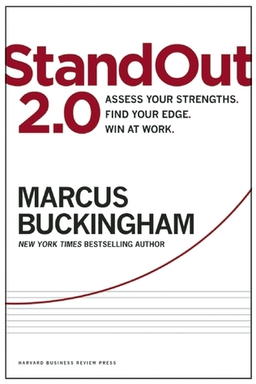
Have you ever wondered why some people seem effortlessly brilliant while others struggle to find their groove—even when they work just as hard? Marcus Buckingham’s StandOut: The Groundbreaking New Strengths Assessment asks this very question. Buckingham argues that sustained excellence isn’t about fixing your weaknesses or copying others’ best practices; it’s about discovering and leveraging your unique strengths—your personal edge—and then applying that edge where it counts most.
Buckingham proposes that we often mistake innovation and success as processes we can standardize and scale. Yet, as he demonstrates through vivid workplace stories, true innovation is deeply personal—it grows from individual style, instinct, and strengths. Leaders falter when they copy methods that worked for others; they succeed when they find and refine their own approach. The StandOut assessment, and the philosophy behind it, help you uncover the particular combination of strengths that make you stand out and show how to apply them as an individual contributor, manager, or leader.
Why Strengths Trump Best Practices
Early in the book, Buckingham dismantles the myth that “best practices” can simply be transplanted from one person or team to another. Through Ralph Gonzalez’s story—a Best Buy manager who transformed a failing store by empowering employees to blow whistles to celebrate great performance—he illustrates how personal strengths fuel innovation. Ralph’s idea worked because it reflected his charismatic personality and leadership energy. When others tried to apply the same practice without his natural flair, it flopped. The lesson: what’s authentic in one person’s hands can be awkward in another’s.
From Innovation to Individualization
Rather than chasing general “best practices,” StandOut asserts that organizations should harness many small, practical innovations created by individuals who play to their natural roles. Buckingham calls this a system of innovation “on the You channel.” Instead of top-down programs that homogenize creativity, leaders should personalize practices—matching the right techniques to the right people, based on their strengths.
This approach mirrors what companies like Netflix and Facebook do technologically: they deliver personalized recommendations based on who you are and how you behave. StandOut applies this same principle to work. Once you know your strengths, you can receive tailored tactics, language, and techniques precisely suited to you, not to some abstract model of success.
The Nine Strength Roles
At the heart of the book is the StandOut assessment, which measures you across nine distinct “Strength Roles”: Advisor, Connector, Creator, Equalizer, Influencer, Pioneer, Provider, Stimulator, and Teacher. Each represents a specific pattern of thought, emotion, and behavior that gives people their edge. For example, an Advisor analyzes practical steps for others, a Connector thrives by linking people, a Creator thrives on insight and design, and a Stimulator shines by raising energy and enthusiasm. You’re ranked by your top two roles—your unique multiplier combination—where your greatest potential and contribution lie.
The book then shows how to apply these strengths as a leader, manager, salesperson, and service professional. In-depth profiles walk through each role’s power, vulnerabilities, and success habits, helping readers use their natural talents to make an “immediate impact” or reach the “next level.”
A Practical Philosophy Backed by Science
Buckingham’s career-long mission—from First, Break All the Rules to Go Put Your Strengths to Work—has been to replace deficit-focused management with strengths-based performance. In StandOut, he expands on earlier work like StrengthsFinder by moving beyond self-description to prescription. The book doesn’t just affirm who you are—it equips you with concrete ways to win using that uniqueness. It’s a framework for “innovating at scale through individuality.”
Ultimately, StandOut is both a self-discovery system and a leadership philosophy. It asserts that innovation works best when filtered through authenticity, not imitation. By learning your roles and applying them consciously, you not only improve performance—you become irreplaceable. That’s the essence of standing out in any team, any industry, and any era of change.