
Idea 1
Racist Ideas and the Power Behind Them
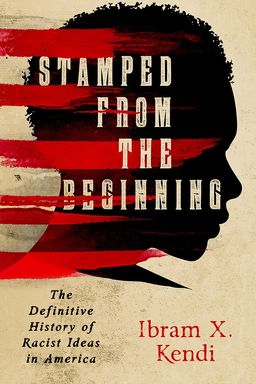
Why do racist ideas persist even when societies claim enlightenment? In Stamped from the Beginning, Ibram X. Kendi argues that racism has never been a product of ignorance or inherent hate—it is manufactured to defend self-interest. You learn that discriminatory policies create racist ideas, and those ideas, in turn, manufacture ignorance and justify power. The book traces this mechanism from fifteenth-century Europe to the twenty-first-century debates over genetics and policing.
Three Voices of Racial Thought
Throughout history, debates about race have unfolded through three recurring voices. Segregationists claim that racial groups are permanently unequal; assimilationists accept equality in principle but blame culture and behavior; and antiracists locate the source of inequality in policy and power. You can hear these voices echo across centuries—from Gomes de Zurara’s praise of Prince Henry’s ‘civilizing’ missions to Cotton Mather’s Puritan theology, Gunnar Myrdal’s assimilationist psychology, and the modern rhetoric of colorblind meritocracy.
Economic and Political Roots
Racism evolves alongside economic systems. The transatlantic slave trade, colonial plantations, and industrial capitalism demanded hierarchical labor divisions. Planters and merchants produced theories—biological, theological, and later scientific—to justify exploitation. Kendi shows you how the laws of Virginia and the slave codes of Barbados did not arise from abstract hatred but from a need to protect profits and prevent cross-racial solidarity (as illustrated after Bacon’s Rebellion).
Science, Religion, and Cultural Reinforcement
Each social institution joined the project. Religion wove the curse of Ham and Christian conversion into pro-slavery doctrine. Enlightenment science created taxonomies that mapped hierarchy into nature—from Linnaeus’s Homo sapiens europaeus vs. afer to Morton’s craniometry. Later, social scientists reinterpreted racist frameworks as cultural pathology (Moynihan’s report) while artists and reformers fought to reclaim representation. By tracing these links, you see the same logic repeatedly re-emerge under new names: scientific racism, cultural deficiency, and postracial denial.
Resistance and Reclamation
Black thinkers and activists—Wheatley, Toussaint Louverture, Frederick Douglass, Sojourner Truth, Du Bois, Angela Davis—challenge racist ideas not only through protest but by reframing truth and power. Kendi shows that resistance fails when confined to persuasion or respectability; structural change is essential. From the Haitian Revolution to the Harlem Renaissance to Black Power, each generation fights simultaneously against physical violence and cultural distortion.
The Contemporary Imperative
The story ends with the modern illusion of a ‘postracial’ America and with the reappearance of biological and cultural myths through data and genetics. Kendi invites you to reorient your lens: racism does not live in hearts but in institutions. To defeat it, you must transform policies—laws, schools, prisons, economies—that keep creating and spreading the ideas. Education might open minds, but structural power defines reality. This is the book’s radical insight: racist ideas are not the disease; they are the symptom of self-interest entrenched in power.