
Idea 1
The Art and Science of Detecting Deception
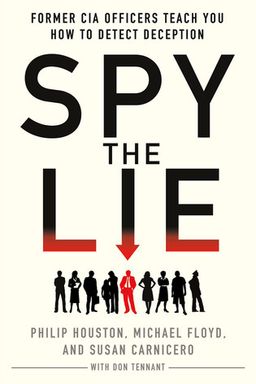
How can you tell when someone is lying to you? Whether it's a child denying they stole money, a partner acting evasive, or a public figure dodging questions—you’ve probably felt that nagging uncertainty about what’s real. In Spy the Lie, former CIA officers Philip Houston, Michael Floyd, and Susan Carnicero reveal the structured approach they developed from decades of interrogations and intelligence work to answer that question scientifically. They argue that honesty and deception generate predictable patterns of verbal and nonverbal behavior—and if you know how to spot those signals in the right context, you can uncover the truth in anyone’s words.
Why We’re So Bad at Detecting Lies
The authors begin by exploring why humans are so easily deceived. We tend to assume innocence, rely on unreliable body language myths (like poor eye contact or fidgeting), and let personal biases cloud our judgment. Even professionals—from police officers to parents—often fall prey to their desire to believe others. Houston recalls interviewing a trusted CIA asset named Omar, whose twenty years of service fooled countless analysts. Though Omar seemed credible, subtle behaviors revealed he had secretly worked for an enemy service the entire time. This shocking case underscores how belief and bias can blind even the most trained observers.
From Polygraphs to a Behavioral Model
Phil Houston’s background as a polygraph examiner at the CIA sparked a revelation: truth and deception aren’t just measurable physiologically—they manifest behaviorally in real time. The polygraph records physical reactions within seconds of a stimulus (a question). Houston wondered, what if ordinary conversations were analyzed the same way? His insight created a behavioral model built on two guidelines: timing and clusters. The first deceptive behavior appears within five seconds of a question; and reliable detection depends on identifying clusters—two or more deceptive indicators occurring together. This simple structure allows observers to separate real deception from ordinary nervous habits.
The Strategic Principle: Ignore Truthful Behavior
Counterintuitively, the authors insist that to find the truth, you must ignore truthful behavior. They call this the deception paradox. Liars often use true facts or moral appeals to convince rather than convey information. For example, an employee accused of theft might talk about donating to charity or helping the community—truthful statements that distract from guilt. Ignoring irrelevant truths focuses your attention on behaviors directly caused by the question being asked. (Note: This principle parallels Daniel Kahneman’s ideas in Thinking, Fast and Slow—filtering extraneous information improves decision accuracy.)
Everyday Lies and the Power of Convincing Statements
People rarely tell outright falsehoods; most lies are subtle attempts to influence perception. These are called convincing statements. When a suspect says “I’m not that kind of person” or “I’d never risk my job,” they’re selling you an image instead of providing facts. In one grim case, a government employee accused of molesting children told investigators, “I’m not a pervert. That would be perverted!”—a string of convincing statements that masked his crimes. The authors show how such statements appear true, emotional, and align with the interviewer’s biases, making them dangerously persuasive.
Reading Behavior—Not Mind Reading
Unlike Hollywood’s Lie to Me or ESP-like intuition, the CIA model isn’t mystical. It’s a disciplined observation process: look and listen simultaneously (L-squared mode) within the first five seconds of a question. Watch for clusters of behaviors—verbal cues like nonanswers, qualifiers (“basically,” “I think”), or referral statements (“as I said before”)—and nonverbal cues like grooming, hand-to-face movements, or anchor-point shifts. The goal isn’t to label someone a liar instantly, but to identify problem areas deserving deeper questioning.
Why Truth Still Matters
Ultimately, Spy the Lie isn’t about suspicion—it’s about clarity and integrity. The authors emphasize that detecting deception serves justice, protects relationships, and informs better decisions. Whether you’re a leader interviewing job candidates, a parent confronting a teen, or simply a citizen parsing political statements, Houston, Floyd, and Carnicero teach that truth isn’t always obvious—but it’s always observable when you know where to look. As Abraham Lincoln said, “Truth is your truest friend.” This book gives you the tools to find it.