
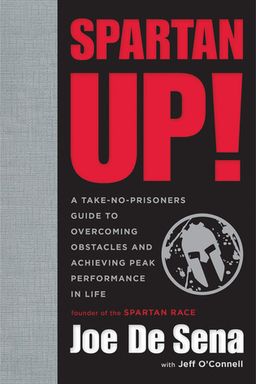
Spartan Up! cover

Spartan Up!

by Joe de Sena

Spartan Up! guides you to live life to its fullest by adopting the Spartan philosophy. Joe de Sena shares how embracing discipline, challenging comfort zones, and committing to personal growth can lead to a healthier and more fulfilling life. Learn to conquer obstacles and achieve peak performance in every aspect of your life.

The Spartan Way: Transforming Adversity Into Strength

What if you could turn every obstacle in life into an opportunity for growth? That’s the heart of Joe De Sena’s Spartan Up!—a manual for transforming everyday comfort into resilience, grit, and purpose. As the founder of the Spartan Race, De Sena argues that modern life has made us soft. We’ve traded ancient challenges for convenience, and in doing so, lost our connection to discipline, endurance, and primal satisfaction. The Spartan philosophy restores that—reminding us that uncomfortable experiences forge the strongest minds.

De Sena contends that suffering isn’t an obstacle—it’s a teacher. Through stories of extreme endurance events, personal transformation, and hard-earned victories, he shows that adversity can redefine what’s possible. The book isn’t just about racing through mud and barbed wire; it’s about building the fortitude to face setbacks, transform failure, and live with purpose. He writes not as a guru, but as a fellow traveler who’s crawled through the snow, hallucinated on mountain ridges, and emerged tougher on the other side.

Why Misery Makes You Stronger

De Sena’s central thread is the paradox that discomfort creates joy. During races in subzero temperatures, hallucinations, hunger, and exhaustion push him beyond reason—but crossing the finish line makes that misery feel like magic. Pain recalibrates what we perceive as hard. Once you’ve frozen overnight on a mountain, your next tough meeting or workout seems trivial. This reframing of pain—from something to avoid into something to embrace—drives all Spartan philosophy. (Similarly, authors like Viktor Frankl and Ryan Holiday argue that meaning and resilience arise from struggle.)

From the Death Race to Daily Life

The book begins with De Sena’s harrowing endurance races—the Quebec Raid, the Death Race—and transitions to the birth of the Spartan Race. These events were designed to break competitors physically and mentally, but through that breakdown they found transformation. People quit at 95 percent, and those who persist learn that success demands pushing past comfort. For De Sena, the Death Race became an experiment in psychology: what happens when you take ordinary people and strip away luxury? The answer: you uncover extraordinary willpower.

A Philosophy, Not Just a Sport

As Spartan expanded worldwide, it evolved from obstacle racing to a life philosophy—a call to Spartan Up! It’s about mastering your will, delaying gratification, and rejecting shortcuts. “Easy” may sell products, but it degrades character. Instead, De Sena preaches the virtues of grit, frame of reference, and delayed reward—the mental skills needed not only to finish a race but to thrive in work, relationships, and self-mastery.

Why These Ideas Matter Today

In an age of instant gratification and digital distractions, Spartan Up! is radical for its simplicity: wake early, train hard, eat real food, reject shortcuts, and put purpose before comfort. Its message is that happiness comes not from removing pain but from building immunity to it—what he calls “obstacle immunity.” When you recalibrate what’s normal, discomfort becomes opportunity. For readers, each lesson doubles as a metaphor: every obstacle in a race mirrors the barriers in life. You grease your hands, climb the wall, and emerge stronger.

The Spartan mindset teaches that freedom isn’t found in ease—it’s found in endurance. This book invites you to stop avoiding your hardships and start training your will through them.

De Sena’s Spartan code—embracing suffering, cultivating discipline, and pushing past limits—isn’t reserved for athletes. It’s a model for living with purpose in an unpredictable world. You don’t have to run through mud and fire; you just have to confront the comfort that holds you back. Once you do, as he promises, “you’ll know at the finish line.”


Grit: The Power of Endurance

De Sena’s concept of grit is the backbone of Spartan resilience. Grit isn’t talent or intelligence—it’s sustained effort through discomfort. Drawing on the now-famous “marshmallow experiment” and psychologist Angela Duckworth’s studies, he shows that people who delay gratification outperform those who chase quick pleasure. For Spartans, grit means working strenuously toward a challenge even when progress is slow and failure constant.

Testing Grit in Extremes

Whether enduring the freezing Death Race or pulling a kayak through mud, De Sena reveals that grit develops only under pressure. In one Death Race, Marines broke down crying while an amputee calmly reattached her prosthetic and kept going. True grit emerges when comfort is gone and chaos reigns. Those who survive discover they can handle far more than imagined. Every obstacle—a cliff, mud pit, or sleepless night—is designed to rewire participants’ limits.

Building Grit Daily

You don’t need an endurance event to cultivate grit. De Sena suggests rituals: rise early, exercise intensely, do the thing you dislike first, and never take shortcuts. Set goals that stretch your capacity, eliminate distractions, and hold yourself accountable publicly. He compares sticking to this discipline with the Spartan youth’s military training—rigorous, communal, and focused on self-mastery. When grit becomes habit, obstacles transform from threats into tests.

Grit isn’t built overnight—it’s a muscle forged by repetition, pain, and persistence. Every time you resist comfort, you strengthen your will.

In De Sena’s world, grit is more reliable than motivation. When motivation fades, grit endures. It’s the invisible armor that protects you from life's unpredictability. Like Gandhi’s perseverance or Edison’s thousand failed experiments, grit is the soul food of achievement.


Delayed Gratification: Mastering the Cookie Test

De Sena transforms a 1970s psychology experiment into a life philosophy. In Stanford’s “cookie test,” children who resisted immediate temptation (eating one cookie now versus two later) became far more successful adults. To him, this represents the essence of Spartans: sacrificing small pleasures today for greater victories tomorrow. The modern world, by contrast, is addicted to the first cookie—fast food, credit cards, instant likes, easy entertainment.

Training Through Temptation

Every Spartan race is a live-action cookie test. Racers resist the impulse to quit midway for comfort’s sake—because they know the delayed reward is transformation. De Sena applies this principle beyond the race: don’t hit snooze when you wake up, skip dessert, run when you’re tired, choose discipline over convenience. Like investors who delay consumption for compound interest, Spartans delay gratification for lifelong dividends in health and confidence.

Why Most People Fail

De Sena blames modern culture for training us to take the cookie. We’re rewarded for ease instead of endurance—credit replaces savings, pills replace lifestyle change, comfort replaces growth. But comfort breeds fragility. Spartans reject short-term pleasure because lasting satisfaction comes only after effort. (Ryan Holiday echoes this principle in The Obstacle Is the Way, arguing that difficulty is the doorway to destiny.)

Spartans train their minds to crave the harder path. Each delayed reward, whether a finish line or a personal goal, rewires the brain to find comfort in challenge itself.

When you skip the easy cookie—literally or metaphorically—you gain freedom from impulse. Over time, this discipline becomes identity. You cease chasing comfort and start chasing excellence. In a world built on shortcuts, De Sena argues, the true rebel is the one who waits.


Frame of Reference: Rewiring What Feels Normal

To achieve obstacle immunity, De Sena teaches you to change your frame of reference—the mental baseline that defines what feels hard. When you’ve endured subzero races or countless burpees, ordinary stress feels insignificant. Your frame of reference shifts from “this is unbearable” to “this is manageable.” As philosopher Epictetus taught centuries ago, peace comes not from control over circumstances but control over perception.

Resetting the Baseline

De Sena’s own recalibration began when he lost financial comfort and physical health. Poverty and adversity forced him to redefine success. By taking on uncomfortable physical challenges, he rebuilt mental resilience. This echoes Stoic practices—voluntary hardship to remind oneself that simple living brings clarity. Meditation, fasting, and endurance racing all serve this same purpose: reset what “normal” means so gratitude and joy flourish in simplicity.

Examples of Mental Shifts

Stories in Spartan Up! illustrate dramatic reframing. Cancer survivor Jim Mullane, for instance, enters a race amid chemotherapy to remind himself he’s alive. Paraplegic athlete Michael Mills crawls over obstacles with his team’s help, proving that normalcy is psychological. Each experience redefines what effort, pain, and perseverance mean. They stop comparing their discomfort to comfort—they compare it to privilege.

Change your reference, and the world changes with it. What once seemed impossible becomes routine; what was unbearable becomes fuel.

De Sena advises resetting your frame daily through hard exercise, gratitude, and deliberate simplicity. “Whatever is hard becomes easy when misery is behind you,” he writes. This mental reframing is the secret to Spartan happiness—it’s not comfort that brings peace, but conquering discomfort.


Spartan Fitness: Forge Body and Mind Together

For De Sena, physical strength and mental toughness are inseparable. He rails against sedentary living, noting that obesity, depression, and stress are modern epidemics born of inactivity. Ancient Spartans trained from childhood to embody discipline and endurance, not aesthetics. Likewise, modern “Spartans” must treat fitness as a livelihood, not a hobby. “You can’t think your way over an eight-foot wall,” he says—strength comes from sweat.

Functional Movement vs. Vanity Exercise

Forget complex machines and shortcuts. Spartan fitness favors natural movements—running hills, carrying heavy objects, climbing ropes, swimming, burpees. These functional exercises train the whole body while sharpening problem-solving and endurance. De Sena’s exemplar of efficiency is the burpee: one motion uniting strength, flexibility, and cardiovascular power. Thirty burpees a day, he promises, is medicine against stagnation.

Training Outdoors and Together

Nature is the original gym. Trails, mud, and weather add unpredictability—a core advantage over treadmills and climate-controlled studios. Outdoor exercise boosts mood, adaptability, and connection to the environment. Training with others adds accountability and camaraderie, as seen in De Sena’s early Vermont farm workouts, where racers chopped wood, swam rivers, and hauled sandbags—rituals that bonded them like soldiers.

Spartans train with purpose, not vanity. Strength is not for display—it’s for survival, service, and self-respect.

De Sena’s wisdom echoes Jack LaLanne’s philosophy: exercise is the fountain of youth. It’s how you honor your body, sharpen your will, and inoculate yourself against fragility. As Muhammad Ali said, “Suffer now and live the rest of your life as a champion.” Spartan fitness makes that suffering sacred.


Nutrition and Self-Discipline: Eat Like a Spartan

Spartan health begins at the table. De Sena’s simple rule: if your great-grandparents wouldn’t recognize it, don’t eat it. For him, junk food and processed sugar have become cultural addictions, dulling both body and mind. He equates the body to a swimming pool—polluted water comes not from the pool itself but from what you pour into it. To cleanse yourself, eat food, not products.

From Excess to Essentials

Modern abundance has turned nutrition into chaos. To restore balance, De Sena advises returning to whole, plant-based foods, minimal sugar, and moderation: fresh vegetables, fruits, nuts, lean proteins. His farm in Vermont embodies this shift toward organic, rotational agriculture. Farming echoes Spartan values—patience, simplicity, and respect for nature’s cycles. He even jokes that food should be measured not in calories but in burpees: a large fry equals 500 burpees.

Fasting and Doing More With Less

Fasting, light eating, and mindful nourishment reflect the Spartan ethic of controlled consumption. De Sena trains on raw fruits and nuts, believing digestion breaks need rest just like muscles. Like the philosopher Michael Pollan (


Transformance: Growth Through Challenge and Teamwork

In later chapters, De Sena explores transformance—the natural human tendency to grow through challenge. This instinct begins in childhood: toddlers climb stairs repeatedly, not for reward but mastery. As adults, society dulls that impulse with convenience, fear, and routine. Spartan Race restores it through obstacles that reawaken play, courage, and collaboration.

The Joy of Mastery

Every obstacle mastered fuels confidence. Failing the rope climb or wall becomes motivation to train and return stronger. Just as children turn scraped knees into triumphs, Spartans use discomfort as data. De Sena highlights racers like paraplegic Michael Mills and blind child Matthias Vescelus, whose participation redefined possibility for everyone watching. Mastery breeds momentum—and momentum leads to transformation.

Team Spirit and Humanity

Transformation isn’t solitary. Spartan events ignite communal grit: racers pull each other over walls, share encouragement, and celebrate the collective struggle. De Sena connects this to family and parenting—discipline balanced with love builds strong character. His own children practice kung fu, languages, and burpees because challenge bonds family. Team effort, he argues, teaches empathy and courage more powerfully than any speech.

Transformance means turning adversity into unity. When struggle is shared, it ceases to isolate—it connects.

By reviving our primal instinct to overcome, transformance becomes a philosophy of living—an antidote to stagnation. As De Sena writes, “Life is movement, and movement is life.” When we move together toward hardship, we discover strength beyond muscles: resilience, gratitude, and love.


Living the Spartan Code

In his closing chapters, De Sena crystallizes the Spartan ethos into a code—a set of daily principles that transform discipline into habit. A Spartan, he writes, pushes mind and body to the limit, masters emotion, learns continuously, gives generously, leads boldly, and acts rather than speaks. These are not motivational slogans but operational rules for living with purpose.

Purpose and Integrity

Through examples like Sir Richard Branson and Theodore Roosevelt’s “man in the arena,” De Sena shows that greatness requires risking comfort for meaning. The Spartan Code values action over talk and integrity over convenience: wake early, finish what you start, treat others with respect, and leave no one behind. The finish line is not the end but the moment you realize who you’ve become.

Endurance as Enlightenment

Physical endurance and moral courage merge into spiritual awareness. After suffering and perseverance, racers—and readers—discover a new lens for life. They see obstacles as gifts, pain as proof of progress, and failure as fuel. De Sena’s mantra, “You’ll know at the finish line,” becomes existential advice: true knowledge is earned in struggle. Like ancient Stoics, Spartans find liberation in self-discipline.

Becoming Spartan isn’t about racing—it’s about becoming unstoppable. When you master your will, every obstacle becomes an opportunity for greatness.

In the end, De Sena’s code invites us to rejoin the heroic tradition of ancient warriors and modern strivers alike. Whether in mud pits or boardrooms, the Spartan way teaches endurance, honor, and joy in the struggle. You finish not covered in mud but transformed in mind.

Dig Deeper

Get personalized prompts to apply these lessons to your life and deepen your understanding.

Go Deeper

Get the Full Experience

Download Insight Books for AI-powered reflections, quizzes, and more.