
Idea 1
Discovering the Work That Sparks You
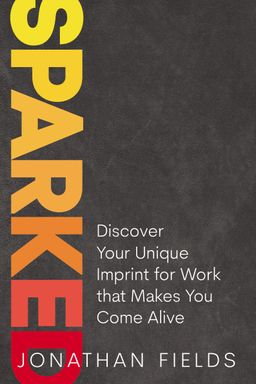
Have you ever woken up and wondered, is this really what I’m meant to do? Jonathan Fields’s Sparked begins with that very question. Fields argues that most of us wander through life half-alive in our work because we’ve lost our connection to what truly ignites us. He asserts that everyone possesses a unique inner imprint—what he calls a Sparketype—that defines the kind of effort that makes us come alive. Finding and understanding this Sparketype, he promises, can bridge the gap between simply surviving and fully thriving. Yet, as Fields cautions early in the book, this discovery isn’t about quitting your job tomorrow or blowing up your life—it’s about seeing where you already stand, understanding what energizes you, and designing ways to bring more of that spark into the life you already lead.
The Crisis of Meaning in Modern Work
Fields begins by observing what he calls a “crisis of discontent.” Millions of people type “What should I do with my life?” into Google every month. Beneath that search lies exhaustion, anxiety, and an absence of purpose. He believes this malaise isn’t a flaw in our character—it’s a consequence of losing touch with the deeper impulses that drive meaningful effort. We chase other people’s definitions of success, or accept the assumption that work must be draining. When the reward is only a paycheck, we slowly disconnect from the sense of vitality that meaningful effort once provided. The result: a workforce of capable, intelligent, and successful people quietly suffering through their own lives.
To reverse this, Fields identifies five universal domains that form the “sweet spot” of being Sparked: purpose (working toward something that matters), engagement (feeling energy while doing it), meaningfulness (recognizing the impact your effort has), expressed potential (getting to be fully yourself), and flow (that absorbing state where time disappears). When these five dimensions overlap, work feels like a calling rather than a grind.
From Personality Tests to Purpose DNA
Unlike personality tests such as the Myers-Briggs or the Enneagram, Sparketypes aren’t about describing what you’re like—they're about diagnosing the deeper why behind the work you do. The book introduces ten Sparketypes, each representing a fundamental human impulse: the Maven (lives to learn), the Maker (creates things), the Scientist (solves problems), the Essentialist (brings order), the Performer (enlivens moments), the Sage (teaches), the Warrior (leads others), the Advisor (guides), the Advocate (champions causes), and the Nurturer (cares for others). Fields compares these Sparketypes to DNA: we each express them uniquely, but the code itself operates at a foundational level.
Each person also has a Sparketype profile made up of three parts: the Primary Sparketype (the main source of motivation and energy), the Shadow Sparketype (a secondary impulse that supports or amplifies the primary), and the Anti-Sparketype (the kind of work that drains you). For example, Fields describes himself as a “Maker Primary with a Scientist Shadow”—he loves creating new things and solving puzzles that improve his creations—but his Anti-Sparketype, the Essentialist, finds no joy in systems and structure.
How Discovering Your Sparketype Reframes Everything
Discovering your Sparketype, says Fields, often feels like a homecoming. People report feeling “deeply seen” because the language finally gives shape to impulses they’ve felt but never articulated. A Maven who’s spent years being told to “focus” suddenly understands that her endless learning isn’t a flaw—it's how she’s wired. A Nurturer drained by a corporate sales role realizes it’s not laziness but the misalignment between her wiring and her environment. Each profile not only explains fulfillment and frustration but also provides clues to restructuring your work and personal life around activities that align with your intrinsic motivation.
Importantly, Fields reassures readers that finding your Sparketype doesn’t necessarily mean leaving your job or starting a company. Often, “coming alive” can happen right where you already are by adjusting how you engage with your current role. For example, a Scientist may redesign parts of their job to include more problem-solving or experimentation; a Performer may bring more enthusiasm into everyday meetings; a Sage might integrate more mentoring. Small “spark moves” can create disproportionate changes in energy and fulfillment.
Why This Matters
Fields’s ultimate thesis is that when individuals align their work with their Sparketype, everyone benefits—organizations thrive, creativity expands, and people reclaim the joy of contribution. Misalignment, on the other hand, leads to burnout, disengagement, and that quiet despair that fills offices and living rooms worldwide. Sparked functions as both diagnosis and treatment. It invites you to see yourself clearly, to acknowledge that your longing for meaningful effort is valid, and to use self-knowledge as a compass toward vitality. The journey begins with awareness—the spark that lights everything else.