
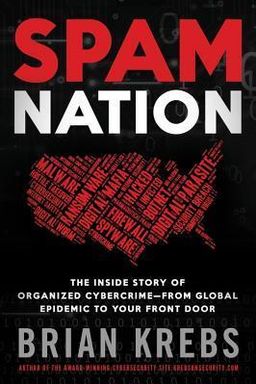
Spam Nation cover

Spam Nation

by Brian Krebs

Spam Nation, by Brian Krebs, delves into the hidden networks of organized cybercrime. A few powerful spammers have turned annoying emails into a lucrative, illegal empire, endangering individuals and global systems alike. Explore how these cybercriminals operate, and learn crucial strategies for defending yourself against their pervasive threats.

Inside the Global Cybercrime Ecosystem

When you receive a junk email promising cheap pharmaceuticals or miracle pills, do you ever wonder who’s behind it? In Spam Nation, investigative journalist Brian Krebs uncovers an unsettling truth: those throwaway spam messages are the visible tip of a massive criminal empire spanning continents, infecting millions of computers, and siphoning billions from consumers. Krebs argues that spam isn’t just digital litter—it’s the backbone of an industrialized network of cybercrime that threatens global security, commerce, and even human lives.

At the center of the book is a war for control over the world’s spam economy, involving Russian cybercriminals like Pavel Vrublevsky and Igor Gusev, rival pharmaceutical cartels such as Rx-Promotion and SpamIt, and an ecosystem of hackers, botmasters, money launderers, and credit card processors feeding off our inboxes. Through his firsthand reporting—from Moscow’s underworld to Western courtrooms—Krebs reveals how spam is intimately connected to malware outbreaks, identity theft, and even national cyberattacks.

The Scale and Stakes of Spam

Spam isn’t merely annoying—it’s a global economic parasite. By 2013, nearly 70% of all emails circulating worldwide were spam, much of it linked to pharmaceutical scams. Each message is bait from sophisticated networks using hacked computers, known as botnets, to bypass defenses and distribute malware. Krebs shows how these systems evolve constantly, with tens of thousands of new malware variants detected each day. The scale is staggering: a single botnet like Cutwail infected millions of PCs and sent up to 16 billion junk emails daily.

This industrialization of spam marks a sociological transformation. What was once the domain of lone hackers has grown into a digital mafia—a shadow economy rivaling small nations. But it’s not just about nuisance; spam kills. Consumers who buy counterfeit drugs from these emails have died from poisoned pills, while others have watched savings evaporate after malware stole their bank credentials.

The Digital Mafia and the Pharma Wars

Much of Spam Nation revolves around the bitter rivalry between two cybercrime titans: Pavel Vrublevsky, founder of ChronoPay and co-owner of the Rx-Promotion pharmacy network, and Igor Gusev, cofounder of ChronoPay turned rebel spamming mogul behind GlavMed and SpamIt. Their feud—dubbed the “Pharma Wars”—exposed the structure and economics of global spam. Leaked databases, hacked communications, and insider testimonies gave Krebs unprecedented access to understand how criminal cartels monetized millions of stolen card numbers and harvested data from consumers desperate for affordable medication.

These leaked records painted the digital mafia’s hierarchy: spammers (called affiliates) earned hefty commissions for every sale made through their junk email campaigns. Beneath them worked coders maintaining 24/7 malware factories, and above them stood sponsors running entire partner networks—known as partnerkas—linking buyers, fake pharmacies, and payment processors. The Pharma Wars didn’t just ruin lives; they shifted the balance of cybercrime worldwide. Each side used bribery, law enforcement manipulation, and denial-of-service attacks as weapons, leaving casualties in both the digital and political landscapes.

Why It Matters to You

Krebs insists that spam isn’t someone else’s problem—it’s yours. The average consumer might ignore junk emails, assuming deletion equals safety. In reality, even unopened spam can expose vulnerabilities that botnets exploit to infiltrate your devices and harvest your data. Through compromised computers, criminals can impersonate you, steal your identity, and disrupt corporate or national systems. Governments worldwide have underestimated this risk, treating spam as a nuisance rather than a cornerstone of modern cybercrime. The consequences now include ransomware epidemics, extortion through hacking, and destabilization of digital infrastructure.

Ultimately, Spam Nation is both a riveting true-crime narrative and a wake-up call. It challenges you to rethink online privacy, security, and the very trust infrastructure of the Internet. Krebs concludes that the fight against cybercrime isn’t won through legislation alone but through collaboration between corporations, law enforcement, and vigilant individuals like you. The question he poses is simple yet haunting: if every click, card transaction, and email can feed a global criminal machine—what will it take for us to unplug it?


The Rise of the Digital Underworld

Brian Krebs begins his investigation with a fatal car crash in Moscow—a symbolic moment marking the birth of modern cybercrime. The death of young entrepreneur Nikolai McColo, whose hosting company harbored thousands of illegal websites, signaled a turning point when digital crime consolidated from scattered hackers into organized syndicates. McColo Corp was a haven for botnets, bulletproof hosting, and virus factories—a literal safehouse for global spam networks.

From Hackers to Cyber Barons

In this underworld, spammers evolved from solitary coders into wealthy digital barons commanding thousands of hijacked computers worldwide. Figures like Dmitry “Gugle” Nechvolod controlled networks capable of sending billions of spam messages daily, often advertising “Canadian” pharmacies that were actually shipping counterfeit drugs from India or China. The key was automation: malware turned personal computers into zombie engines of commerce, spreading virus updates alongside Viagra ads—creating a self-sustaining loop that fed itself through infection.

Bulletproof Hosts and Mafia Protection

Krebs traces cybercrime’s roots to Russia’s “bulletproof” hosting services—web businesses protected by bribery, extortion, and political cover. The Russian Business Network (RBN) pioneered this model, combining child-porn payment systems, blackhat web services, and political corruption to build servers immune from takedown requests. The RBN’s founders, Rubatsky and Loginov, blurred the line between criminality and commerce, laying groundwork for later syndicates like ChronoPay and Rx-Promotion. (Comparable to Misha Glenny’s McMafia, Krebs reveals how digital crime mirrored physical mafias—complete with turf wars, bribed police, and even kidnappings.)

The Shift to Global Exploitation

By the late 2000s, these networks expanded across continents. When investigative journalists and ISPs shut down McColo in 2008, global spam dropped by 75%. The world briefly breathed easier—but cybercrime merely scattered to new havens in Asia and Eastern Europe. The takedown proved Krebs’s hypothesis: spam’s infrastructure was highly centralized, and pressure on the right points could disrupt millions of email campaigns overnight. Yet, as with any criminal enterprise, when one hub fell, ten more emerged.

Krebs reveals that these virtual mafias operated under near impunity, shielded by weak international laws and the complicity of corrupt officials. What began as a fight over spam hosting evolved into a geopolitical confrontation, underscoring how easily digital crime undermines national security. The lesson? Every spam message represents a chain of corruption—from corrupt ex-KGB agents to programmers sitting comfortably behind home PCs, milking the chaos of cyberspace for profit.


The Pharma Wars: Greed and Betrayal Online

The heart of Spam Nation beats within a feud worthy of a crime thriller—the “Pharma Wars” between Pavel Vrublevsky and Igor Gusev. Krebs chronicles their escalating rivalry as a microcosm of global cybercrime: personal vendettas, political corruption, and complex networks of deceit driving epidemics of poisoned pills and stolen identities.

Two Kings, One Black Market

When Gusev split from ChronoPay to found SpamIt and GlavMed, he unleashed an empire of illegal online pharmacies promising cheap medication with no prescriptions. His former partner Pavel Vrublevsky struck back by launching Rx-Promotion, built on connections with high-risk payment processors and corrupt law enforcement. Their battle mirrored Cold War espionage—complete with bribery, leaked emails, cyberattacks, and propaganda. Each faction leaked the other’s databases to Western journalists and police, inadvertently providing Krebs unprecedented access to their secrets.

Hacked Data and Human Victims

The databases from SpamIt and Rx-Promotion revealed millions of customer records, including health histories, names, and card data—mostly from Americans. These weren’t anonymous victims; they were ordinary people lured by low prices or embarrassed to visit pharmacies. Many ingested tainted batches of fake medications, like Marcia Bergeron, who died from counterfeit pills containing uranium and cement. The war between these cartels killed trust in the Internet itself, as consumers unknowingly joined mailing lists fueling botnets that infected other systems.

Politics Meets Cybercrime

As the Kremlin pushed to clean up its digital image, both men faced investigations—yet each used government connections to strike back. Vrublevsky was appointed chairman of Russia’s anti-spam council, ironic given his role as one of the world’s biggest spammers. Gusev bribed officials through sports federations to delay charges, proving that corruption was the currency of survival. Their escalation disabled entire networks and prompted global investigations from NASA to the FBI, revealing how cheap Viagra spam mutated into cyberwarfare. By the time SpamIt collapsed in 2010, global spam volume had fallen by nearly half—but the underlying economy persisted, shifting to stealthier underground channels.

Krebs’s portrait of the Pharma Wars reads like modern Shakespeare: ambition and betrayal driving technological empires toward ruin. His conclusion transcends the feud—when organized greed meets unchecked digital power, no one escapes the fallout, not even its architects.


The Economics of Spam and Partnerka Networks

To understand why spam persists after countless crackdowns, Krebs explores its economic skeleton: the partnerka system, Russia’s term for partnership programs linking spammers to merchants and money processors. These networks function like modern franchising—but for crime.

How Partnerkas Work

A partnerka matches advertisers with spammers. Sponsors provide products—fake pharmaceuticals, counterfeit software, pirated goods—while affiliates (the spammers) market them through junk email campaigns. Each sale yields a 30–35% commission. These partnerships maintain plausible deniability: sponsors can claim ignorance of illegal activity while affiliates cycle through botnets to avoid detection. To attract loyalty, sponsors offer bonuses, luxury prizes, and even parties—competitions to crown a “Master of Inbox.”

Crime Organized by Incentive

Krebs shows these systems are not centrally controlled mafias but ecosystems of “disorganized crime.” The core principle is adaptation. Top affiliates often control botnets themselves, renting them out for $200–$500 per million spam emails. A handful of spammers—like Cosma of Rustock or Severa of Waledac—earned millions, while thousands more barely broke even. Their success resembled a pyramid scheme powered by malware and desperation. When one program collapsed, its members migrated to another, meaning takedowns rarely ended spam—they redistributed it.

Social Infrastructure of Cybercrime

These networks thrived through encrypted online forums like Spamdot.biz and Crutop.nu. There, members traded code, sold botnets, and settled disputes via virtual reputations and escrow payments. They even enforced ethical codes—punishing members who “ripped” others off. The forums functioned as proto-corporate HR systems, screening applicants and ranking talent. Moderators such as Severa operated like professors, teaching efficient fraud techniques through tutorials, further professionalizing the underworld.

By revealing this structure, Krebs exposes why suppression is difficult: these systems mimic legitimate business operations, complete with customer service, talent pipelines, and dispute resolution. Partnerkas have become capitalism’s shadow twin—a mirror showing what happens when market logic operates without law or morality.


The Human Side: Who Buys Spam?

In one of the book’s most striking sections, Krebs shifts from hackers to the people fueling spam’s economy: the buyers. Through hundreds of interviews with customers found in leaked data, he reveals that the demand for rogue pharmaceuticals is driven less by greed than by desperation—by people priced out of medicine or eager for privacy.

Why People Buy

Many buyers sought cheaper generics for chronic illnesses they couldn’t afford through insurance. Others purchased erectile dysfunction drugs or antibiotics discreetly to hide ailments from partners or employers. As Krebs discovered, purchasing wasn’t always irrational—it often felt like survival. In the U.S., where medical prices skyrocket, consumers rationalized spam pharmacies as compassionate black markets. Yet they unknowingly wired their health and financial identity to criminals who repackaged pills from unregulated Indian and Chinese labs.

Stories of Consequence

Through cases like Marcia Bergeron’s death from toxic counterfeit pills, Krebs underscores the lethal cost of trusting online bargains. Other buyers endured harassment from telemarketers or credit card fraud when their data was sold downstream. The parallel to addiction is clear—buyers seeking pain relief often became repeat customers, caught in cycles resembling narcotic dependency. One man in Eastern Europe spent $500 monthly on illegal painkillers shipped from Hong Kong, putting him in legal peril as well as physical danger. Each transaction fed the bots sending more email to new victims.

Economic and Ethical Implications

Krebs’s interviews reveal a tragic intersection of healthcare inequality and cybercrime—where economic vulnerability becomes exploitation. He argues that until legitimate industries provide accessible alternatives, spammers will remain the suppliers to society’s underserved. Like in Economics of Innocent Fraud (John Kenneth Galbraith), moral blame spreads across institutions that ignore the causes driving illegal demand. His empathy toward buyers makes the book not just investigative journalism but social critique—a reflection on how online crime thrives on human need.


Fighting Back: The Antis and Global Counterstrikes

Spam Nation doesn’t end in despair. Krebs shines a light on the vigilantes, cybersecurity firms, and international agencies pushing back—the “antis.” These unsung heroes, often volunteers or small startups, use their technical prowess to fight an enemy much larger and faster than themselves.

The Rise of the Antis

Groups like InboxRevenge and organizations like Spamhaus developed tools to cripple spam networks by flooding them with fake orders or blocking their domains. Their methods blurred legal lines but proved effective. When Blue Security tried mass unsubscribe retaliation in 2006, spammers retaliated with one of the Internet’s largest denial-of-service attacks, paralyzing millions of users. It was a wake-up call revealing both the antis’ potential and the criminals’ ferocity.

Corporate and Government Action

Krebs documents major coordinated takedowns: Microsoft’s strike on Rustock and Waledac, FireEye and Spamhaus dismantling Grum, the FTC shutting down 3FN. Each destroyed millions of bots, temporarily slashing global spam rates. Yet Krebs emphasizes that success came only when corporations—Pfizer, Google, Visa, Microsoft—found economic reasons to act. Pfizer defended its brand against counterfeit Viagra, Visa fined banks supporting illegal payment networks, and Google paid $500 million after its ads promoted rogue pharmacies. Commerce, not law, ultimately drove reform.

The Continuing Battle

Despite victories, the war remains endless. Every botnet takedown inspired more sophisticated successors, shifting cybercrime from spam to ransomware and black SEO. Krebs frames this struggle as the digital equivalent of the narcotics war—each solution spawning adaptation. He urges readers to adopt vigilance at the individual level: update software, strengthen passwords, and use two-factor authentication. “Defense in depth,” he writes, begins with awareness. In this sense, Spam Nation transforms from exposé to manifesto—reminding you that the first line of defense against cybercrime starts at your keyboard.


Endgame: Lessons from a Spam Nation

In his closing chapters and epilogue, Krebs condenses years of reporting into practical warnings and hard-won lessons. He doesn’t just recount sensational arrests, like Pavel Vrublevsky’s sentencing to a Russian penal colony; he interprets them as symbols of a new digital frontier—where moral boundaries blur and ordinary citizens become pawns in a global economic war.

The Transformation of Cybercrime

Krebs demonstrates that spam’s collapse didn’t end online crime—it evolved. From fake antivirus scams sprang ransomware and identity theft. Criminals no longer rely solely on emails but exploit search engines, social media, and unpatched software. The lesson: in the interconnected marketplace, every vulnerability—from outdated Java plugins to reused passwords—creates opportunity for exploitation. He argues that cybercrime mirrors capitalism’s own adaptability; cutting one revenue stream spawns a new one faster than regulation can respond.

An Ethical Wake-Up Call

Ultimately, Spam Nation is less about criminals than about complicity. We, the users, feed the ecosystem through indifference—by ignoring updates, using weak credentials, or buying questionably cheap goods online. The book’s final sections—“A Spam-Free World: How You Can Protect Yourself”—shift tone from investigative to instructional. Krebs offers specific defenses: multifactor authentication, password managers, skepticism toward unsolicited downloads, and regular software hygiene. It’s a practical guide disguised inside a crime epic.

The Broader Message

If there is one lasting insight, it’s that cybercrime thrives wherever transparency fails. The solution isn’t fear, but literacy. Understanding how digital economies work—how data moves, how payment systems interact, how power hides behind anonymity—restores agency. Like Upton Sinclair’s The Jungle or Edward Snowden’s revelations, Spam Nation forces readers to confront uncomfortable truths: our daily conveniences are built atop invisible systems vulnerable to manipulation. The takeaway is empowering yet sobering—technology magnifies every human trait, from greed to ingenuity. Which side we strengthen remains up to us.

Dig Deeper

Get personalized prompts to apply these lessons to your life and deepen your understanding.

Go Deeper

Get the Full Experience

Download Insight Books for AI-powered reflections, quizzes, and more.